Enterprise WordPress Development for UK Organisations
Tell us a little about what you’re looking for, and our team will be in touch to discuss how we can help.
Enterprise WordPress development is not simply WordPress development for a bigger company. The difference is usually found in what the platform has to support: larger content estates, multiple teams, complex permissions, business-system integrations, higher traffic, stricter governance and a greater operational cost when something goes wrong.
Prime Lion Digital develops WordPress platforms around those requirements. We look at how people will publish, how systems need to connect, where control is required and how the platform is expected to change over time.
The aim is not to make WordPress more complicated. It is to make sure the architecture remains workable as the organisation, content and technical requirements grow.
What Makes a WordPress Project “Enterprise”?
There is no particular traffic figure, employee count or number of pages that turns a WordPress website into an enterprise platform.
A relatively small organisation can have demanding technical requirements. A much larger business may operate perfectly well with a comparatively straightforward WordPress build.
Enterprise requirements tend to appear when several forms of complexity overlap. Thousands of content items may need to be managed by different teams. Editors may require carefully controlled permissions. WordPress may need to exchange data with a CRM, ERP, identity provider or another internal system. The organisation might operate across several brands, languages or markets.
At that point, decisions about content structure, integrations, infrastructure, deployment and governance start affecting one another.
Enterprise WordPress is better understood as an architectural and operational requirement than a label based on company size.
Enterprise WordPress Is About Complexity, Not More Technology
 Enterprise projects are easy to over-engineer.
A larger organisation does not automatically need headless WordPress, extensive custom code, complicated cloud infrastructure or dozens of specialist tools. Sometimes conventional WordPress, engineered carefully, is the more maintainable choice.
The question is where the complexity actually sits.
If several departments need controlled publishing access, multiple systems exchange data with the website or regional teams require different levels of autonomy, additional engineering may be justified. If those requirements do not exist, introducing them artificially creates more infrastructure to own, monitor and maintain.
We therefore treat architecture as a response to requirements rather than a way to make a project appear more sophisticated.
Our Enterprise WordPress Development Services
Enterprise WordPress development services can extend well beyond the CMS itself. Depending on the project, the work may involve architecture, custom functionality, integrations, migration, access control and the technical processes used to manage future changes.
Enterprise WordPress Architecture
Architecture comes before development. We map content, users, technical dependencies, integrations and expected growth before deciding how WordPress should be configured.
This establishes what can remain native to WordPress, where custom development is justified and where an external service should be integrated rather than recreated inside the CMS.
Custom WordPress Development
Some requirements cannot be handled sensibly through standard themes and plugins. Custom development can support specialist content structures, administrative tools, workflows, interfaces and business logic.
But “custom” is not shorthand for better. Bespoke code introduces something else that has to be tested, documented and maintained, so it should solve a clear requirement.
Enterprise Integrations and APIs
For many organisations, WordPress is one part of a wider digital environment. Customer data may live in a CRM. Product or operational information may come from another platform. Authentication may be controlled centrally.
Our API integration services support projects where WordPress needs to communicate with these systems reliably.
The difficult part is rarely obtaining an API key. Data ownership, authentication, synchronisation, rate limits, error handling and the behaviour of the website when an external service is unavailable all need to be considered.
WordPress Multisite
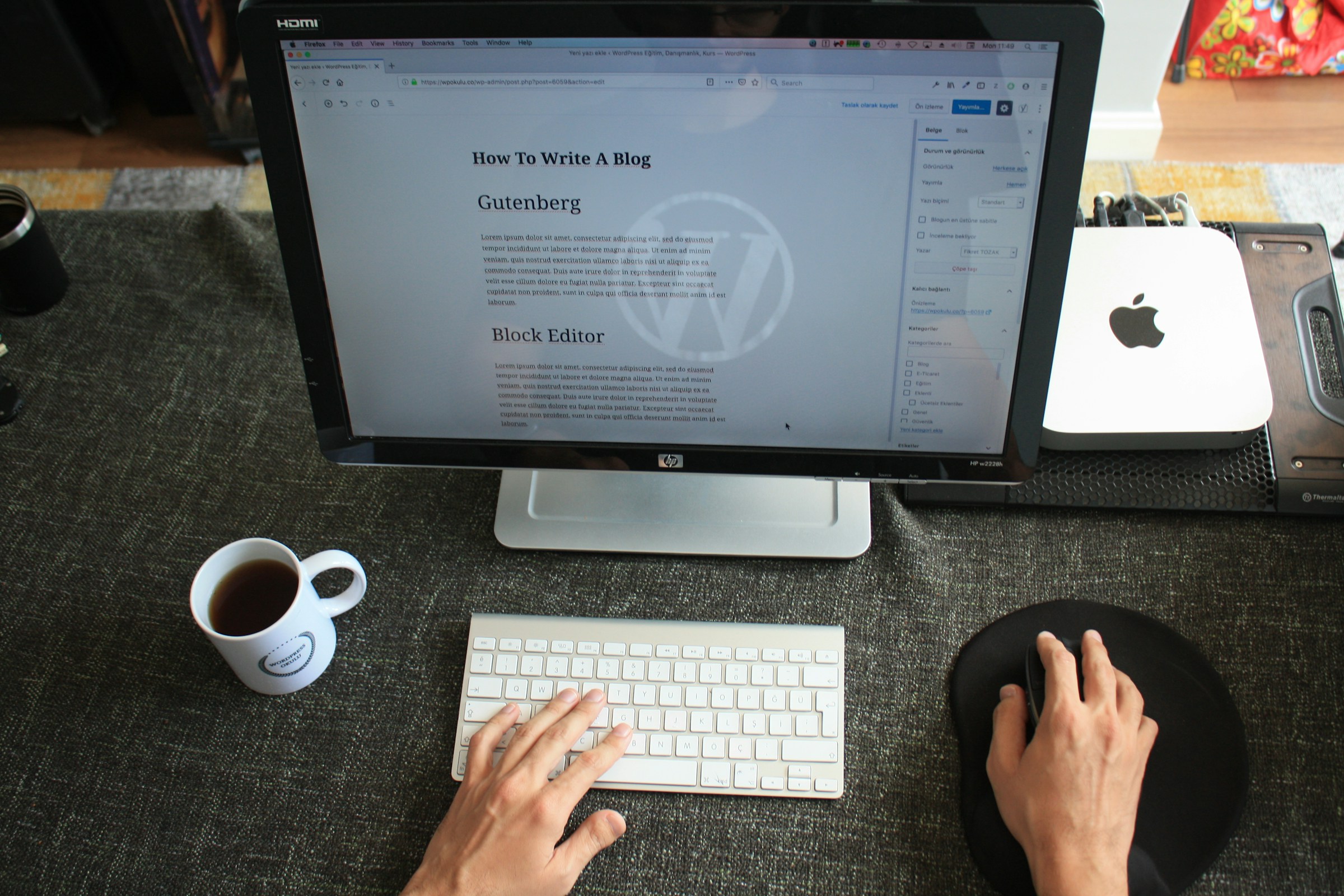 WordPress Multisite can provide a shared technical foundation for regional websites, divisions, franchise networks or related brands while allowing individual sites to manage their own content.
That centralisation can be useful. It also creates shared dependencies, which is why Multisite should be chosen because the websites genuinely benefit from being connected, not simply because there is more than one of them.
Multilingual WordPress Platforms
International publishing involves more than translation. URL architecture, regional content, permissions, local search visibility and responsibility for keeping translations current all matter.
One organisation might require centrally controlled content translated across several markets. Another may need local teams to adapt substantial parts of the website independently. Those are different operational models and should not be forced into the same technical structure.
Enterprise Search and Content Discovery
Search becomes more important as content grows. Visitors may need to find information across services, resources, locations, products or other structured content without knowing how that information is organised internally.
For larger content estates, native WordPress search may not provide enough control. Taxonomy, filtering, indexing and specialist search technology can all become relevant. The right approach depends on what people are trying to find and how the underlying content has been modelled.
User Roles, Permissions and Access
A website managed by three people can have a simple permissions model. One shared by marketing, communications, regional editors, external agencies and technical administrators usually cannot.
Access can be structured around who needs to create, edit, approve, publish or administer particular areas. People should have enough control to do their work without every editor becoming a WordPress administrator.
Enterprise WordPress Migration
Moving a large website involves more than transferring pages. URLs, metadata, media, taxonomies, redirects, analytics, integrations and years of accumulated content may all need to be accounted for.
Our website migration work considers these dependencies alongside the technical move itself.
Ongoing Development and Platform Evolution
Enterprise websites rarely stay unchanged after launch. Campaigns, integrations, compliance requirements and internal processes continue to create development work.
Maintainability therefore needs to be considered while the platform is being built, not after the original development team has moved on.
Does Your Organisation Actually Need an Enterprise WordPress Architecture?
Before deciding on technology, it helps to identify where the operational pressure exists.
| Requirement | Standard WordPress may be enough | Enterprise planning becomes more relevant |
|---|---|---|
| Content | Small or moderate content estate managed by one team | Large structured content estate managed across departments or markets |
| Users | A few administrators and editors | Multiple roles, approval requirements and controlled access |
| Integrations | Standard analytics and marketing tools | CRM, ERP, SSO, business systems, external databases or custom APIs |
| Websites | One website serving one primary audience | Multiple brands, regions, languages or connected websites |
| Development | Occasional website changes | Regular releases involving developers, internal teams and controlled deployment |
The purpose of this assessment is not to qualify a project as enterprise as quickly as possible. It is to separate requirements that genuinely need additional architecture from those that can remain straightforward.
What Has to Scale in an Enterprise WordPress Platform?
 Scalability is often reduced to traffic. That is only one part of the problem.
Traffic and Infrastructure
Hosting, caching, database behaviour, media delivery and application performance need to remain predictable as demand changes. Infrastructure may also need to accommodate unusual peaks rather than being designed solely around an average day.
Content and Publishing
A CMS that feels perfectly manageable with 100 pages can become frustrating with tens of thousands of articles, resources, locations or other records if the content model was never designed for that volume.
Editors still need to find, reuse and update information efficiently as the content estate expands.
Users and Permissions
Adding editors creates governance questions. Who can publish? Who approves changes? Can a regional team edit central content? Who is allowed to alter plugins, integrations or technical settings?
These sound like internal process questions. In practice, they shape the CMS architecture.
Integrations and Data
Every connected system creates another dependency. The platform needs defined behaviour when data arrives late, credentials expire, an API changes or an external service becomes temporarily unavailable.
Development and Change
A platform also needs to scale in its ability to change safely. Version control, staging environments, deployment procedures, testing and documentation become increasingly important when several developers or suppliers work on the same system.
At enterprise level, scalability means traffic, content, people, systems and change all remaining manageable at the same time.
Content Governance and Editorial Workflows
For some organisations, the hardest scaling problem is not traffic. It is publishing.
Marketing, communications, product teams and regional offices may all contribute to the same platform. Some content can be published immediately; other material may require approval. Local editors might need control over their market without being able to alter global components.
The CMS should reflect those responsibilities rather than relying on informal rules outside WordPress.
A well-planned editorial workflow also reduces unnecessary developer dependency. Editors should be able to perform ordinary content work themselves while higher-risk changes remain appropriately controlled.
There is a practical test here: technical flexibility has little value if the people responsible for the website cannot use it confidently.
Integrating WordPress with Enterprise Systems
An enterprise website often sits between several systems rather than operating independently.
A CRM may own customer information. An ERP may hold operational or product data. An identity provider may manage authentication. Search, marketing and analytics platforms may each have their own responsibilities.
Before connecting them, we establish something more fundamental: which system is authoritative for each type of data?
If two platforms can independently change the same information, synchronisation quickly becomes harder to reason about. A good integration has clear ownership, predictable data flows and defined failure behaviour.
Depending on the requirement, WordPress can exchange information through REST APIs, webhooks and other integration methods. The implementation should follow the direction, frequency and sensitivity of the data rather than applying one integration pattern everywhere.
Security, Access and Operational Control
Enterprise WordPress security is not a plugin setting.
Hosting, authentication, administrator access, third-party code, software updates, deployment procedures, monitoring and backups all contribute to the risk profile.
Access becomes particularly important when internal teams and external suppliers share a platform. Administrator privileges should be limited to people who need them; editorial permissions can then reflect actual responsibilities.
There also needs to be an answer to a less technical question: who is responsible when something happens?
Ownership of updates, credentials, monitoring, recovery and incident response should be understood before there is an incident, not worked out during one.
Performance at Enterprise Scale
Performance is easier to protect when it is treated as an architectural concern rather than a clean-up task before launch.
Frontend implementation, database queries, third-party scripts, plugins, media, caching, CDN configuration and hosting can all affect the result. Which of these matters most will vary by platform.
Our website performance optimisation work can address problems on existing sites, but new enterprise projects should avoid creating obvious bottlenecks in the first place.
Adding infrastructure does not automatically improve performance. Sometimes it simply creates another layer to diagnose.
Multisite, Multilingual or Separate WordPress Platforms?
Organisations operating several brands, regions or languages often face this decision early in planning.
| Approach | Often useful when | Important consideration |
|---|---|---|
| Single WordPress website | Markets share most functionality and content structure | Localisation and permissions can become more complex as teams grow |
| WordPress Multisite | Several sites benefit from central technical governance | Shared infrastructure also creates shared dependencies |
| Separate WordPress installations | Brands or regions require substantial independence | Updates and development may need to be maintained across several platforms |
| Headless WordPress | Content needs to serve separate applications or digital experiences | Frontend infrastructure and publishing workflows become separate concerns |
There is no default enterprise choice. The decision depends on how much the websites need to share, how independently teams operate and where central control is genuinely useful.
Enterprise WordPress and Headless Architecture
Headless architecture can be useful in an enterprise environment. It is not an enterprise requirement.
Separating WordPress from the frontend may make sense when content needs to serve several applications, an organisation already has a React or Next.js environment, or frontend teams need to work independently from the CMS.
It also means owning another application layer, deployment process and hosting environment.
Our headless WordPress development service covers these decoupled architectures when the technical or operational case supports them.
For many enterprise websites, conventional WordPress remains the more practical architecture.
Technical SEO and Accessibility at Scale
Small technical decisions have a wider impact on large websites.
A template change can affect thousands of URLs. The same is true of canonical rules, structured data, internal linking, pagination or indexation settings. Migration mistakes can spread just as widely.
Our technical SEO work considers crawlability, URL structure, redirects, metadata, canonicalisation, structured data, sitemaps and internal architecture alongside development rather than waiting until the platform has already been built.
Accessibility benefits from the same approach. Components, navigation, forms and editorial patterns are much easier to address systematically during development than to retrofit across a large content estate later.
Migrating an Existing Enterprise Website to WordPress
Large migrations are often more complicated than they first appear because the visible website represents only part of what needs to move.
An established CMS may contain years of media, metadata, redirects, taxonomies, integrations and content relationships. Some should be preserved exactly. Some should be transformed. Some legacy material may not belong in the new platform at all.
That distinction matters. Reproducing every historical decision can bring old problems into a new CMS.
For websites with established organic visibility, URL mapping, redirects and indexation need to be part of the migration plan from the beginning. They should not become launch-week tasks.
Our Enterprise WordPress Development Process
Discovery and Requirements Mapping
We start with the organisation rather than WordPress. That means understanding users, content, teams, existing systems, integrations, constraints and what is expected to change after launch.
Technical Architecture
Those requirements are translated into decisions around WordPress architecture, data relationships, integrations, permissions, hosting considerations and custom development.
UX and Content Architecture
For content-heavy platforms, information architecture is planned alongside the technology. This can include reusable content models, taxonomy, navigation and relationships between different types of information.
Development and Integration
WordPress functionality, frontend components and external connections are developed against the agreed architecture. Where native functionality or a well-supported dependency solves the problem properly, there is little value in rebuilding it for the sake of calling the solution custom.
Staging and Quality Assurance
Work is tested away from the live environment. The scope of QA depends on the project but can include functionality, responsive behaviour, permissions, integrations, accessibility, performance and technical SEO.
Migration and Deployment
Content and systems move according to an agreed deployment plan, with launch-critical dependencies such as redirects, analytics and integrations checked as part of the transition.
Monitoring and Continued Development
Launch is where editors, visitors and connected systems begin interacting with the finished platform at full scale. Monitoring and post-launch work provide a chance to identify real operational issues rather than trying to predict every future requirement in advance.
What Affects the Cost of Enterprise WordPress Development?
Page count alone is a poor way to estimate an enterprise WordPress project.
A 50-page platform with custom permissions, several business-system integrations and a complicated migration can require substantially more engineering than a publishing site containing thousands of straightforward articles.
Cost is more likely to be influenced by architecture, custom functionality, integrations, migration, languages or websites, infrastructure, testing and the amount of coordination required between teams.
That is why useful pricing normally follows requirements discovery rather than preceding it.
How Long Does an Enterprise WordPress Project Take?
The development work is only one part of an enterprise timeline.
Stakeholder approvals, content preparation, access to existing systems, API documentation, migration data and third-party suppliers can all become dependencies.
A technically straightforward integration can still hold up a release if the system it connects to cannot be tested. A migration cannot be validated properly if the source data is incomplete.
We try to identify those dependencies during planning so that project delays are not confused with development estimates.
Who Owns the Platform After Launch?
This is worth establishing before a supplier changes, an employee leaves or something breaks.
The organisation should know who controls the hosting account, where the source code is stored, who owns paid licences, how API credentials are managed and who can access DNS, analytics, CDN and deployment systems.
Documentation matters too. Another competent developer should be able to understand the important parts of the platform without reverse-engineering every decision made by the original team.
An enterprise platform should not become dependent on the individual developer who built it.
Clear ownership makes future development easier whether it is handled by Prime Lion Digital, an internal team or another supplier.
Enterprise WordPress in Practice
Relevant experience needs to be described accurately. A project does not become an enterprise case study simply because WordPress was involved. The examples below show work that is relevant to content scale, connected systems and commercially important WordPress delivery without presenting projects as something they were not.
Audit Consulting Group: Content Architecture, Lead Generation and Connected Systems

Audit Consulting Group required more than a brochure website. WordPress sits within a wider digital environment involving an expanding service and information architecture, lead generation, analytics and a separate CRM system.
The platform needed to support continued publishing without allowing the content structure to become progressively harder to navigate and manage. Development, content architecture, SEO and measurement therefore had to be considered together.
The wider digital project has supported growth to more than 4,000 monthly organic visitors and more than 100 website enquiries per month. These are broader digital and SEO outcomes rather than results attributed to enterprise WordPress development alone.
The useful enterprise lesson is the relationship between systems: a CMS, lead-generation website and business workflow cannot always be planned independently once they begin exchanging information and supporting the same customer journey.
Freizeit Camper: WordPress, WooCommerce and Ecommerce Operations
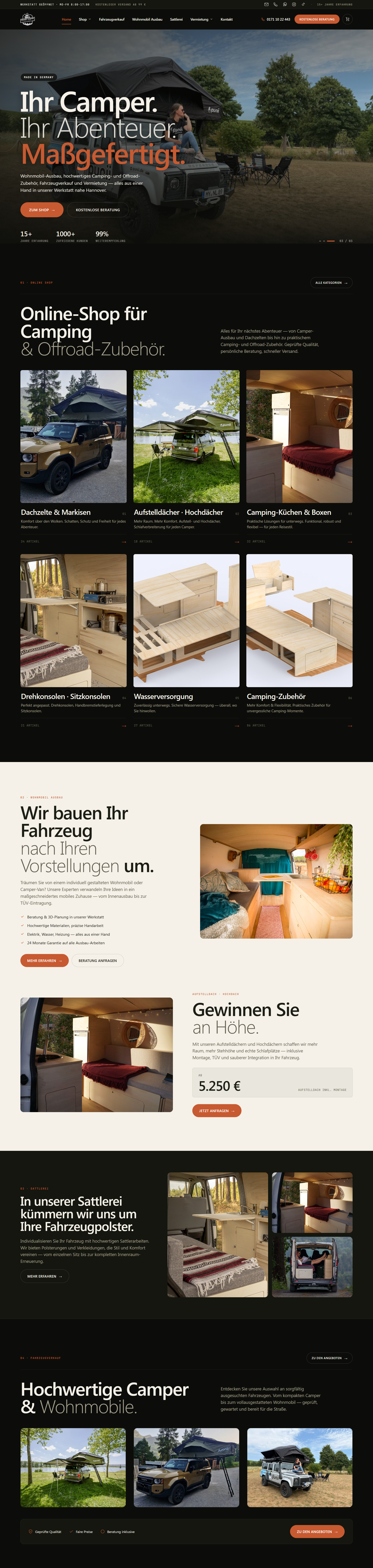
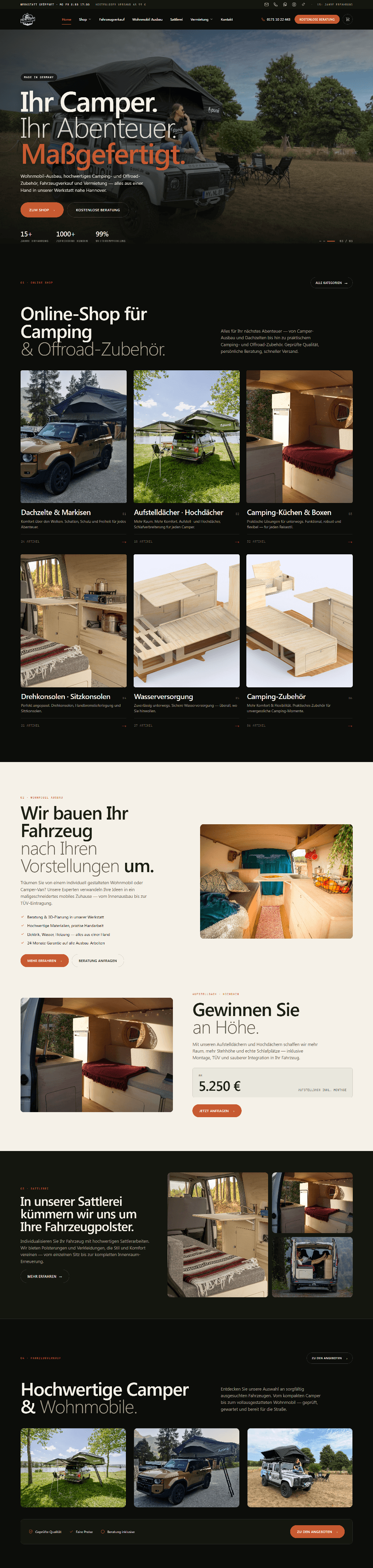
For Freizeit Camper, WordPress and WooCommerce formed the technical basis of an ecommerce project involving catalogue structure, customer journeys and measurement through Google Analytics 4 and Google Search Console.
The work demonstrates a different type of operational dependency. An ecommerce CMS has to make sense to customers, administrators and the people responsible for measuring commercial performance. Changes to catalogue structure or customer journeys can affect all three.
We do not present this as an enterprise WordPress implementation where enterprise architecture was not part of the project. It is relevant delivery experience in building WordPress around real commercial operations.
Architecture Scenario: A WordPress Platform Outgrowing Its Original Operating Model
Consider a business that started with one marketing team and one WordPress website. Over time it adds regional editors, several languages, a CRM connection and a much larger content estate.
The website may still work technically, yet everyday changes become harder. Permissions no longer reflect responsibilities. Nobody is entirely sure which system owns certain data. Releases become risky because dependencies are poorly documented.
A complete rebuild is not automatically the answer. The better intervention may be to restructure permissions, improve the content model, document integrations and introduce controlled staging and deployment practices.
This is an architecture scenario, not a claimed Prime Lion Digital client case study. It illustrates an important point: enterprise requirements often emerge gradually as an organisation outgrows the operating assumptions behind its original website.
Why Work with Prime Lion Digital on an Enterprise WordPress Project?
Enterprise WordPress projects rarely stay within one technical discipline. Content architecture affects editors and SEO. API decisions affect business systems. Frontend decisions influence accessibility and performance. Migration decisions can affect years of established search visibility.
Prime Lion Digital works across WordPress development, API integration, technical SEO, analytics, performance and connected business systems. That wider perspective matters when decisions in one part of the platform create consequences somewhere else.
Our broader WordPress development services cover the surrounding development capabilities, while specialist requirements such as headless architecture, migration and technical optimisation can be incorporated where the project genuinely needs them.
We also think there is value in identifying what a project does not need. Removing unnecessary complexity can be as important as adding new capability.
Frequently Asked Questions
What is enterprise WordPress development?
Enterprise WordPress development is the planning and engineering of WordPress platforms for organisations with complex requirements around content, users, integrations, governance, security, performance or ongoing development. It describes the demands placed on the platform rather than simply the size of the organisation using it.
What makes WordPress enterprise-level?
Enterprise-level requirements can include large content estates, multiple editorial teams, granular permissions, significant traffic, integrations, multiple websites or languages and controlled development processes. Not every organisation needs all of these.
Is WordPress suitable for enterprise organisations?
Yes, where the architecture matches the requirements. Suitability should be assessed against content, integrations, governance, security, performance, internal capabilities and long-term ownership rather than company size alone.
Can WordPress handle high-traffic websites?
Yes, but traffic capacity depends on the wider implementation. Hosting, caching, database behaviour, application code, plugins, media delivery and external services can all influence performance under load.
Is WordPress secure enough for enterprise use?
WordPress can form part of a secure enterprise environment, but security depends on how it is engineered and operated. Hosting, authentication, permissions, updates, third-party dependencies, monitoring, backups and development processes all matter.
What is WordPress Multisite and when should an organisation use it?
WordPress Multisite allows several websites to operate within a shared network. It can be useful where sites benefit from common technical governance while retaining separate content or domains. Separate installations may be more appropriate when brands or regions require substantial technical independence.
Can WordPress integrate with CRM, ERP and other business systems?
Yes. WordPress can exchange information with CRM, ERP, authentication, marketing and other platforms through APIs and related integration methods. Data ownership, authentication, synchronisation and failure handling should be defined as part of the architecture.
Can enterprise WordPress support multiple languages and regions?
Yes. The right structure depends on how much functionality and content the markets share. Translation workflows, URLs, local SEO, permissions and regional ownership should all be considered before choosing the technical model.
Should an enterprise WordPress website be headless?
Not automatically. Headless WordPress is useful when separating the CMS and frontend solves a specific requirement. Conventional WordPress can be easier to develop and operate when that separation provides little practical advantage.
How do you migrate a large website to WordPress?
A large migration normally starts with an audit of content, URLs, media, metadata, taxonomies, integrations and other dependencies. Migration rules can then define what is moved, transformed, redirected or retired before deployment.
How much does enterprise WordPress development cost?
Cost depends on architecture, custom functionality, integrations, migration complexity, content structures, permissions, languages, infrastructure and testing. Requirements discovery is usually more reliable than estimating an enterprise project from page count alone.
How long does an enterprise WordPress project take?
Timelines depend on both development and organisational dependencies. Requirements gathering, stakeholder approvals, content migration, integrations, third-party systems and testing can all affect delivery.
Discuss Your Enterprise WordPress Requirements
If you are replacing an existing CMS, planning a new WordPress platform or dealing with a website that has become increasingly difficult to manage, the useful starting point is understanding where the complexity actually sits.
Tell us about the current platform, content estate, teams, integrations and technical requirements. We can assess whether enterprise WordPress architecture is justified and how much architecture the project genuinely needs.
Discuss your enterprise WordPress project with Prime Lion Digital.