
Leave your details and our team will get back to you shortly to discuss your website, SEO or digital growth project.
Presentation Design Services UK for Businesses That Need Clearer, More Persuasive Communication
Presentation Design Built Around Audience Attention, Business Psychology and Real Decision-Making Environments
Most presentations do not fail because the slides look unprofessional.
They fail because the audience mentally disconnects before the core message fully lands.
This happens far more often than businesses realise.
We regularly see companies spending weeks preparing investor decks, sales presentations and internal reports filled with information, charts and detailed explanations, only to discover during meetings that audiences feel overloaded, confused or emotionally disengaged halfway through the presentation.
In many situations, the problem is not effort.
The real issue is communication structure.
Executives often try to explain too much too early. Teams become emotionally attached to details that audiences do not actually need yet. Departments continuously add “important” slides over time until presentations become fragmented and exhausting to follow.
Eventually the deck looks visually polished but strategically difficult to absorb.
At Prime Lion Digital, we provide presentation design services for UK businesses that need more than attractive slides. We help organisations simplify communication, improve audience understanding and create presentations designed around how real people process information under pressure.
Our work combines presentation strategy, behavioural psychology, information hierarchy, visual communication and business storytelling into presentation systems designed to support real commercial outcomes.
Why Many Business Presentations Underperform
 One of the biggest misconceptions in presentation design is the belief that presentations are mainly visual problems.
In reality, most presentations fail long before design becomes the issue.
The problems usually begin when businesses start building slides before deciding what the audience actually needs to understand.
We regularly audit presentations where:
- multiple stakeholders added conflicting messaging over time
- slides attempted to explain too many ideas simultaneously
- technical detail overwhelmed commercial clarity
- charts became unreadable during live meetings
- teams feared simplifying information because they associated complexity with credibility
- internal politics prevented unnecessary slides from being removed
This creates cognitive overload surprisingly quickly.
Most audiences are not analysing presentations with full concentration from beginning to end. They scan headlines, process dominant visuals first and mentally filter information continuously throughout the meeting.
Once attention begins collapsing, even strong ideas become harder to communicate effectively.
A professional presentation design company should understand these behavioural realities rather than focusing only on aesthetics.
Presentation Design Is Really About Communication Psychology
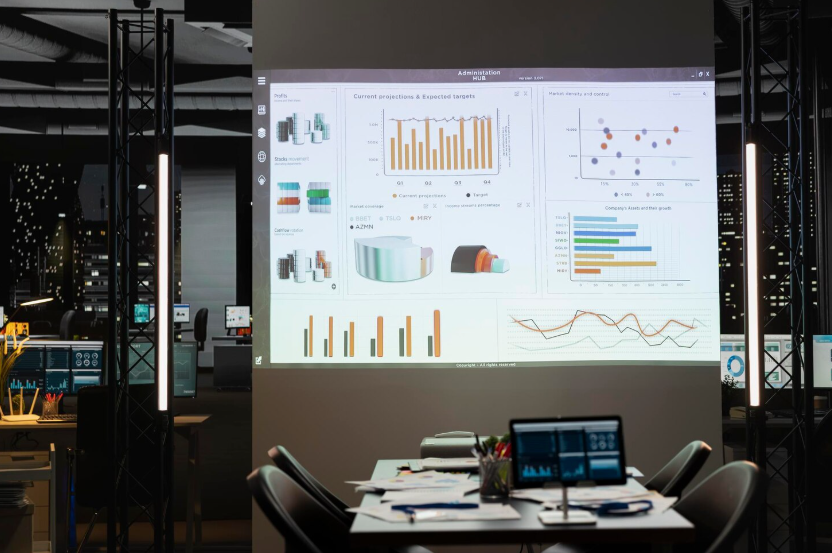
Many businesses assume audiences follow presentations much more closely than they actually do.
In reality, attention fluctuates constantly during meetings.
People process presentations emotionally before rationally. They notice visual consistency, pacing and confidence long before consciously evaluating every detail on the slide itself.
This changes how presentations should be designed.
For example, we regularly see businesses trying to “prove expertise” by overloading slides with statistics, explanations and dense paragraphs. Internally, this feels safer because teams worry simplifying the content may reduce credibility.
Usually the opposite happens.
Overloaded presentations often create uncertainty because audiences struggle to identify the key message quickly enough.
One of the most important parts of presentation strategy is deciding what to remove.
Strong presentations rarely feel overloaded. They feel controlled, intentional and easier to follow than expected.
Why Audience Attention Matters More Than Most Businesses Think
Presentations exist inside high-pressure environments.
Investor meetings, sales conversations, leadership reporting and corporate presentations all compete against limited audience attention.
People are already mentally overloaded before many meetings even begin.
This means presentation design must work with human cognitive behaviour rather than against it.
Most people:
- scan slides before reading details
- focus on dominant visual elements first
- lose concentration when information feels fragmented
- remember structure more easily than isolated details
- struggle to absorb multiple competing messages simultaneously
We regularly redesign presentations where audiences were technically receiving “all the information”, but still leaving meetings confused about the actual commercial point.
That usually happens because the presentation was designed around internal business logic rather than audience cognition.
Presentation Storytelling Is About Progression, Not Drama
Businesses often misunderstand what storytelling actually means in presentation environments.
Strong presentation storytelling is not about forcing emotional language or dramatic startup clichés into every slide.
It is about helping audiences move logically through information without cognitive friction.
The strongest presentations usually make the audience feel:
- they understand the problem clearly
- the commercial logic makes sense
- the information is organised intentionally
- the presenter understands the audience perspective
- the proposed solution feels credible and realistic
That applies across:
- sales presentations
- investor pitch decks
- corporate reporting
- training presentations
- leadership presentations
- conference and webinar presentations
Audiences trust presentations more when the communication feels transparent and structured rather than overly engineered.
Sales Presentation Design Requires Decision-Making Clarity

Sales presentations often fail because businesses try to explain everything instead of helping buyers make decisions confidently.
We frequently see sales decks overloaded with:
- feature-heavy explanations
- generic corporate claims
- too many service descriptions
- weak differentiation between competitors
- multiple inconsistent slide styles created by different departments
- dense technical detail that distracts from the core value proposition
As a result, prospects leave meetings remembering very little clearly.
One of the biggest hidden problems is that businesses often confuse information quantity with persuasive strength.
In reality, buyers usually disengage when presentations become unnecessarily complicated.
Our presentation services focus heavily on simplifying communication flow, improving message sequencing and helping businesses create sales conversations that feel clearer, more controlled and easier to trust.
Investor Pitch Decks Require Different Communication Thinking
Investor presentations operate under completely different behavioural conditions compared to standard sales decks.
Founders usually understand their business so deeply that they underestimate how much context investors are missing initially.
This creates predictable presentation problems.
Pitch decks become overloaded with technical detail too early. Slides explain operational systems before communicating market opportunity clearly. Founders attempt to demonstrate seriousness through complexity rather than strategic clarity.
We regularly help businesses simplify:
- market positioning explanations
- fundraising narratives
- traction communication
- financial storytelling
- investor sequencing logic
- slide hierarchy and pacing
Strong investor presentations usually feel commercially understandable before they feel technically detailed.
That distinction matters significantly during fundraising conversations.
Data Visualisation Should Reduce Cognitive Effort
Many presentations weaken communication because charts are designed for information storage rather than human understanding.
We regularly redesign presentations containing:
- tiny unreadable labels
- multiple competing metrics
- dashboard-style visual overload
- charts with unclear strategic relevance
- slides forcing audiences to interpret complexity independently
Once audiences need to “work out” what a chart means, presentation momentum slows immediately.
One of the biggest mistakes businesses make is assuming more data automatically creates more credibility.
Usually the opposite happens.
Strong data visualisation highlights the insight first and supports it visually rather than overwhelming audiences with raw information.
Presentation Systems for Growing Businesses
As businesses scale, presentation inconsistency often becomes a hidden operational issue.
Sales teams create one type of deck. Leadership teams create another. Marketing departments build presentations using different visual systems entirely.
Eventually the organisation begins looking fragmented both internally and externally.
We help businesses develop scalable presentation systems that maintain consistency without becoming restrictive.
Depending on project requirements, this may include:
- editable branded templates
- presentation hierarchy systems
- master slide frameworks
- reusable layouts
- data visualisation standards
- department-ready presentation structures
The objective is not rigid uniformity. It is creating presentations that feel recognisable, professional and easier to manage operationally over time.
Presentations Need to Work in Real Environments
Modern presentations rarely exist only inside ideal boardroom conditions.
They are viewed during Zoom meetings, shared as PDFs after calls, opened on laptops between meetings and sometimes reviewed quickly on mobile devices.
This changes how professional presentation design should work.
We regularly encounter presentations that looked visually strong during design stages but became difficult to consume during live meetings because:
- text scaled poorly on projectors
- layouts became unreadable during remote presentations
- slides depended too heavily on verbal explanation
- visual density created audience fatigue too quickly
A strong presentation company should understand how presentations behave operationally in real environments, not just how slides appear inside design software.
Motion and Animation Should Support Understanding
Animation is one of the most overused elements in modern presentations.
Businesses often assume movement automatically improves engagement because animated slides feel more “premium”.
In practice, excessive animation usually weakens communication.
We regularly see presentations where transitions and motion effects become more noticeable than the actual message itself.
Subtle animation can improve pacing and help audiences process information progressively. But once movement competes with understanding, communication quality drops quickly.
The strongest presentation design usually feels controlled rather than visually aggressive.
Our Presentation Design Services
Prime Lion Digital supports businesses across multiple presentation environments and communication scenarios.
Our services include:
- sales presentation design
- investor pitch deck design
- corporate presentation design
- PowerPoint and Google Slides design
- presentation redesign services
- editable presentation templates
- data visualisation design
- training presentation design
- conference and webinar presentations
Every project is approached around communication goals, audience behaviour and real business context rather than generic slide aesthetics.
Our Presentation Design Process
Our process starts with understanding the communication environment behind the presentation itself.
Before visual work begins, we analyse:
- presentation objectives
- audience expectations
- decision-making context
- communication friction points
- information hierarchy
- delivery conditions
From there, we restructure content, simplify messaging and build presentation systems aligned with both audience cognition and business objectives.
Depending on the project, we may also:
- rewrite slide messaging
- simplify technical explanations
- redesign complex charts
- improve narrative flow
- create reusable frameworks
- develop presentation guidance for teams
The result is a presentation designed around real communication performance rather than decorative slide design alone.
Case Studies
Case Study 1 — Startup Investor Pitch Deck
Industry: Technology Startup
Scope: Investor pitch deck redesign
Timeline: 1 Week
The founders had strong technical knowledge but struggled to communicate the market opportunity clearly to investors.
The original deck contained overloaded product explanations, inconsistent slide hierarchy and too much internal terminology early in the presentation flow.
We restructured the narrative around investor decision-making psychology, simplified messaging and rebuilt the visual hierarchy around clarity and pacing.
The redesigned deck contributed to:
- 47% increase in investor engagement during presentations
- stronger investor retention across meetings
- clearer communication of market opportunity
- more productive fundraising conversations
- improved founder presentation confidence
Case Study 2 — Corporate Sales Presentation
Industry: Professional Services
Scope: Sales presentation redesign
Timeline: 2 Weeks
The company’s sales deck had evolved over several years and gradually became overloaded with duplicated messaging, inconsistent layouts and dense service explanations.
Different teams had added slides independently, making the presentation increasingly difficult for prospects to follow during meetings.
We simplified the structure, improved buyer-focused messaging and redesigned the presentation around commercial clarity rather than internal business terminology.
The project supported:
- 39% increase in presentation conversion rate
- stronger prospect engagement during meetings
- improved consistency across the sales team
- faster understanding of value propositions
- greater confidence during presentations
Case Study 3 — Training Presentation Redesign
Industry: Corporate Training
Scope: Training deck redesign and template system
Timeline: 1 Week
The organisation’s training presentations were visually inconsistent, text-heavy and difficult for participants to follow during longer sessions.
Audience attention dropped quickly because slides overloaded learners with too much information simultaneously.
We redesigned the training system around cognitive pacing, readability and simplified visual hierarchy.
The updated presentation system delivered:
- 53% increase in participant engagement
- improved information retention
- stronger consistency across training materials
- better audience comprehension during sessions
- more confident delivery from internal trainers
Presentation Design Pricing
Pricing for presentation design services depends on presentation complexity, slide count, communication restructuring requirements and visual design depth.
Smaller presentation redesign projects may start from around £180, while larger investor decks, corporate presentations and advanced presentation systems typically require higher strategic and creative investment.
Factors affecting pricing include:
- number of slides
- content restructuring requirements
- custom graphics and data visualisation
- presentation complexity
- delivery timeline
- template system requirements
We focus on creating presentation systems that improve communication quality rather than simply decorating existing slides.
FAQ
What are presentation design services?
Presentation design services involve structuring information, improving communication flow and creating visually organised slides that help audiences understand ideas more clearly. Strong presentation work usually combines messaging strategy, behavioural understanding and visual communication rather than aesthetics alone.
Can you redesign existing presentations?
Yes. Many clients approach us with presentations that already contain useful information but suffer from overloaded slides, inconsistent structure or weak communication flow. We regularly restructure and redesign existing decks rather than starting from scratch.
What makes a strong business presentation?
A strong presentation usually feels easier to follow than expected. It guides audiences progressively through information without cognitive overload, visual confusion or unnecessary complexity.
Do you design investor pitch decks?
Yes. We design investor presentations focused on clarity, sequencing, market communication and fundraising psychology rather than simply visual aesthetics.
Can presentation design improve sales performance?
Yes. Presentation design often affects how quickly buyers understand value propositions, how confidently teams communicate and how effectively complex information is absorbed during sales conversations.
Will we receive editable presentation files?
Yes. Final files are delivered in editable formats such as PowerPoint or Google Slides depending on your operational requirements.
How long does presentation design usually take?
Smaller projects may take several days, while more complex investor decks, sales presentations and corporate systems often require between one and three weeks depending on content readiness and project complexity.
Ready to Improve Your Business Presentations?
If your presentations feel overloaded, inconsistent or difficult for audiences to follow, Prime Lion Digital can help.
Contact our team today to discuss your presentation design requirements, investor pitch decks, sales presentations or scalable internal presentation systems.