
Leave your details and our team will get back to you shortly to discuss your website, SEO or digital growth project.
Small Business Website Design for UK Companies That Need a Website Built Around Real Business Growth
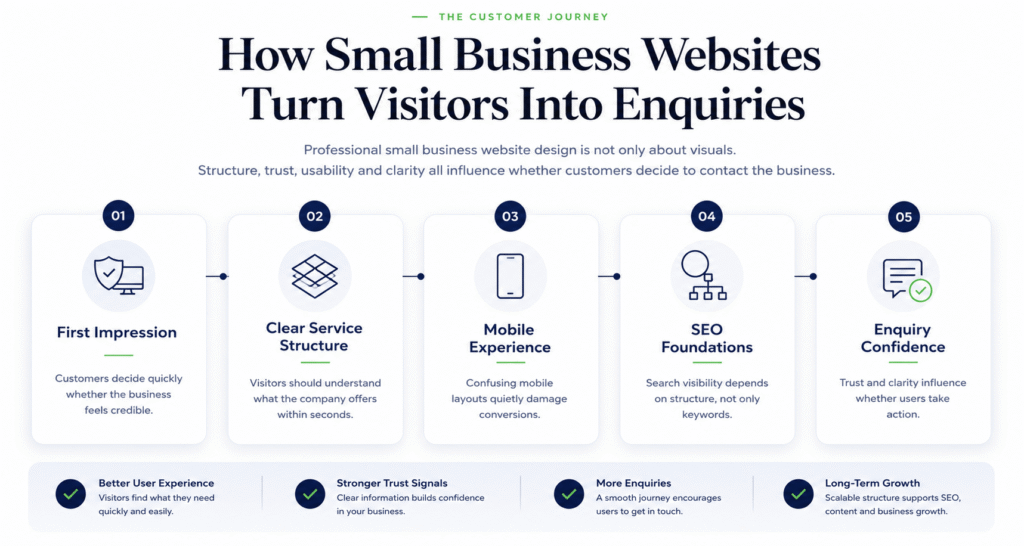
Many small business websites look modern on the surface but still struggle to generate enquiries, support SEO properly or explain the business clearly enough to build trust.
In most cases, the issue is not simply visual design.
The structure is confusing. Important services are buried too deeply. Mobile usability creates friction. Messaging sounds generic. Pages compete against each other instead of supporting clear search intent. The website may technically “exist”, but commercially it contributes very little.
At Prime Lion Digital, we design and develop small business websites for UK companies that need more than an attractive layout. Our approach combines UX thinking, conversion structure, SEO architecture and strategic web design to create websites that feel credible, perform properly and remain scalable as the business grows.
Some clients approach us while launching a new business. Others already have an established company but recognise that their current website no longer reflects the quality of the service they actually provide. In both situations, the underlying goal is usually the same: create a website that communicates clearly, builds confidence quickly and helps turn traffic into genuine enquiries.
Speak with Prime Lion Digital about your small business website project.
What Goes Into a High-Performing Small Business Website
Strong small business website design is rarely about visuals alone.
The strongest websites are usually built around structure, usability and decision-making logic long before colours, animations or styling become the priority.
Every project is shaped around how customers search, how services should be structured, where conversion friction currently exists and how users naturally move through information.
Depending on the project scope, our work may include UX-focused website design, responsive development, WordPress builds, service-page architecture, local SEO structure, landing page design, mobile optimisation, conversion-focused layouts, lead enquiry flows, analytics setup and scalable content structures.
We also provide additional design services where required, including UI/UX design for digital platforms, landing page redesign, responsive mobile design, email design systems, campaign visuals and interface design for browser-based applications.
The objective is not to overload the website with unnecessary features. It is to create a website that helps the business communicate more clearly, scale more effectively and convert traffic more consistently.
Who This Service Is Designed For
 This service is designed for businesses that need a professional online presence without ending up with either a generic template website or an unnecessarily bloated enterprise build.
We regularly work with local service companies, consultants, accountants, healthcare providers, trades, startups, ecommerce brands and established businesses whose older websites no longer support enquiries or SEO visibility properly.
Some companies come to us after investing in websites that looked visually acceptable at launch but quickly became restrictive. Others are frustrated by websites generating traffic without generating enough meaningful enquiries.
In many situations, the deeper issue is not traffic volume itself. Visitors arrive on the website but struggle to understand what the company actually specialises in, which service applies to their situation or why the business should be trusted over competitors.
That confusion usually costs more enquiries than businesses realise.
The Problems That Quietly Hold Small Business Websites Back
Many small business websites develop problems gradually rather than all at once.
A business launches quickly using a generic theme or low-cost builder. New services are added over time. Pages expand inconsistently. Navigation becomes cluttered. SEO structure weakens. Mobile usability deteriorates. Eventually the website stops feeling like a coherent system and starts feeling like disconnected pages held together by menus.
We regularly review websites where:
- multiple services are forced onto one page with no clear hierarchy;
- important enquiries require too many clicks on mobile devices;
- homepage messaging becomes so broad it could apply to almost any competitor;
- service pages remain too thin to compete properly in search;
- older page builders create editing and performance limitations;
- businesses redesign visuals without fixing structural issues underneath.
One of the most overlooked problems is internal familiarity. Businesses often understand their own services so well internally that they underestimate how difficult the website can feel for somebody discovering the company for the first time.
Users rarely study websites carefully. They scan quickly, compare several providers simultaneously and make fast judgements based on clarity, trust and ease of navigation.
If understanding the offer takes too much effort, they usually continue searching.
Website Design Services Built Around Different Business Needs
UI/UX Website Design
We create user-focused interface and experience design for websites, digital products and customer-facing platforms. This includes layout systems, interaction planning, user journeys and interface structures designed around usability rather than visual trends alone.
Website Redesign Projects
Not every business requires a complete rebuild. In some situations, targeted redesign work focused on navigation, conversion flow, service-page clarity or mobile usability can resolve major performance issues without rebuilding the website entirely.
Responsive and Mobile Website Design
Responsive design is approached as a usability requirement rather than simply a technical adjustment. Mobile layouts should make enquiries easier, not harder.
Landing Page Design
Landing pages often fail because they try to explain too much at once. We design landing pages around focused search intent, conversion clarity and clearer user decision-making.
Email and Digital Communication Design
For businesses running ongoing campaigns, we create responsive email layouts and communication systems that maintain consistency across devices and major platforms.
Application and Platform UI/UX
We also provide interface design for browser-based platforms, customer portals and mobile applications across iOS, Android and desktop environments.
What Small Businesses Usually Invest in Website Design
Website design projects vary significantly depending on structure complexity, SEO requirements, functionality, integrations and long-term scalability expectations.
A smaller brochure-style website with limited functionality naturally requires less planning and development than a larger service-focused website with conversion architecture, SEO structure, landing pages and future expansion planning.
One of the most common mistakes businesses make is comparing website pricing purely on visual appearance. Two websites may look superficially similar while being completely different underneath in terms of structure, scalability, technical foundations and long-term maintainability.
In practice, businesses often realise the limitations of cheaper builds only after trying to expand services, improve SEO or integrate additional functionality later.
How Long a Website Project Usually Takes
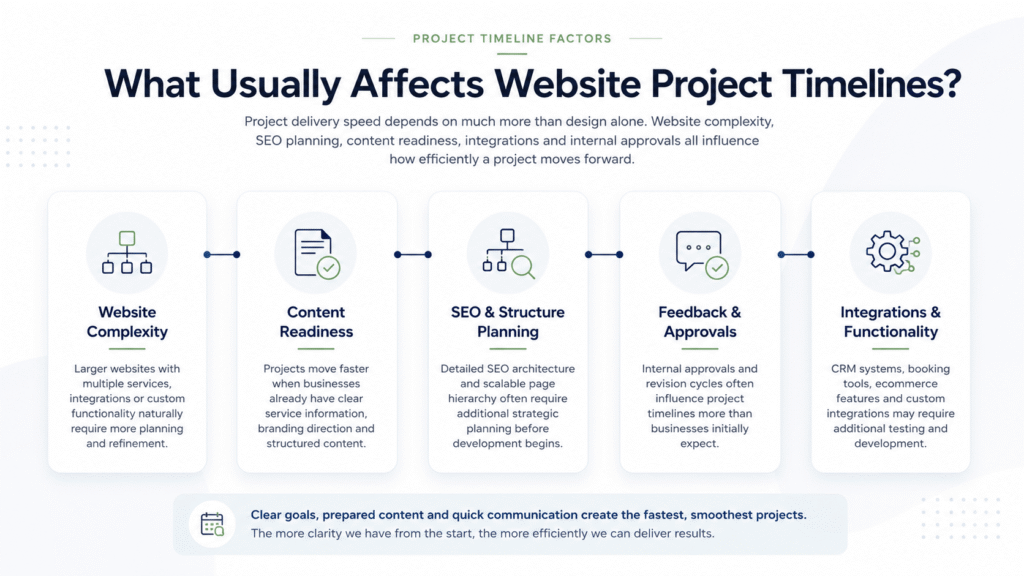
Project timelines depend on the complexity of the website, the number of pages, technical requirements, content readiness and approval speed.
Smaller projects may move relatively quickly. Larger projects involving migration work, detailed SEO planning, integrations or complex service structures naturally require more refinement.
One of the biggest timeline variables is usually clarity. Businesses that already understand their service structure, positioning and priorities tend to move through the process more efficiently than projects still trying to define core messaging during development.
How the Website Design Process Actually Works
Strong website projects rarely begin with visual design.
They begin with understanding how the business functions commercially.
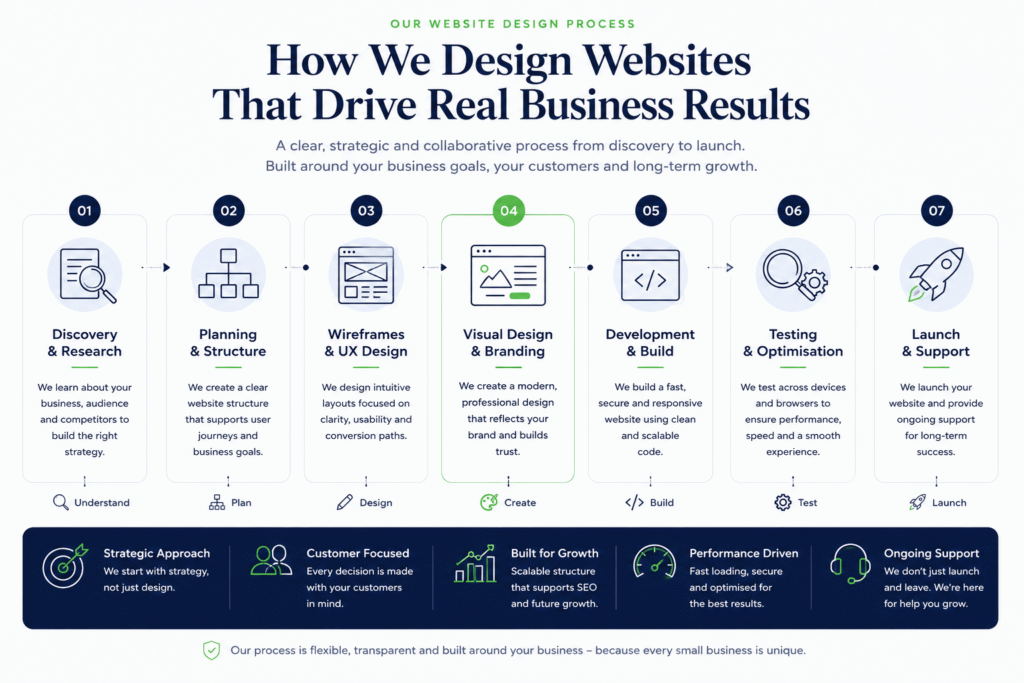
Before layouts are created, we review service hierarchy, customer behaviour, search intent, competitor positioning and the actions users actually need to take once they arrive on the website.
That stage often reveals structural problems businesses were not fully aware of. In some cases, commercially valuable services are buried too deeply within navigation. In others, location intent is mixed into generic pages that provide weak contextual clarity for search engines.
Once the structural direction becomes clear, we move into UX planning, wireframes, page hierarchy and visual direction. Design decisions focus heavily on readability, spacing, interaction flow and usability rather than decorative trends alone.
Development is approached with long-term scalability in mind. Depending on the project, this may include WordPress development, editable page systems, structured templates, integrations and performance optimisation.
How Design, SEO and UX Work Together Throughout the Project
Small business websites rarely underperform for one isolated reason.
Weak enquiry generation is often caused by several smaller issues interacting together — unclear messaging, poor mobile usability, weak service hierarchy, confusing conversion flow or structural SEO limitations.
That is why design, usability and SEO cannot realistically be treated as completely separate stages.
Rather than building visuals first and attempting to “add SEO later”, we approach the website as one connected system where structure, content hierarchy, usability and search visibility influence one another throughout the project lifecycle.
Platforms, Integrations and Technical Foundations
We work with scalable technologies and content management systems selected around long-term usability rather than short-term trends.
Depending on the project, this may include WordPress development, ecommerce systems, CRM integrations, analytics platforms, booking systems, lead tracking tools, reporting systems and structured content workflows.
We regularly see businesses trapped inside rigid templates or outdated systems that make even small updates unnecessarily difficult. Technical decisions should support long-term growth rather than create operational friction later.
Small Businesses We Commonly Work With
Our work spans a wide range of industries, including professional services, trades, construction, finance, healthcare, ecommerce, property, consulting, local service businesses and growing startups.
Different industries create different website requirements. A local service business focused heavily on lead generation requires a very different structure from a consultancy building authority-based visibility or an ecommerce company managing product-focused customer journeys.
Many generic agency templates fail precisely because they treat completely different business models as if they require identical website structures.
What Clients Often Underestimate
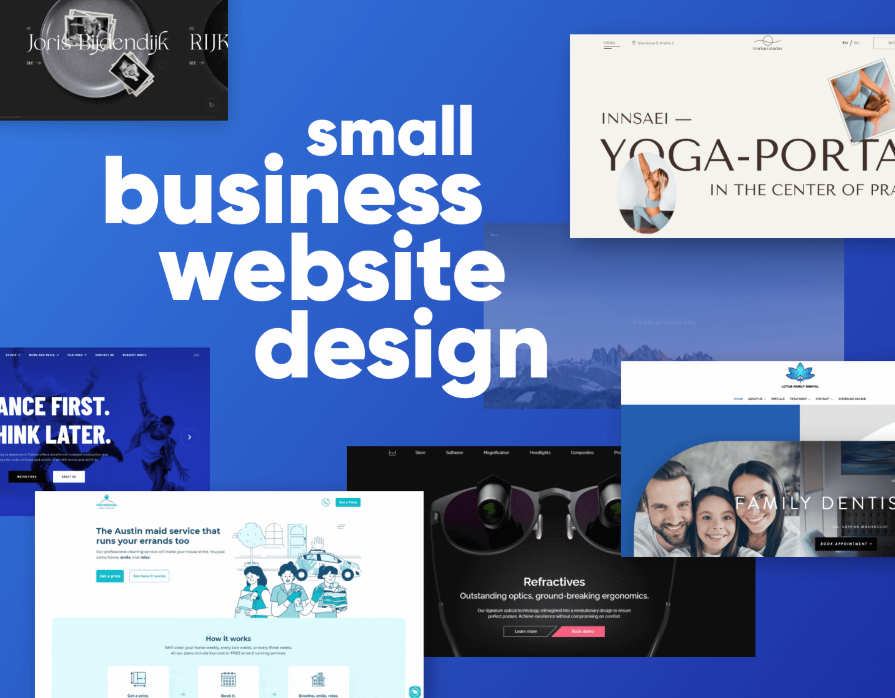 Many businesses underestimate how heavily website structure influences both conversion performance and SEO visibility.
Visual quality matters, but clarity usually matters more.
Users need to understand the service quickly, identify the correct page naturally and move towards contact without friction. When the structure becomes overloaded or inconsistent, even visually attractive websites start underperforming commercially.
Businesses also frequently underestimate scalability. A website that feels “good enough” during launch can become restrictive surprisingly quickly once new services, SEO campaigns or additional locations are introduced.
Mobile usability is another commonly overlooked issue. Small friction points repeated across hundreds or thousands of visitors often create larger commercial losses than businesses initially expect.
Why Similar Website Projects Often Fail
Many website projects fail because the process focuses heavily on aesthetics while underestimating communication, usability and long-term structure.
Some agencies rely too heavily on templates or trend-driven visuals that age quickly and create scaling problems later. Others build visually attractive websites that still provide weak SEO hierarchy and poor conversion clarity underneath.
We also regularly see redesign projects where rankings decline after launch because redirects, URL structure, internal linking and migration planning were treated as technical afterthoughts rather than strategic tasks.
In other cases, businesses continue investing in advertising campaigns while sending traffic into websites that still contain the same conversion friction that existed before the redesign.
What Businesses Usually Realise Too Late About Website Design
One of the biggest misconceptions around small business website design is that more design automatically creates better performance.
In practice, websites often improve commercially when complexity is reduced rather than increased.
Users rarely want to “explore” a small business website deeply. Most want to understand the business quickly, confirm credibility and identify the next step with minimal effort.
That changes how websites should be structured. Clear service separation, focused messaging, visible contact pathways and readable mobile layouts usually outperform visually overloaded designs attempting to impress through complexity alone.
Another important consideration is adaptability. Businesses evolve constantly. Website structures should support that growth rather than requiring major rebuilds every time services expand or SEO priorities change.
What to Compare Before Choosing a Website Agency
Businesses comparing website providers often focus heavily on portfolio visuals while overlooking deeper structural differences.
Two websites may appear visually similar while being completely different underneath in terms of SEO foundations, scalability, usability and long-term maintainability.
Lower-cost builds frequently rely on rigid templates, inconsistent page systems or overloaded page builders that create operational limitations later. Those limitations often become visible only after the business attempts to scale SEO activity, expand services or improve conversion performance.
Before choosing a website agency, businesses should look beyond screenshots and ask practical questions:
- Can the website structure scale properly?
- Will service pages support future SEO growth?
- How easy will updates become internally?
- How is mobile conversion behaviour handled?
- How are redesign and migration risks managed?
- Will the website remain commercially useful long term?
What Strong Website Design Changes Commercially
When website structure, UX, messaging and SEO architecture work together properly, the commercial impact usually extends far beyond aesthetics.
Businesses often experience stronger enquiry quality, improved conversion consistency, clearer search visibility and reduced friction across the customer journey.
In many cases, the biggest improvements come from making the website easier to understand rather than making it more visually complicated.
Clearer service separation, stronger mobile usability, improved content hierarchy and more visible conversion pathways often outperform aggressive design trends prioritising appearance over usability.
Small Business Website Design Case Studies
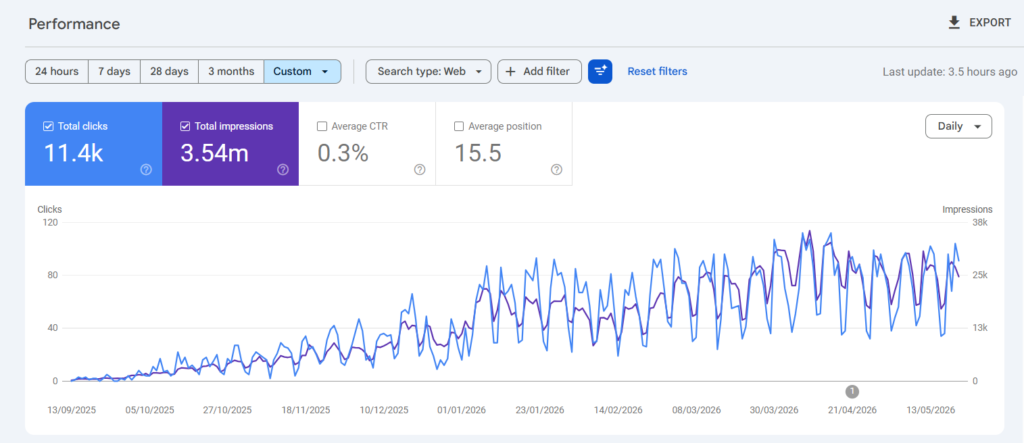 Local Service Business Website Redesign
A UK home improvement company approached Prime Lion Digital after struggling with an outdated template website generating very few enquiries despite strong offline referrals.
After reviewing user behaviour, we identified several structural problems. Multiple services were compressed into generic pages, mobile enquiry actions were difficult to access and the homepage attempted to explain too many things simultaneously.
We rebuilt the website around clearer service separation, improved mobile usability, stronger conversion pathways and local SEO structure.
Within six months:
• Organic traffic increased by 214%
• Monthly enquiries increased from 18 to 67
• Mobile bounce rate decreased by 36%
• Average session duration increased by 41%
Professional Services Website Restructure
A professional services firm approached us after investing heavily in paid advertising while still struggling with weak lead quality.
The website looked visually modern, but users often left without understanding the company’s actual specialisation or service process clearly enough to contact confidently.
We restructured the website around clearer service positioning, stronger internal navigation and more commercially focused messaging.
Following launch:
• Website conversion rate increased by 72%
• Qualified lead enquiries increased by 58%
• Average page engagement improved by 46%
• Cost per lead decreased by 31%
SEO-Focused Website Expansion Project
A growing UK business approached Prime Lion Digital while preparing to expand services and target additional locations.
The existing website structure had become difficult to scale. Local SEO pages lacked hierarchy, internal linking was inconsistent and adding new services was creating overlap across the site.
We rebuilt the website architecture around scalable service structures, SEO-focused hierarchy and cleaner long-term content organisation.
During the first year:
• Organic search visibility increased by 287%
• Ranking service pages expanded from 6 to 19
• Monthly website enquiries increased by 163%
• Website performance scores improved by 58%
What Happens After Launch
Website launch is rarely the end of the process.
Once the website is live, businesses often begin refining SEO activity, expanding service pages, improving conversion performance or introducing additional integrations and marketing campaigns.
That is why scalability and maintainability are considered throughout development rather than treated as secondary concerns later.
Websites should remain usable internally after launch rather than becoming difficult to update every time the business evolves.
How Website Communication and Feedback Are Managed
Clear communication is an important part of successful website projects.
Businesses should understand what stage the project is currently in, which decisions still need to be made and how structural choices may affect long-term usability, SEO or scalability.
Throughout the project, we maintain structured communication around progress, feedback, revisions, technical considerations and implementation priorities.
The goal is to keep the process commercially focused rather than turning it into endless design revisions disconnected from business objectives.
Why Businesses Choose Prime Lion Digital
Prime Lion Digital combines web design, development, UX/UI, SEO and conversion-focused strategy within one integrated process.
We do not approach websites as isolated visual redesigns. Structure, usability, search visibility, content hierarchy and technical decisions all influence how customers experience the business online.
Businesses choose us because they want more than a website that simply “looks professional”. They want a website that communicates clearly, supports long-term SEO growth, scales properly and reduces the friction quietly limiting performance on many small business websites.
Our focus is not short-term visual impact alone. We build websites designed to remain commercially useful long after launch.
Frequently Asked Questions
How much does small business website design usually cost?
Pricing depends on the size of the website, functionality requirements, SEO structure, integrations and whether the project involves a redesign or a completely new build.
Can you redesign an existing website without damaging SEO performance?
Yes. Existing rankings, URL structure, redirects, internal linking and content hierarchy should all be reviewed carefully during redesign and migration projects.
How long does the process usually take?
Timelines vary depending on project scope, content preparation, approvals and technical complexity.
Will the website be scalable as the business grows?
Yes. We build websites with long-term flexibility in mind so additional services, SEO campaigns and location pages can be introduced without constant structural rebuilds.
Do you only work with WordPress websites?
No. While many projects use WordPress because of its flexibility and scalability, platform decisions depend on the operational needs of the business rather than a fixed template approach.
Ready to Improve Your Small Business Website?
If your current website feels visually acceptable but commercially underperforming, the issue may sit deeper in the structure, usability, messaging or SEO foundations underneath it.
Prime Lion Digital designs and develops small business websites that combine strategic structure, UX clarity, professional design and long-term scalability without relying on generic templates or short-term visual trends.
Contact Prime Lion Digital to discuss your small business website design project.