
Leave your details and our team will get back to you shortly to discuss your website, SEO or digital growth project.
Backend Development Services for Scalable Applications, APIs & Business Systems in UK
Prime Lion Digital provides backend development services for businesses that need reliable systems behind websites, applications and digital platforms. That can mean building a new API layer, replacing fragile legacy code, improving database performance, tightening security, or designing a backend architecture that can cope with growth without becoming expensive to maintain.
We work with companies that need more than code written to spec. They need sensible technical decisions, clean delivery, realistic timescales and backend systems that support the commercial side of the business as well as the technical one.
If you are planning a new platform, fixing an unstable one, or looking for a backend development company to support internal systems, customer-facing applications or integrations, we can help you scope it properly and deliver it with fewer surprises.
Speak to our team about your backend project
What our backend development services actually include
Backend work is often described too loosely. In practice, it covers the parts users do not usually see but depend on every day: business logic, application architecture, APIs, databases, authentication, integrations, admin systems, performance, resilience and deployment workflows.
Our custom backend development services typically include application structure planning, API design and development, database design, third-party integration work, refactoring, performance improvement, migration planning and backend modernisation. We also support secure backend development services where data handling, permissions, access control and auditability matter from the start rather than being added late.
For some clients, that means a dedicated backend software development service for a new product. For others, it means quietly fixing the operational issues that have been slowing the business down for months.
Who this service is for
This service suits businesses that rely on digital systems to operate properly, not just look good on the surface. That includes companies launching SaaS products, ecommerce businesses dealing with stock and order complexity, professional services firms with internal workflows, and growing organisations that have outgrown a basic CMS or a collection of disconnected tools.
It is also a good fit if you need to hire backend developers for a defined project but want the strategic oversight of a backend development agency rather than individual freelancers working in isolation.
Usually, the enquiry comes from one of three situations: a new platform needs building properly, an existing backend has become unstable or difficult to extend, or the business has reached the point where patchwork integrations and workarounds are causing real operational friction.
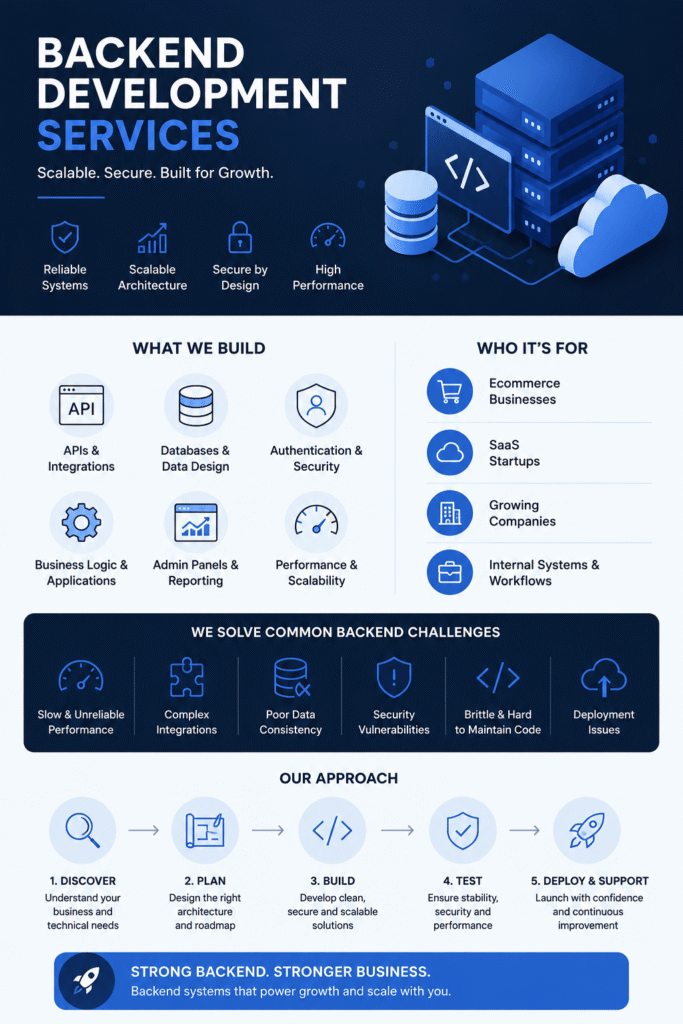
Common backend problems businesses bring to us
Most backend projects do not start with a clean brief. They start with symptoms. Slow admin areas. Unreliable APIs. Failed integrations. Reporting that cannot be trusted. Features that take far too long to release because the underlying codebase has become brittle.
We are often brought in when the business has one or more of these issues: database queries that do not scale, inconsistent data across systems, insecure authentication flows, overloaded monolithic applications, poor error handling, deployment instability, limited test coverage, and backend logic that has grown without a clear structure.
Sometimes the problem is not poor development effort. It is that the original system was built for a smaller business, fewer users or a much simpler set of requirements. Growth exposes design decisions that used to seem acceptable.
Types of backend solutions we deliver
Our backend web development services cover both greenfield builds and improvement work on existing systems. We design and build custom application backends, REST and GraphQL APIs, authentication and authorisation systems, admin panels, third-party integrations, reporting layers, workflow engines and data processing services.
We also deliver scalable backend development services where performance, queue handling, caching strategy, database load and infrastructure planning are part of the technical design from the outset. For larger organisations, our enterprise backend development services usually involve more governance, multi-environment deployment workflows, security reviews, documentation standards and integration with internal systems.
Where needed, we provide backend migration services to move from legacy PHP systems, older .NET applications, tightly coupled platforms or unsupported frameworks into something more maintainable. Not every migration needs a full rebuild. In many cases, a staged modernisation plan is the safer and more commercial option.
Technology options and platform experience
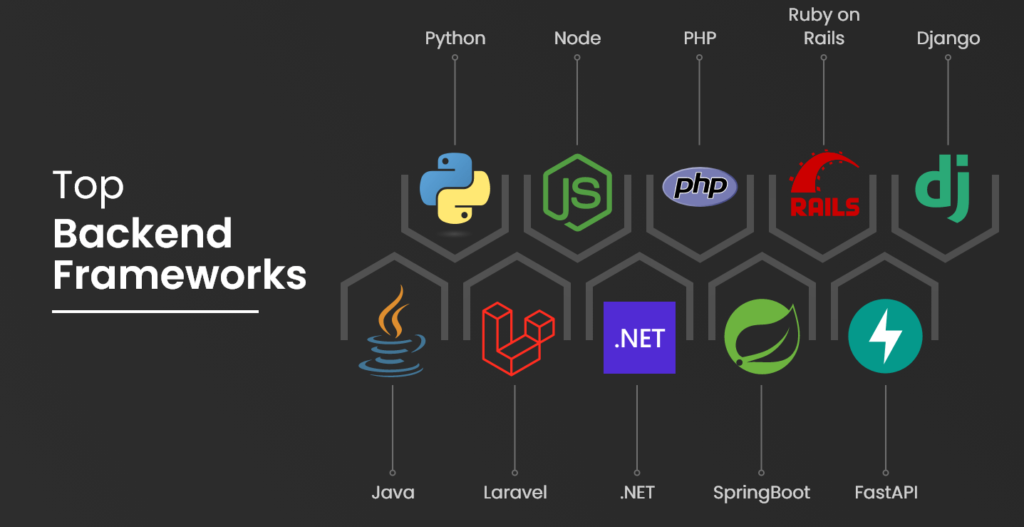
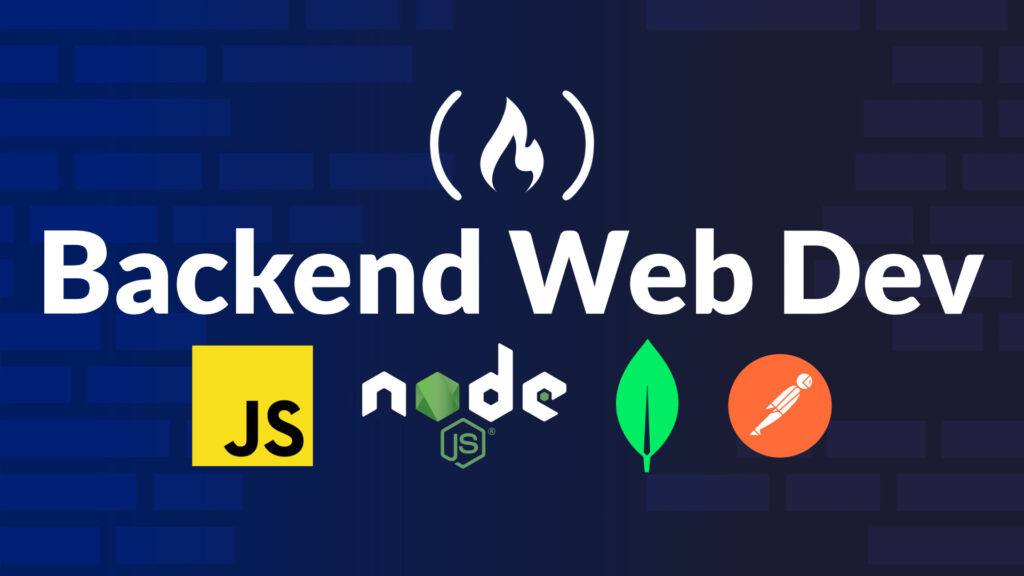 We are technology-led in the right way, which means choosing tools based on the problem rather than forcing every project into the same stack. Our work commonly includes Node.js backend development services for high-concurrency applications and API-led systems, Laravel backend development services for robust PHP-based applications, and broader PHP backend development services for custom platforms, portals and integrations.
We also support Python backend development services where data processing, automation or application logic suits the ecosystem, along with .NET backend development services for businesses running Microsoft-based environments or enterprise infrastructure.
Alongside language and framework decisions, we work with databases, caching layers, queues, cloud hosting, CI/CD pipelines, monitoring tools and external service integrations. The stack matters, but code quality, deployment discipline and maintainability matter more.
Integrations, APIs and data flow
A large share of backend work involves getting systems to communicate properly. CRMs, payment gateways, ERPs, booking systems, inventory tools, accounting platforms, internal dashboards and mobile apps all depend on clean, predictable data flow.
Our backend API development services cover new API design, versioning strategy, endpoint performance, authentication models, webhook handling and integration resilience. We also review existing integrations where errors, duplicate records or delayed syncs are affecting operations.
Businesses often underestimate how much cost sits inside bad integration logic. A backend can look functional while quietly creating admin overhead, customer support issues and unreliable reporting. Good backend integration services reduce manual work, improve data confidence and make future development easier.
Typical investment and pricing expectations
Backend projects vary too much for flat pricing to be credible. Scope, system maturity, compliance needs, legacy constraints, documentation quality and integration complexity all affect investment.
As a practical guide, smaller backend optimisation or API improvement projects may start from a few thousand pounds. A focused custom backend development service for a defined application or workflow typically sits higher once architecture, testing, deployment and integration work are included. Larger enterprise backend development services, migrations or multi-system modernisation programmes can run substantially beyond that depending on risk and complexity.
We prefer to scope pricing around business outcomes and delivery reality rather than offer low headline figures that unravel later. If a project is still being defined, we usually recommend a short discovery and technical planning phase first. It saves money more often than it adds cost.
Typical timelines and delivery expectations
 A short backend optimisation engagement may take a couple of weeks. A new API or custom service with clear requirements may take several weeks. A full backend platform build, migration or enterprise integration programme can run for several months.
What affects timing most is not just the amount of code. It is decision-making speed, legacy complexity, third-party dependencies, data quality, testing requirements and how clear the existing business rules actually are. Backend projects often uncover exceptions and edge cases that were never documented because the business has been handling them manually.
We set delivery expectations early, flag dependencies and break the work into sensible phases. That keeps progress visible and reduces the risk of everything landing at the end.
How the process works
We usually begin with technical and commercial discovery. That means understanding the current system, the business process behind it, where the main constraints sit and what success looks like beyond “it works”. For example, faster admin tasks, fewer failed syncs, better uptime, easier feature delivery or reduced hosting strain.
From there, we move into solution design: application structure, stack decisions, data modelling, integration approach, environments, security considerations and release planning. Development follows in controlled phases with reviews, testing and staged deployment rather than one opaque build cycle.
Where the existing platform is live and business-critical, we are careful about change management. Good backend delivery is not just about writing code; it is about avoiding avoidable disruption.
Who works on your project
Backend projects need more than one type of thinking. Depending on scope, work may involve a backend developer, technical lead, solution architect, QA resource and project lead. On larger or more sensitive builds, security review and infrastructure input become important too.
That matters because many backend failures are not really coding failures. They are planning failures, system design failures, testing failures or communication failures. We structure projects so those gaps are less likely to appear.
Industries and business types we support
Our backend development agency works with businesses where operational reliability matters. That includes ecommerce, SaaS, education, healthcare-adjacent services, logistics, property, professional services and membership-based platforms. The common factor is not sector branding. It is that the backend needs to support real transactions, workflows, users and data movement.
Some clients need secure backend development services because they handle sensitive user information or role-based access. Others need scalable backend development services because traffic, transactions or product complexity are increasing faster than the current system can handle.
What clients often underestimate
 One of the most common misconceptions is that backend work is simply a developer task. In reality, the difficult part is often making the business logic explicit. Discounts, account states, approvals, data permissions, failed payment scenarios, reporting rules and exception handling all need to be defined somewhere. If they are not, they become hidden delivery risk.
Another issue is assuming that a faster server will fix a poor backend. Sometimes it helps briefly, but inefficient queries, weak indexing, tightly coupled code and poor caching strategy have to be addressed properly. Backend optimisation services work best when the underlying bottleneck is understood, not guessed.
Clients also underestimate how much a weak backend affects the front end. Slow page responses, broken customer journeys, inaccurate stock, inconsistent dashboards and delayed notifications often trace back to backend decisions.
Why similar projects often fail
Most failed backend projects do not fail because the idea was wrong. They fail because the scope was vague, the legacy system was poorly understood, or delivery focused on features without enough attention to structure, testing and rollout.
Another common issue is choosing an approach that suits developers more than the business. A technically interesting rebuild can be the wrong commercial decision if a staged refactor would reduce disruption and deliver value sooner. The reverse is also true: patching a structurally weak system for too long becomes more expensive than rebuilding the right parts properly.
We are cautious about both extremes. A good backend development company should know when to improve, when to replace and when to leave certain parts alone for now.
Strategic guidance before you choose a backend partner
If you are comparing backend development services, ask how the team handles code review, testing, deployment risk, rollback planning, logging and monitoring. Ask how they deal with unclear requirements and legacy unknowns. Ask what happens after launch. Those answers tell you more than a list of frameworks.
It is also worth checking whether the agency understands the operational side of your business. A backend system is there to support order flow, user access, reporting, support teams, finance processes and product delivery. If those realities are missing from the conversation, the technical solution may be neat on paper but awkward in use.
The right backend development agency should be comfortable discussing trade-offs. There is rarely one perfect answer. There are usually several viable options with different costs, delivery risks and long-term implications.
Backend agency or freelance developer?
There are projects where a capable freelancer is enough, especially for contained development tasks on a stable system. But when backend work affects infrastructure, integrations, migration planning, security, multiple stakeholders or business-critical workflows, a more structured delivery model is usually safer.
Working with a backend development company gives you broader technical review, more continuity, clearer process and less dependency on one person. That does not make every agency better by default, but it does matter on projects where mistakes are expensive and hidden issues are likely.
If your main concern is business continuity rather than simply getting code produced, agency support tends to make more sense.
Results and business impact
Well-delivered backend work is not always visible to end users in obvious ways, yet it changes the economics of a digital product. Features become easier to release. Admin time falls. Support tickets reduce. Data becomes more trustworthy. Platform stability improves. Hosting costs can become more predictable. Teams stop working around system limitations and start using the system properly.
That is why we focus on outcomes such as response times, error reduction, throughput, data consistency, maintainability and release confidence. They have a direct commercial effect even when they are not the most glamorous metrics.
Examples of project outcomes
A UK ecommerce business with growing integration issues
The company had a custom storefront connected to stock, orders and courier updates through a set of ageing scripts. Orders were processing, but data mismatches were creating fulfilment delays and regular manual correction. We redesigned the backend integration layer, improved error handling, introduced queue-based processing and cleaned up the database interactions.
Because the live order flow could not tolerate downtime, the new sync process was rolled out in stages alongside the older scripts until parity checks were stable. Within the first two months after launch, failed order sync events dropped by roughly 78% and the operations team reported several hours per week saved in manual reconciliation. Commercially, the result was not just technical stability; it reduced avoidable labour and improved dispatch reliability during peak periods.
A professional services platform with slow internal workflows
This business had a client portal that had grown gradually over time. Staff could use it, but reporting and account administration had become painfully slow. We reviewed the backend structure, refactored key service layers, reworked database indexing and removed a number of inefficient query patterns.
Average response times across critical admin actions improved by around 63%, and some multi-step tasks that had taken more than a minute were reduced to a few seconds. The commercial value was straightforward: less staff friction, quicker turnaround and fewer complaints about system lag from internal teams.
A SaaS product preparing for wider rollout
The product had traction, but the original backend was built quickly to validate the concept. Before scaling, the business needed stronger permissions, cleaner APIs and better deployment confidence. We helped restructure the application backend, tighten authentication logic and introduce a more reliable release workflow with improved monitoring.
Because parts of the original service were still tied to legacy assumptions in customer data, releases were phased behind feature flags rather than switched over all at once. Following the rebuild of core backend services, the team cut release-related incidents significantly and supported a user base increase of more than 3x without the same pattern of performance degradation. For the business, that meant growth was no longer being held back by fear of breaking production every time a feature shipped.
What happens after launch
Launch is rarely the end of the useful work. Most backends need a period of close observation after release, especially if live data, user behaviour or third-party systems behave differently from assumptions made in staging.
We support post-launch monitoring, bug resolution, performance review, optimisation planning and ongoing development where required. In some cases, the immediate post-launch period reveals the next sensible improvement more clearly than the original specification did. That is normal. Real systems reveal themselves in use.
Communication and reporting
Backend projects go wrong when clients cannot see what is happening until something breaks. We keep communication straightforward: what has been reviewed, what is being built, what needs attention, what dependencies exist and what decisions are needed from your side.
For larger projects, that normally includes milestone planning, technical updates and release visibility. For smaller engagements, it may be lighter-touch. Either way, the aim is the same: clear progress, sensible escalation and fewer unpleasant surprises.
Why businesses choose Prime Lion Digital
Clients usually come to us because they want backend work handled with more care than a basic build-and-bill approach. They need technical depth, but they also want sound judgement. We are comfortable discussing integrations, security, refactoring and migration planning in practical terms, not abstract ones.
We do not treat every project as a rebuild. We do not pretend every legacy system is easy to rescue either. Sometimes the best answer is a narrow optimisation. Sometimes it is a staged modernisation plan. Sometimes it is a new backend built on cleaner foundations. Our job is to help you work out which is which.
We also put more emphasis than many agencies on release discipline: staged rollout where needed, clear documentation of key decisions, and visible communication when live systems are involved. If you need a backend development company that can balance engineering quality with business reality, that is where we tend to be most useful.
Frequently asked questions
Can you work on an existing backend rather than rebuild it?
Yes. A full rebuild is not always the right answer. We often work on refactoring, performance improvement, API redevelopment, security hardening and backend modernisation where the goal is to improve the existing system without unnecessary disruption.
Do you provide backend API development services only?
Yes, where that is the requirement. Some clients need a standalone API layer for web, mobile or third-party integrations. Others need the broader application backend around it.
Which technologies do you support?
Common stacks include Node.js, Laravel, PHP, Python and .NET, alongside relational and non-relational databases, caching layers, queues and cloud environments. The right choice depends on the system, not just preference.
Can you help if our current platform is slow but we do not know why?
Yes. That is a common starting point for backend optimisation services. We review application structure, queries, infrastructure, business logic and integration behaviour to identify the real cause before recommending changes.
How do you approach security?
Secure backend development services usually involve access control, authentication design, data handling, API protection, secure coding practices, dependency awareness, environment management and logging. The level of formality depends on the project, but security should not be left until the end.
Do you offer enterprise backend development services?
Yes. For larger organisations, backend projects often require stronger governance, clearer documentation, multiple environments, integration planning, controlled deployment and stakeholder coordination across teams.
Can you support migrations from legacy systems?
Yes. Backend migration services are often needed when a system has become hard to maintain, unsupported or commercially restrictive. We can help assess whether migration, refactoring or phased replacement is the best route.
Discuss your backend requirements
If you need backend development services for a new platform, an API, a migration, a system overhaul or targeted backend optimisation, we can help you assess the work properly before development begins.
We are happy to review your current setup, pressure-test the proposed approach and advise on scope, risks, delivery priorities and realistic next steps.