Leave your details and our team will get back to you shortly to discuss your website, SEO or digital growth project.
B2B Website Design in the UK
Prime Lion Digital delivers B2B website design for UK businesses that need more than a polished brochure site. We design and build websites that help complex companies explain what they do, earn trust faster and turn commercial interest into qualified enquiries. If you are comparing a b2b website design agency, reviewing a full site rebuild or planning a more specialist website design for b2b buyers, this page is intended to help you make a sensible decision.
Our work covers strategy, UX, messaging structure, design, development, CMS implementation, technical foundations and launch support. For some clients that sits within broader website design services. For others, it becomes a larger delivery project involving deeper build requirements, integrations and post-launch search performance planning.
If you want to discuss a B2B website build, redesign or migration, contact Prime Lion Digital for a practical review of your current site, buyer journey and project requirements.
What this service actually includes
Good b2b website design services are rarely just about visuals. In most B2B projects, the real work is deciding how the site should help a buyer move from uncertainty to confidence. That means understanding the audience, mapping decision stages, structuring information properly and removing friction from the journey.
Our service usually includes discovery workshops, sitemap planning, content hierarchy, wireframing, interface design, responsive design, CMS setup, development, testing and launch preparation. Where needed, we also review analytics, lead handling, CRM flows, internal search visibility and technical performance, particularly when the website is expected to support long sales cycles or multiple stakeholder groups.
A typical b2b business website design project may also involve rewriting page structures, clarifying offer pages, improving enquiry paths and reducing the number of unnecessary clicks between a high-intent visitor and a meaningful action. If the project has wider brand or platform needs, we may recommend related corporate website projects or CMS development considerations from the start rather than trying to retrofit them later.
Who this service is for
This service is usually right for businesses that sell to other businesses and need their website to do a more serious job than simply “looking modern”. That includes professional services firms, SaaS providers, manufacturers, B2B ecommerce suppliers, industrial businesses, consultants, technology companies and established service brands with a complex offer.
Some clients come to us because their current site no longer reflects the quality of the business. Others are growing into new sectors, launching a new proposition or replacing an outdated site that is difficult to manage internally. We also work with teams who already have traffic but are losing commercial opportunities because the site does not explain, differentiate or convert well enough.
If you are a small company with straightforward requirements, a simpler brochure-style route may be more suitable. If you need a more strategic multi-page site for a sales-led organisation, this B2B service is likely the better fit.
Common business problems we are usually asked to fix
Most B2B websites do not fail because the colours are wrong. They fail because the site does not match how buyers actually evaluate risk. In practice, that shows up in a few familiar ways: unclear service pages, weak proof, poor structure, confusing navigation, slow loading, thin differentiation and enquiry forms that ask for action before trust has been earned.
We are often brought in after a business has invested in design that looks respectable but says very little. The homepage may be broad, the service pages repetitive and the calls to action too generic for a considered purchase. In SaaS and industrial sectors, another common issue is internal knowledge not being translated into buyer-friendly language. The team knows the product or process inside out, but the website still leaves prospects asking basic questions.
Where search visibility matters, structural issues also damage performance. Pages compete with one another, content lacks depth and technical weaknesses limit crawlability or user experience. That is why some projects benefit from parallel input around technical SEO considerations, even when the core brief is still B2B website design.
Types of B2B website design projects we handle
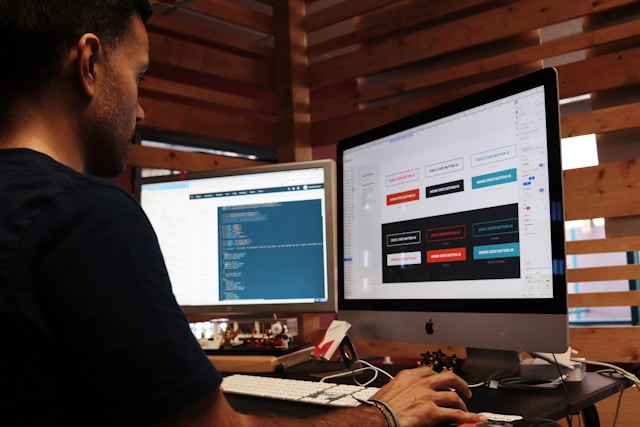 Not every B2B site has the same commercial job to do, so the solution should not be templated. We support full redesigns, strategic reskins, platform migrations, new website launches and phased redevelopment projects where the business cannot afford a disruptive all-at-once rebuild.
Our work includes brochure-led lead generation sites, high-trust b2b saas website design, content-heavy professional services sites, specialist b2b ecommerce website design for trade or wholesale environments and technically demanding b2b industrial website design where buyers need specifications, certifications, process clarity and procurement confidence before they enquire.
We also support businesses that need a more robust b2b website build because the old system has become too rigid, too slow or too dependent on developers for everyday updates. In those cases, usability for your internal team matters just as much as front-end presentation.
Typical investment and pricing expectations
Pricing for b2b website design services varies because the real cost sits in complexity, not page count alone. A focused B2B lead generation site with a modest number of core pages may be far more straightforward than a larger site with product logic, gated resources, CRM integrations, multilingual requirements or layered approval processes.
For many UK businesses, a professionally planned and delivered B2B website project starts in the mid four figures and moves into five figures once strategic discovery, custom UX, content restructuring, bespoke development, integrations or migration risk are involved. A more involved b2b website design company engagement for SaaS, industrial or multi-service organisations usually requires budget for deeper planning and more careful implementation.
We prefer to discuss investment in relation to scope, buyer complexity and the role the website plays in revenue generation. A site that supports high-value enquiries, sales enablement and long-term visibility should not be treated as a cosmetic expense. At the same time, buyers deserve straight answers about trade-offs. Not every business needs a large custom platform, and overbuilding is as unhelpful as underinvesting.
Project timelines and delivery expectations
 Most B2B website projects take between six and fourteen weeks, though that range can stretch depending on approvals, content readiness, integrations and decision-making speed on the client side. A compact redesign with clear internal ownership moves quickly. A multi-stakeholder project with brand revisions, product complexity or compliance reviews will naturally take longer.
The most common reason timelines slip is not development. It is uncertainty around content, structure or sign-off. That is why early planning matters. If your team needs support with page messaging, navigation logic or restructuring technical information into buyer-friendly content, it is better to deal with that upfront than force design and development to absorb the confusion later.
We set delivery expectations in plain terms: what needs to be agreed, what depends on client input, where risk sits and what should be phased rather than squeezed into version one.
How the process works
We begin with discovery. That usually covers your commercial goals, current site weaknesses, buyer types, service or product structure, competitors, internal constraints and the actions the new website needs to generate. On B2B projects, this stage is often where the real value starts, because it exposes disconnects between how the business describes itself internally and how buyers actually make decisions.
Next comes architecture and UX planning. We define the page structure, journey logic and content hierarchy before visual design begins. This reduces expensive rework and helps the finished site feel intentional rather than assembled page by page.
From there we move into design and build. The design phase focuses on clarity, credibility and usability across devices. Development then turns approved designs into a stable, manageable website with the right templates, functionality and performance considerations. Before launch, we test forms, tracking, responsiveness, speed, redirects and key user paths. The aim is a controlled release, not a rushed handover.
Who works on the project
A credible b2b website design agency should not treat strategy, design and development as isolated tasks. Our projects typically involve a strategist, designer and developer, with content and SEO input where needed. That mix matters because many B2B problems sit between disciplines. A conversion issue may look like a design problem but really come from weak hierarchy or unclear proposition. A messaging issue may appear to be content-related but actually starts with poor segmentation.
You are not simply hiring b2b website designers to create layouts. You are engaging a team that understands how B2B buyers compare suppliers, how internal stakeholders review websites and how commercial websites must work in practice after launch.
Technologies, platforms and integrations
 Platform choice should reflect what the website needs to do in real life. We work with CMS-led builds where clients need straightforward editing, scalable service page management and dependable day-to-day control. In more advanced scenarios, the website may need CRM integration, marketing automation, lead routing, event tracking, gated content handling, trade functionality or custom development to support internal processes.
For some organisations, the right answer is a clean CMS with disciplined templates and well-managed page governance. For others, especially in b2b saas web design agency or wholesale settings, the project may need deeper technical involvement and a more tailored development approach. That is where broader web development services become relevant.
We also think carefully about what not to integrate. Too many B2B sites become slow, brittle or difficult to manage because every internal tool is forced into the website whether it improves the user experience or not.
Industries and business types we work with
Our B2B work spans professional services, SaaS, manufacturing, industrial supply, consultancy, trade-focused ecommerce and corporate service businesses. Each brings different challenges. A SaaS company may need stronger onboarding logic and clearer product positioning. An industrial firm may need technical downloads, accreditation visibility and sector-specific proof. A consultancy may need authority, discretion and a structure that supports complex service evaluation without becoming dense.
That is why we do not use a one-size-fits-all formula for website design for b2b. The right structure for a software platform is not the same as the right structure for a technical manufacturer or a multi-service commercial firm.
What clients often underestimate
The biggest underestimation is usually content readiness. Many businesses assume they can “add the words later”, when in reality the quality of the site depends on how clearly the offer, proof and buyer journey are explained. If the internal team cannot agree what belongs on key pages, the design will only disguise the problem for a while.
Another common issue is stakeholder alignment. B2B websites are often judged by directors, sales teams, marketers, operations leads and sometimes external partners. If success criteria are not clear at the start, the project can drift into opinion-led revisions. We try to keep decisions anchored to user needs and commercial goals, not personal taste.
There is also the question of aftercare. A strong site should be manageable once live. If publishing a case study, editing a service page or adding a team update becomes frustrating, the website will gradually decay, no matter how good launch day looked.
Why similar projects often fail
They fail when strategy is skipped, when design is expected to solve structural confusion or when businesses choose on price alone without understanding what is missing from the scope. A cheap build can become expensive very quickly if it has to be rebuilt around better messaging, cleaner architecture or proper technical foundations six months later.
Another frequent failure point is copying competitor patterns too closely. Many B2B sectors end up with interchangeable websites because everyone follows the same vague headings, stock claims and underdeveloped service pages. That may feel safe, but it does very little to help a cautious buyer make a decision.
Projects also struggle when launch is treated as the finish line. In reality, live performance often reveals where users hesitate, where pages need strengthening and where internal teams need better reporting or content governance.
Strategic guidance before choosing a B2B website design company
If you are comparing a b2b website design company, ask how they approach buyer complexity, content structure, internal stakeholder needs and post-launch management. Attractive visuals are useful, but they are rarely the deciding factor in B2B performance.
Ask what they need from you to keep the project moving. Ask how they handle messaging when your team is too close to the offer. Ask how they measure success beyond “the site is live”. A sensible partner should be able to discuss lead quality, decision support, user flow, technical performance and the practicalities of maintaining the site over time.
It is also worth asking what they would simplify. Experienced teams do not just add features. They remove friction, challenge unnecessary complexity and help you avoid spending budget where it adds little buyer value.
How to compare options sensibly
When deciding between providers, compare depth of thinking as much as design examples. A capable b2b website design agency should be able to show how it structures information, deals with long buying cycles and balances branding with conversion logic.
Look at whether they understand your type of business. A team that produces sleek consumer sites is not automatically strong at b2b industrial website design or technically layered SaaS projects. Likewise, a developer-led supplier may build functional pages but leave conversion, positioning and clarity undercooked.
Good decisions usually come from asking practical questions: who is leading strategy, how content challenges are handled, what happens if requirements change mid-project and how the website will support growth after launch.
Results and business impact
Well-executed b2b website design can improve far more than aesthetics. It can shorten the time it takes a buyer to understand your offer, reduce drop-off from key pages, support better-quality enquiries, improve search visibility through stronger architecture and make internal marketing activity more effective.
For sales-led businesses, the impact often shows up in enquiry quality rather than raw volume alone. For SaaS and product-led companies, it may appear in demo request rates, product page engagement or better alignment between traffic intent and landing page structure. For industrial firms, even a modest improvement in trust signals, specification access and navigation clarity can change how seriously the business is considered during early supplier research.
Strong B2B websites also tend to improve sales conversation efficiency and internal content manageability. When prospects reach the right pages faster and your team can update service, sector or product content without friction, the website becomes more useful commercially after launch rather than harder to maintain.
Examples of project outcomes
A UK SaaS company came to us with a site that looked credible at first glance but left buyers unclear on product fit, implementation and differentiation. We reworked the page hierarchy, clarified commercial messaging, improved demo paths and redesigned core product and solution pages. Within five months, qualified demo enquiries improved by around 34%, while engagement on core product pages also strengthened. The commercial value was not just more traffic; it was a stronger match between search intent and sales conversations.
A B2B industrial supplier needed a more convincing digital presence for engineers, procurement teams and specifiers. The old site buried technical detail, loaded slowly and did little to support confidence before contact. We delivered a cleaner b2b industrial website design, improved product information structure, simplified navigation and strengthened technical documentation access. Over the following months, contact submissions from target sectors improved within a 20% to 40% range, and high-value specification pages saw meaningfully longer engagement. In practical terms, more buyers were staying long enough to evaluate the business properly.
A growing trade ecommerce business had a catalogue-led website that functioned, but commercial users struggled with account journeys, product discovery and quote-related actions. We restructured the UX, improved category logic and delivered a more robust b2b ecommerce website design with clearer pathways for repeat trade buyers. Over the following quarter, trade enquiry and account-request actions improved by 26%, while navigation engagement across key commercial pages became more consistent. That mattered because the business was trying to grow trade relationships, not just website sessions.
What happens after launch
Launch is the point where the site becomes useful, not the point where it becomes finished forever. After go-live, most businesses need a period of observation and refinement. We typically review tracking, user behaviour, form quality, content gaps and any issues that only become obvious under real traffic.
Some clients need ongoing design and development support. Others need a roadmap for content expansion, service page growth or search performance improvement. In many cases, the website works best when it is treated as an active commercial asset rather than a static project file handed over and forgotten.
Communication and reporting
Clear communication makes a noticeable difference on B2B web projects. We keep the process structured, with defined stages, feedback points and realistic expectations around what is needed from both sides. That matters because slow decisions, fragmented feedback and unclear ownership are among the easiest ways to make a good project harder than it needs to be.
Where ongoing work is involved, reporting focuses on the signals that actually matter to the business: page engagement, lead paths, technical issues, search visibility trends and priorities for improvement. We try to avoid noisy reporting that looks busy but answers very little.
Why businesses choose Prime Lion Digital
Businesses tend to choose Prime Lion Digital because they want a site that is commercially useful, not just visually updated. We bring together strategy, design, development and performance thinking in a way that suits B2B decision-making. That means asking awkward but necessary questions early, shaping the structure around real buyers and resisting the temptation to hide weak thinking behind polished design.
We are also candid about fit. Not every business needs a large custom project, and not every challenge is solved with a redesign. Sometimes the right answer is a focused redevelopment, a platform improvement or a stronger content architecture inside the existing framework. That level of honesty is usually more useful to buyers than a broad promise to do everything.
Frequently asked questions
How is B2B website design different from general web design?
B2B websites usually need to support longer buying cycles, more stakeholders and more cautious decision-making. The site has to answer practical questions, prove credibility and make complex offers easier to evaluate.
Do you only work on complete redesigns?
No. We also support phased rebuilds, strategic improvements and redevelopment work where replacing everything at once is unnecessary or commercially unwise.
Can you help with content and SEO as part of the project?
Yes, where needed. Many B2B websites benefit from tighter content structure, stronger service pages and technical improvements alongside design and development work.
Do you work with SaaS and industrial businesses?
Yes. We regularly support b2b saas website design requirements as well as technically detailed industrial and manufacturing websites where buyer confidence depends on clarity and trust.
How involved does our team need to be?
You do not need to write every page from scratch, but timely input, access to internal knowledge and clear decision-makers make a significant difference to quality and speed.
What platform do you use?
That depends on the project requirements, editing needs and integration complexity. We recommend platforms based on practical fit, not habit.
Talk to us about your B2B website project
If you are planning a redesign, reviewing an underperforming site or looking for a more credible b2b website build, Prime Lion Digital can help you assess the opportunity properly. We will look at your current website, your buyer journey, your content structure and the level of investment that makes sense for the business.
Get in touch for a practical conversation about your B2B website design requirements, likely scope, timelines and the best next step.