Tell us a little about what you’re looking for, and our team will be in touch to discuss how we can help.
Case Study Video Production Services for UK Businesses
A successful project deserves more than a brief mention in your portfolio. A well-produced video case study can explain the original challenge, show how the work was carried out and help prospective customers understand the outcome through genuine experiences and relevant visual evidence.
Prime Lion Digital offers case study video production for UK businesses looking to communicate real projects, customer experiences and practical applications of their products or services. From interview-led customer stories to project-focused films, the right approach depends on what your audience needs to understand and which facts, participants and materials are available.
Our case study video production services start from £1,500 per project. The final quotation depends on the agreed scope, including filming requirements, contributors, locations, editing and any additional video versions.
Whether you are presenting a technical installation, a professional service engagement, a business transformation or a customer success story, the objective is the same: create a clear, credible account of real work that is useful to people evaluating your business.
Discuss Your Case Study Video Project
Case Study Videos That Show the Value of Real Work
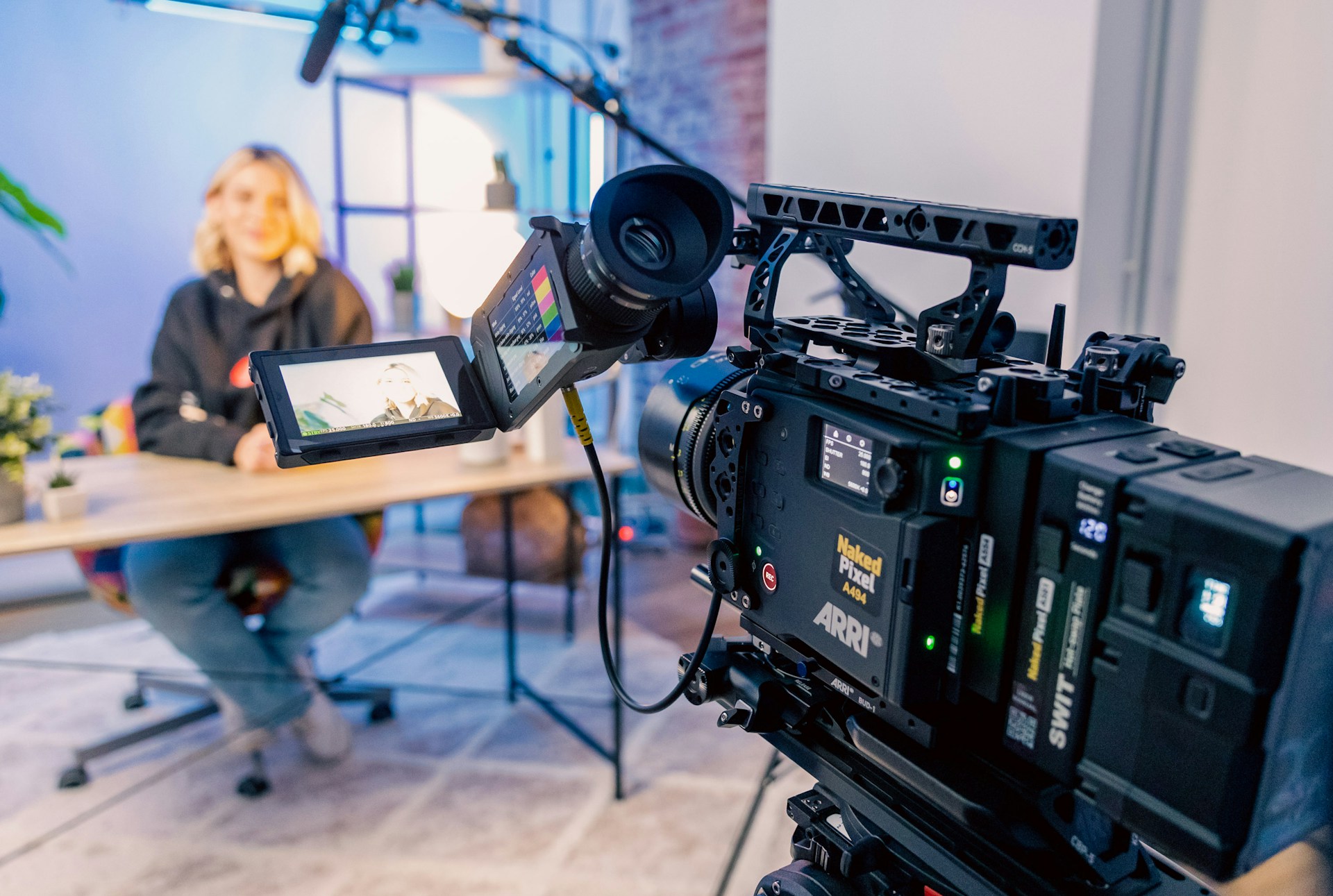 Many businesses can describe what they offer. Fewer can demonstrate how their work fits into a customer’s real situation. A case study video helps close that gap by moving beyond general claims and showing a particular challenge, the decisions involved and the outcome that can reasonably be supported by evidence.
For a potential buyer, this context matters. A software company may need to show how its platform fits into an existing workflow. A construction business may want to explain the constraints of a completed project. A professional services firm may need to demonstrate its approach to a complicated assignment without disclosing confidential information.
These are different stories, but they share an important requirement: the video should help viewers understand something they could not easily learn from a promotional statement alone.
A professionally planned case study film can combine interviews, workplace or project footage, product demonstrations, approved documents and carefully presented results. The balance between these elements should reflect the subject rather than follow a fixed promotional formula.
Used appropriately, the finished material can support service pages, sales presentations, proposals, sector-specific marketing and conversations with prospective customers. Its value lies in providing relevant information and a credible account of the work, not in guaranteeing a particular commercial result.
What Is a Video Case Study?
A video case study is a structured account of a real project, customer experience or business application presented through video. It explains the circumstances surrounding the work, the problem or objective, the approach taken and the outcome, supported by information that can be checked or demonstrated.
Unlike a conventional advertisement, a video case study is built around a specific situation. Unlike a simple customer testimonial, it may explore several perspectives, explain technical or operational decisions and use supporting footage to make the project easier to understand.
A useful case study commonly addresses five questions:
- Context: Who was involved, and what was the situation?
- Challenge: What needed to change, be solved or be delivered?
- Approach: What work was undertaken, and why were particular decisions made?
- Evidence: What can be shown or verified about the project?
- Outcome: What was achieved, completed or learned?
These elements do not have to appear as five rigid chapters. An engaging film may begin with the outcome, introduce the challenge through a customer interview or use a demonstration to establish context. What matters is that the final story remains accurate and understandable.
For example, a video about a new manufacturing process might combine a manager’s explanation with footage of the operation and approved performance data. A professional services case study might rely more heavily on interviews and an explanation of the decision-making process. The structure should follow the evidence available.
Our Case Study Video Production Services
Effective video case study production requires decisions before, during and after filming. The work is not simply to record an interview and add background music; it is to identify the information that matters, capture suitable material and assemble it into a coherent account.
The exact activities and deliverables are established through the project brief and quotation. Depending on the assignment, the production scope may cover the following elements.
| Production element | Purpose | Scope consideration |
|---|---|---|
| Project discovery and briefing | Establish the audience, communication objective and available project information. | Complex projects may require additional research or stakeholder input. |
| Story development | Identify the central challenge, important decisions and defensible outcome. | Depends on the complexity of the subject and the quality of source material. |
| Interview preparation | Plan questions that encourage specific, relevant first-hand answers. | The number and availability of contributors affect scheduling. |
| Testimonial and project filming | Record interviews and visual material appropriate to the story. | Locations, access, filming time and technical conditions are assessed individually. |
| Supporting footage | Show products, workplaces, processes, completed work or other relevant context. | May require additional locations, permissions or production time. |
| Editing and narrative development | Organise recorded material into an understandable and accurate film. | Complex stories, graphics and multiple contributors can increase editing requirements. |
| Review and delivery | Check the agreed edit and prepare the specified final output. | Approval stages, revisions and export formats should be agreed in advance. |
Some projects can be explained effectively through one interview and carefully chosen supporting footage. Others require several contributors, more extensive location filming or the presentation of technical information. The objective is to select the work that genuinely helps the story, rather than adding production elements simply to make the project appear larger.
Where Businesses Use Video Case Studies
Case study videos are particularly useful when potential customers need to evaluate a business’s practical experience before making a decision. The most suitable approach depends on the industry, the buying process and the type of evidence available.
| Business scenario | Useful story focus | Relevant evidence | Potential use |
|---|---|---|---|
| Technology and SaaS | How a product fits into a real organisation or workflow. | User interviews, approved interface recordings and implementation context. | Product pages, sales demonstrations and sector campaigns. |
| Professional services | How a complicated client requirement was approached. | Stakeholder accounts, process explanations and approved outcomes. | Service pages, proposals and business development. |
| Construction and property | The challenge, delivery process and completed project. | Location footage, project stages and authorised before-and-after material. | Project portfolios, tender support and presentations. |
| Manufacturing and engineering | How a solution operates in a practical environment. | Process footage, technical explanations and verified specifications. | Industry pages, exhibitions and sales discussions. |
| Retail and hospitality | A customer experience, service development or business improvement project. | Participant interviews, relevant premises and operational context. | Website content, local marketing and partner presentations. |
| Corporate partnerships | How organisations collaborated to deliver a defined objective. | Multiple perspectives, project records and agreed outcomes. | Stakeholder communications and programme reporting. |
The same business may benefit from different types of case study over time. A short customer-led film may be suitable for a landing page, while a more detailed project-led video may be useful when prospective buyers need to understand the work before requesting a proposal.
What Makes a Strong Video Case Study?
The best video case studies are not necessarily the most elaborate productions. They are the ones that give the intended audience enough relevant information to understand the work and form a considered opinion.
A Specific and Relevant Challenge
Statements such as “the customer needed a better solution” provide little insight. A stronger story explains what was difficult, what constraints existed or which decision had to be made. For example, a project may have involved a restricted installation window, several stakeholders or a requirement to maintain normal operations during implementation.
Specificity makes the situation understandable. It also helps viewers recognise whether the experience is relevant to their own needs.
Authentic First-Hand Perspectives
A customer, end user, project manager and technical specialist may all understand different parts of the same assignment. Selecting the right contributors helps the film explain the project without relying entirely on a company spokesperson.
Interview questions should encourage concrete answers: what prompted the project, what alternatives were considered, what difficulties arose and what changed afterwards. Overly scripted responses can make a real experience sound like a generic advertisement.
Visual Evidence That Supports the Story
Relevant footage helps the audience understand the subject. This may involve showing a product in use, a completed installation, a working environment or the stages of a service process.
However, attractive footage and factual proof are not interchangeable. A sequence of a busy workplace may establish context, but it does not independently prove that productivity increased. Any measurable claim should be supported by suitable information and presented with the correct context.
Outcomes That Can Be Explained Honestly
Not every project has a measurable return on investment. Some outcomes are operational, practical or qualitative: a completed facility, a new workflow, a resolved problem or an improved user experience reported by participants.
The film should distinguish between a documented result, a participant’s opinion and an anticipated future benefit. This distinction protects the credibility of the story and helps avoid claims that cannot be substantiated.
Building a Credible Case Study Story
Story development begins by deciding what the audience actually needs to learn. A prospective buyer may be more interested in the decision process and practical constraints than in a chronological account of every project meeting.
A useful starting point is to identify one central question. For a software implementation, it might be: “How did the organisation introduce this system without disrupting its existing workflow?” For a building project: “How was a technically difficult requirement delivered within the constraints of the site?”
That question helps determine which contributors to interview and which visual material to capture. It also prevents the film from becoming a collection of unrelated positive comments.
Selecting the Right Project
A suitable project should have a clear audience, a meaningful situation and enough accessible information to explain what happened. A well-known client name can be useful, but it is not a substitute for a strong story.
Before production, it is worth considering whether participants are available, whether the relevant work can be filmed, whether outcomes can be discussed and whether the organisations involved have authorised publication.
Handling Results and Supporting Information
Quantitative evidence can strengthen a case study when the figures are reliable. If a film refers to a reduction in processing time, for instance, the comparison period, measurement method and scope of the claim should be understood before the figure appears on screen.
Where reliable numbers are unavailable, the narrative can focus on what was completed, how the solution operates and what participants experienced. The absence of a numerical result is not a reason to invent one.
Balancing the Story
A case study should explain the contribution of the business being featured without suggesting that every positive outcome was caused by a single action. Large projects often involve several organisations, existing systems and external conditions.
Clear attribution, appropriate context and carefully chosen interview extracts make the final account more useful and more credible.
Tell Us About Your Project and Available Evidence
Our Case Study Video Production Process
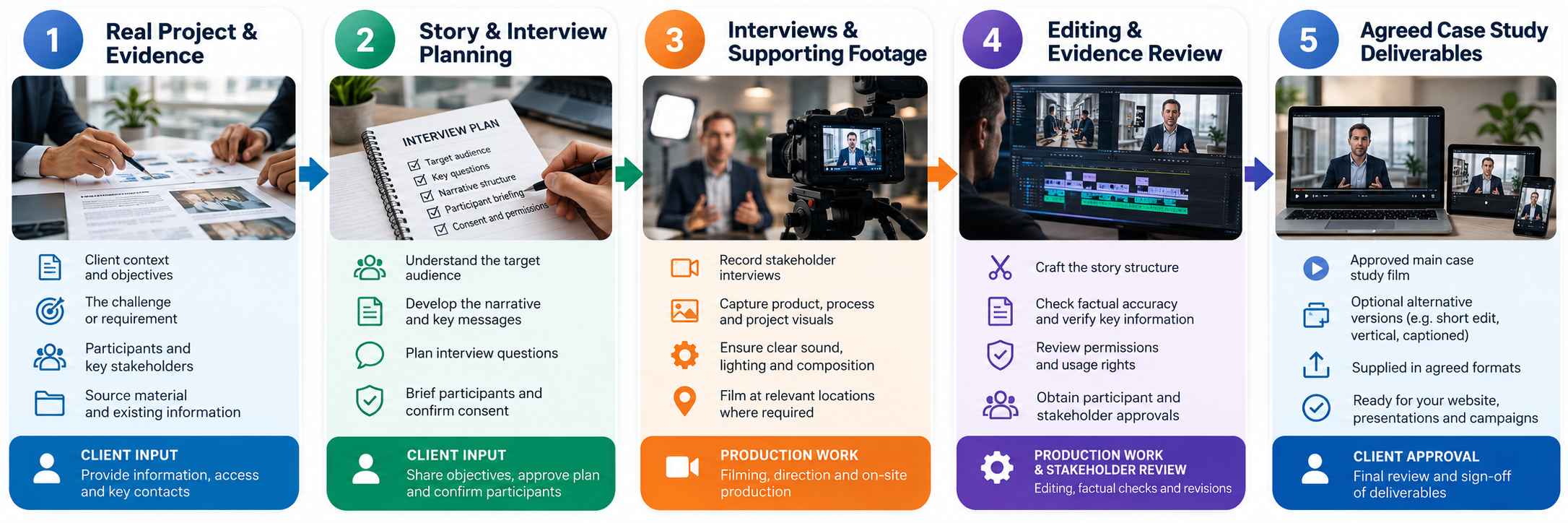
Case study video production benefits from a planned sequence of research, filming, editing and review. The precise workflow will depend on the agreed brief, but the following stages illustrate the decisions that normally need to be addressed.
1. Project Discovery and Evidence Review
The first task is to understand the project and the intended audience. Relevant inputs may include a short project summary, existing written case studies, approved performance information, photographs, technical documents and details of possible interview participants.
Reviewing this information early helps identify gaps in the story before filming is arranged.
2. Story Planning and Interview Preparation
The next stage is to establish the main narrative, select contributors and develop interview topics. Questions should encourage participants to explain their experiences in their own words rather than memorise marketing statements.
Filming locations, access requirements, permissions and the intended final video formats also need consideration at this stage.
3. Interviews and Supporting Footage
Production captures the material needed to tell the story. This may include interviews, demonstrations, working processes, project environments or other relevant footage.
Sound quality, lighting and camera framing should support clear communication. For example, an interview recorded beside noisy machinery may require a different approach from one filmed in a quiet office.
4. Editing and Factual Review
The edit brings the interviews and supporting material together. The structure should be understandable to viewers who have no prior knowledge of the project.
Statements about project results, technical specifications and commercial outcomes may need review by the relevant stakeholders. Editorial approval and factual approval are related but different responsibilities.
5. Final Approval and Agreed Delivery
Once the relevant reviews are complete, the approved film can be prepared in the formats specified in the project agreement. Additional short edits, captions or alternative versions should be identified in the scope rather than assumed to be included.
Interviews, Filming and Visual Evidence
The production choices behind a case study video should reflect the subject and the information the audience needs. An interview can explain a decision or experience, while supporting footage can show the environment in which the work took place.
Choosing Interview Contributors
A customer decision-maker may explain why a project was commissioned. An end user may describe how a product works in daily practice. A technical specialist may clarify implementation decisions that would otherwise be difficult to understand.
One contributor may be sufficient for a straightforward story. Several contributors can provide a more complete account, but they also introduce additional scheduling, filming and editing considerations.
Planning Useful Supporting Footage
Supporting footage should answer a question or clarify a point. A manufacturing case study might benefit from showing an operational process. A technology project may require approved screen recordings. A property project may need footage of the completed space and, where available, authorised material showing earlier stages.
These visuals should be planned before the filming day. If the story depends on a particular demonstration, access to the relevant equipment, people or location must be arranged.
Sound, Lighting and Practical Conditions
Clear speech is essential in an interview-led film. Background noise, reflective surfaces, changing daylight and restrictions on filming can affect the production approach.
Good technical decisions are not always the most visually elaborate ones. A quieter interview location, a more appropriate background or a clearer view of the product may improve the viewer’s understanding more than an additional decorative camera angle.
Confidentiality and Permissions
Business environments may contain personal information, confidential documents, commercially sensitive processes or third-party branding. These issues should be identified before filming and reviewed again before publication.
Participant consent, location access, company approvals and the permitted use of footage should be addressed within the agreed project arrangements. The exact requirements depend on the subject and intended distribution.
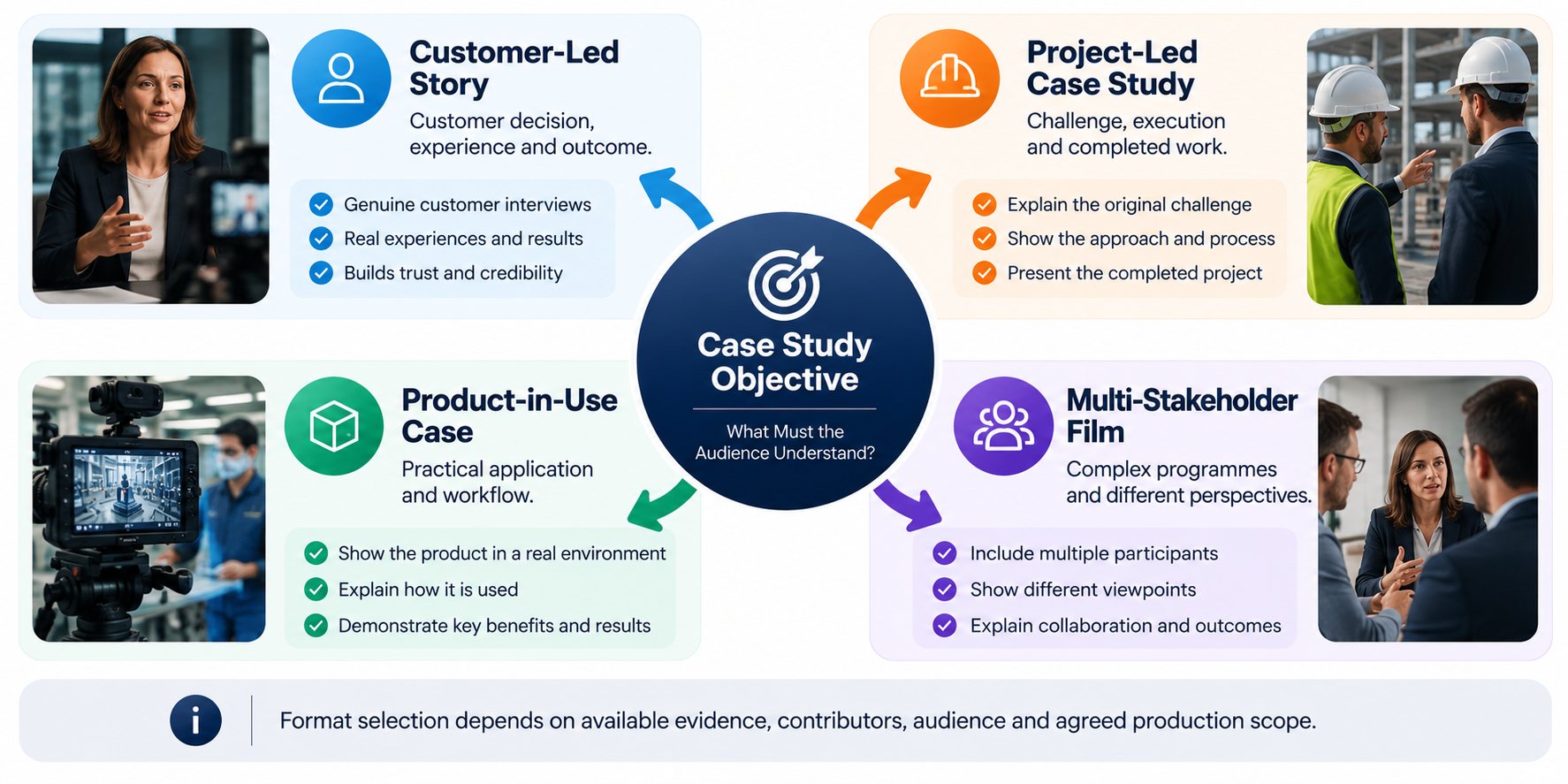
Choosing the Right Case Study Video Format
Not every case study should be built around the same type of interview. The most suitable format depends on the audience’s question, the complexity of the project and the evidence that can be shown.
| Format | Best suited to | Typical contributors or materials | Key consideration |
|---|---|---|---|
| Customer-led case study | Explaining a customer’s decision and experience. | Customer interviews and relevant service or product footage. | Ensure the story goes beyond general praise. |
| Project-led case study | Demonstrating how a defined assignment was delivered. | Project team, site footage, process records and completed work. | Show the challenge and approach, not only the final appearance. |
| Product-in-use case study | Explaining practical adoption or application. | End users, demonstrations and approved screen or product recordings. | Capture the real workflow accurately. |
| Multi-stakeholder case study | Communicating complex partnerships or programmes. | Several participants, locations and supporting records. | Maintain a coherent narrative across different perspectives. |
A project-led film may need fewer interviews but more extensive footage of the work. A multi-stakeholder film may require less visual complexity yet considerably more coordination and editorial planning. These choices influence both the production brief and the quotation.
Business Video Production Examples: Storytelling Across Industries
Different businesses require different approaches to visual communication. A hospitality film may focus on atmosphere and presentation, while a manufacturing video may need to explain an operational environment. Property walkthroughs, fashion content, product advertising and corporate videos each serve their own purposes.
The following collection brings together examples across several industries and video formats. They provide visual references for evaluating subject presentation, communication objectives and the role of video in a wider marketing strategy. They are not all formal case study videos: an evidence-led case study additionally requires a defined project, relevant participants, an explanation of the work and appropriately supported outcomes.
Food, Hospitality and Restaurant Video Production
Food and hospitality videos frequently depend on visual appeal, recognisable products and a clear sense of the customer-facing environment. These examples can help businesses consider how footage of products, preparation or hospitality settings may contribute to their communications. A formal hospitality case study would go further by examining a specific project, business challenge or documented customer experience.
Food Presentation — Visual Storytelling for Hospitality Brands
Food-focused video content provides a useful reference for businesses that need to communicate product appeal through moving images. When evaluating this type of material, consider how clearly the subject is introduced, whether the presentation suits the intended audience and how the content could be adapted for a website or campaign. For a case study involving a food business, similar visual material could establish the commercial context, but the project narrative would still need first-hand information and verified supporting facts.
Cocktail Presentation — Beverage Video Content for Hospitality Marketing
Beverage video production is a useful example of how a specific product category can become the subject of focused visual communication. The creative brief may prioritise product recognition, preparation, presentation or the atmosphere associated with a venue. These are different objectives and should not be confused. In an evidence-led hospitality case study, beverage footage could help illustrate a service concept or operational environment, while interviews and project information would explain the actual business story.
ARTIchoke Cafe — Café Brand Video Reference
This ARTIchoke Cafe video offers a business-specific reference within the hospitality sector. When reviewing content associated with a named café, useful questions include whether the audience can understand the business identity, what information the film communicates and which additional material would be necessary for a documented customer or project story. A café case study might examine a refurbishment, service development or commercial partnership, but those subjects and their outcomes would need to be established independently rather than inferred from promotional footage.
Food Show — Event and Food Industry Video Reference
Food industry events present a different communication challenge from individual restaurant or product videos. Event-focused material may need to introduce the setting, establish the subject and help viewers understand why the occasion is relevant. For businesses commissioning a case study about an exhibition, launch or industry programme, footage of the event can provide valuable context. However, the case study itself should also establish the objective, participating organisations, activities undertaken and any outcomes that can be reliably reported.
Tequila Sour — Cocktail Product Video Presentation
A video centred on a Tequila Sour illustrates a narrowly defined product subject. This type of content can be considered when a hospitality business needs a focused asset for a menu, product page or promotional campaign. The production decisions should follow the intended use: a short product presentation has different information requirements from an interview-led case study. If included in a wider business story, product footage would support the explanation rather than replace the evidence needed to describe a project or result.
Orange Zephyr — Creative Beverage Video Reference
The Orange Zephyr video provides another beverage-focused example for comparing product-specific communication with broader business storytelling. When planning several videos for a hospitality brand, each should have a clear purpose rather than repeat the same message. A product film might introduce an individual drink, while a case study could explore the development of a drinks concept, an operational change or a business collaboration. Such a case study would require appropriate contributors and supporting information beyond the product video itself.
Healthcare, Retail and Manufacturing Video Examples
Businesses in these sectors often need to explain practical services, working environments or operational processes. A suitable production approach should reflect the audience’s knowledge and the information that can be filmed or disclosed. These examples demonstrate different subject categories rather than verified project outcomes.
Healthcare Clinic — Professional Services Video Communication
Healthcare-related video content requires particular attention to clarity, accuracy and the intended audience. A clinic video may introduce an organisation or explain an aspect of its services, but a patient or operational case study introduces additional considerations around consent, confidentiality and the presentation of health-related claims. When evaluating this example, focus on the distinction between general business communication and a documented case study. Any real patient experiences, treatment outcomes or professional claims would require appropriate evidence and permissions before publication.
Clothing Store — Fashion Retail Video Presentation
Retail video production can help communicate a store’s identity, merchandise category and customer-facing proposition. For a clothing business, the creative approach may vary depending on whether the objective is product promotion, brand introduction or an explanation of a particular commercial project. This clothing store video offers a reference for the retail category. A genuine retail case study would require a defined situation, such as a store development or operational change, supported by relevant participants and approved information about the work.
Garment Manufacturing — Industrial Process Video Reference
Manufacturing is a particularly relevant subject for evidence-led business video because practical processes often benefit from visual explanation. A garment manufacturing film can be evaluated in terms of how clearly it communicates the production environment and whether viewers receive enough context to understand the subject. For a complete manufacturing case study, additional information might cover a particular production challenge, implementation decision or documented operational outcome. Technical claims should be reviewed carefully, and any restricted processes or commercially sensitive material should be approved before publication.
Product Advertising and Brand Identity Videos
Product advertising and brand identity videos generally have a different objective from case study production. They may concentrate on product recognition, visual presentation or a concise brand message. These formats can complement a documented project story, but they should not be used as substitutes for interviews, project evidence or factual outcomes.
Animated Logo Introduction — Motion Graphics for Brand Identity
An animated logo introduction is a short-form brand identity asset rather than a case study. Its role may be to provide a recognisable opening or closing element within a larger video programme. When planning a case study film, branding should support the narrative without delaying the information the audience came to see. This example can be used to consider the relationship between motion graphics and broader video content, while recognising that a branded introduction alone does not communicate a project’s challenge or outcome.
Children’s Toys — Product Video Advertising Reference
Children’s toy video content provides an example of a product category in which the intended audience, product information and visual presentation require careful planning. A product advertisement may focus on introducing an item and communicating its appeal, while a product-in-use case study would examine a real application or customer experience. When assessing this reference, consider what the viewer can understand from the video and which claims would need separate substantiation. Any safety, suitability or performance statements should be supported by appropriate product information.
Guitar Product Advertisement — Instrument Marketing Video
A guitar product advertisement is a useful reference for a film focused on a particular commercial item. Product advertising typically prioritises the product itself, while a case study may need to explain how it is used, why it was selected or what a customer experienced. The distinction influences the choice of contributors and supporting footage. For an instrument-related case study, relevant information might include a musician’s first-hand experience or a documented product development project, provided those details are genuinely available and authorised.
Music Videos and Creative Visual Storytelling
Music videos are creative productions with different narrative and commercial objectives from business case studies. Their inclusion here provides a reference for the broader range of video formats available, particularly where businesses are considering artistic direction or the use of visual storytelling. They should not be interpreted as examples of customer evidence or project results.
Mightyyout — Feelings: Music Video Production
The music video for Mightyyout’s Feelings represents an artist-led production rather than a business case study. Music video planning may involve a visual concept, the relationship between sound and imagery, and decisions about how the finished work communicates the artist’s identity. These considerations can provide creative inspiration, but a corporate case study has additional responsibilities: the story must be grounded in a real project and important factual claims must be accurate. The two formats can share production techniques without sharing the same editorial purpose.
Mightyyout — Pause: Creative Music Video Storytelling
Pause by Mightyyout provides a second artist-focused video within this collection. Comparing multiple productions associated with the same artist can help illustrate why each video should have its own creative brief and communication objective. For business content, the equivalent discipline is to avoid producing several videos that repeat the same information without serving different audiences. A case study film should be organised around the project facts and the questions prospective customers need answered, rather than adopting a creative treatment solely for visual effect.
Fashion, Corporate and Event Video References
Fashion, corporate and event videos can help organisations communicate their identity, activities and professional environment. Some subjects may also form the basis of a detailed case study, provided the production includes an identifiable project, suitable participants and evidence of the work undertaken.
Fashion Synergy Mayfair London — Fashion Industry Video
Fashion Synergy Mayfair London provides a named fashion-sector video reference. Fashion content may serve brand communications, event coverage or industry presentation, depending on the actual production brief. When evaluating a video in this category, consider whether the intended audience receives a clear understanding of the subject and whether the format is suitable for its publishing channel. A fashion-sector case study would require additional project context, such as a collaboration, campaign development or operational assignment, together with relevant evidence and approved participant accounts.
CRG Solar — Renewable Energy Business Video Reference
Renewable energy businesses often need to communicate technical services and project environments to audiences with different levels of specialist knowledge. This CRG Solar video provides a company-specific reference for the sector. A formal solar project case study might explain the original requirements, installation considerations, stakeholder responsibilities and verified results. Those details should come from approved project information rather than assumptions about the footage. Clear visual communication can help explain the subject, but technical specifications and performance claims require their own factual basis.
London Fashion Day Winter 2024 — Fashion Event Video
London Fashion Day Winter 2024 is an event-specific video reference. Event films can communicate the identity of an occasion and provide material for organisers, participants or promotional channels. A case study about an event would address a different set of questions: what the organisers intended to achieve, what was delivered, which stakeholders were involved and what outcomes can be documented. Event footage can support that explanation, but attendance, reach, commercial impact and other results should never be inferred from the visual presentation alone.
Barbershop Video Series — The Turkish Touch
The Turkish Touch collection includes five videos associated with the same barbershop. A multi-video collection can be useful for examining how content may be organised around one business, although the purpose and content of each individual film must be assessed separately.
For a formal barbershop case study, the production would need a defined subject, such as a premises project, service development or customer experience, together with first-hand accounts and relevant evidence. The five examples below are presented as business video references, not as verified case studies with documented commercial outcomes.
The Turkish Touch — Original Barbershop Business Video
The first The Turkish Touch video establishes the starting point for this five-part business video collection. When evaluating it as a visual reference, consider how the business subject is introduced and what additional context a prospective customer would need. A case study built around a customer-facing service business should explain a particular situation rather than simply describe the business positively. Interviews with people directly involved and relevant supporting footage can help turn a general business presentation into a more informative project narrative.
The Turkish Touch 2 — Barbershop Brand Content
The second The Turkish Touch video provides another reference associated with the same business. In a planned video collection, individual films may serve different purposes, such as introducing the premises, communicating a particular service or addressing a customer question. Those purposes should be defined in the production brief rather than assumed from the video’s title. For case study production, the central consideration is whether the content explains a real experience or project with enough context to be useful to a prospective buyer.
The Turkish Touch 3 — Business Video Content for a Service Brand
This third video extends the The Turkish Touch collection and offers a further point of comparison for business-focused video content. When several films feature one organisation, consistency can be useful, but each piece should still communicate something meaningful. A customer case study might focus on the decision to use a service and the experience that followed. A project case study might instead explore a business change or completed assignment. The appropriate structure depends on the genuine story and available evidence.
The Turkish Touch 4 — Visual Communication for a Local Business
The fourth The Turkish Touch video contributes to the wider set of material associated with the barbershop. For a local service business, video may support brand recognition, service explanation or website content. A case study has a more specific evidential purpose: it should help viewers understand what happened in a real situation and why the outcome matters. When comparing the films, consider which questions each one answers and whether additional interviews or factual information would be necessary to develop a complete customer or project story.
The Turkish Touch 5 — Completing a Multi-Video Business Collection
The fifth The Turkish Touch video completes the supplied series. Together, the five examples provide a reference for discussing the role of multiple videos in a business’s communications. A coordinated collection may address several audiences or marketing objectives, while a case study typically concentrates on one identifiable situation in greater depth. When commissioning either approach, it is important to agree the intended role of each film, the required deliverables and the evidence needed to support any statements about customer experiences or project outcomes.
Property and Interior Video Production Examples
Property and interior videos can communicate the physical characteristics of a space in ways that written descriptions and still images cannot always achieve. They are useful references for considering how visual material can support project communication, although a walkthrough alone does not establish a case study’s challenge, delivery process or results.
The SWAN Interior — Interior Space Video Tour
The SWAN Interior video is identified as an interior walkthrough. This type of content can help viewers become familiar with a space and consider its physical arrangement or design presentation. For an interior design or refurbishment case study, the visual tour could provide important supporting material, but the complete story would also need to explain the original brief, design constraints, work undertaken and approved outcome. Any claims about budget, project duration or client satisfaction would require separate confirmation.
Studio 18 — Residential Property Video Walkthrough
Studio 18 is presented as a house tour, making it a relevant reference for residential property and architectural video communication. A property walkthrough primarily helps viewers understand the space, while a construction or design case study explains the decisions and work behind it. If the subject were a completed residential project, the case study might include interviews with the client or project team, relevant design documentation and approved information about the finished work. The walkthrough would support that narrative rather than replace it.
These examples demonstrate why video format selection matters. Product advertisements, music videos, business presentations, event films and property walkthroughs may all contribute to a company’s wider content strategy, but a case study has an additional responsibility: to explain a real situation through credible evidence and a coherent narrative.
If your objective is to document a particular customer experience or completed project, contact Prime Lion Digital to discuss a case study video production brief.
Case Study Video Deliverables and Optional Edits
A case study project may produce a principal film and, where agreed, additional versions for different audiences or channels. The right deliverables should be identified during planning because they can affect interview questions, camera framing, graphics and the amount of footage required.
| Potential deliverable | Typical application | What to agree in advance |
|---|---|---|
| Main case study film | Website, project presentation or sales discussion. | Audience, narrative scope, approximate duration and approval process. |
| Short case study edit | Landing pages, email campaigns and shorter presentations. | Which facts and context must remain in the shorter version. |
| Vertical social edit | Mobile-first social channels. | Framing, aspect ratio, captions and platform requirements. |
| Captioned version | Accessible and sound-off viewing. | Caption format, language and accuracy review. |
| Graphics or data visualisation | Explaining technical processes or approved results. | Source information, design requirements and factual approval. |
| Alternative exports | Different publishing or presentation environments. | File specifications, dimensions and delivery formats. |
These are potential outputs, not a list of items automatically included in every project. The quotation should specify the commissioned deliverables, review arrangements and relevant usage terms.
Raw footage, additional editing versions and expanded usage rights should also be clarified where relevant. They should not be assumed to form part of the starting price.
Case Study Video vs Testimonial Video
Case study videos and customer testimonial videos are closely related, but they answer different questions.
A testimonial primarily communicates what a customer experienced or thought. A case study goes further by explaining what the project involved, how it was approached and what can be established about the outcome.
| Consideration | Testimonial video | Case study video |
|---|---|---|
| Main focus | Personal experience and customer perspective. | Specific project, challenge, approach and outcome. |
| Typical contributors | One or more customers. | Customers, end users, project specialists or other stakeholders. |
| Supporting material | Relevant footage that illustrates the experience. | Project evidence, demonstrations, records and supporting footage. |
| Editorial complexity | Often centred on a clear personal account. | May require more research, fact-checking and narrative development. |
| Buyer question | What was it like to work with this business? | How did this business approach and deliver a comparable project? |
One production can sometimes support both formats if the interviews and footage are planned accordingly. However, a testimonial should not be relabelled as a case study simply because it is longer.
If your main objective is to present a genuine first-hand customer recommendation, explore our testimonial video production services.
How to Evaluate the Best Video Case Study Examples
Searching for the best video case study examples can provide useful creative inspiration, but visual polish alone is a poor way to judge whether a film will serve your business.
When reviewing examples from a case study video agency, assess the work against the communication problem it was designed to solve.
Does the Film Establish the Challenge?
The viewer should understand why the project mattered. A case study that starts with an unexplained success claim may be less useful than one that establishes the original requirement and constraints.
Can You Identify the Evidence?
Look for a distinction between participant statements, visual demonstrations and independently documented information. Not every film needs statistics, but significant claims should have an appropriate basis.
Are the Interviews Informative?
Useful interview extracts explain decisions, experiences or outcomes in specific terms. A collection of enthusiastic but interchangeable compliments is usually better suited to a testimonial montage.
Does the Editing Preserve Meaning?
The structure should help the viewer follow the story without creating misleading connections between statements, visuals and results. Graphics and music should support the explanation rather than obscure missing information.
Is the Format Appropriate for Its Audience?
A technical procurement audience may need more detail than a general social-media audience. A short edit can be effective if it retains the necessary context; a longer film is justified when the subject genuinely requires additional explanation.
The most useful examples are those that help you understand what was accomplished, not merely those with the most dramatic presentation. You can also explore our general portfolio when considering broader visual and digital project approaches.
Case Study Video Production Costs in the UK
Prime Lion Digital’s case study video production starts from £1,500 per project. This is a starting price, not a fixed all-inclusive package. The total cost depends on the production requirements agreed for the individual assignment.
Two case studies with similar final running times may require very different amounts of work. A single-location interview with existing supporting material is not equivalent to a project involving several locations, multiple stakeholders and detailed technical graphics.
| Cost factor | Why it affects the project | Useful information for your brief |
|---|---|---|
| Story research | Complex projects may require additional information gathering and narrative development. | Existing project summary, approved documents and key facts. |
| Interview participants | Each contributor can affect preparation, scheduling, filming and editing. | Names or roles, availability and intended contribution. |
| Filming locations | Travel, access, setup and site conditions influence production requirements. | Location details, restrictions and access arrangements. |
| Supporting footage | Demonstrations or operational scenes may need separate planning and filming. | Processes, products or project stages that should be shown. |
| Editing complexity | Several storylines, technical explanations or extensive footage can require more editorial work. | Audience, main message and preferred level of detail. |
| Graphics and data | Custom diagrams or results visualisation require design and factual checks. | Approved figures, source material and brand guidelines. |
| Additional video versions | Short edits, vertical formats and captions can involve separate production tasks. | Channels, aspect ratios and required outputs. |
| Approvals and deadlines | Multiple stakeholders or compressed schedules can change project planning. | Decision-makers, review stages and target publication date. |
For a useful quotation, explain what the case study needs to achieve, who can participate, what evidence exists and where filming would take place. If you already have a written case study or project summary, it can provide a valuable starting point.
Request a Case Study Video Production Quote
Choosing a Case Study Video Agency
Choosing a case study video agency involves more than comparing showreels. The right production approach should reflect your subject, the evidence available and the level of explanation your audience requires.
Before appointing a provider, consider how they would address the following questions:
- Story selection: Can they help distinguish a genuinely useful case study from a general promotional opportunity?
- Interview planning: How will the right contributors and questions be identified?
- Evidence: How will important claims, figures and supporting visuals be handled?
- Production scope: Which locations, filming activities and outputs are included in the quotation?
- Approvals: Who will check factual accuracy, participant permissions and the final edit?
- Deliverables: Are the main film, additional edits, captions and export requirements clearly specified?
- Usage: Are the intended publishing channels and relevant rights addressed?
Prime Lion Digital can be contacted to discuss the objectives and requirements of a proposed video case study. A clear brief makes it easier to establish an appropriate production scope and understand which creative decisions will be most useful for the project.
For businesses comparing several content formats, it is also worth considering how the film will sit alongside existing website content, written case studies, service pages and other marketing materials. A case study is most useful when viewers can move naturally from understanding the project to learning more about the service being considered.
Frequently Asked Questions About Case Study Video Production
What is a video case study?
A video case study explains a real project, customer situation or business application through a structured film. It typically establishes the original challenge, the approach taken and the outcome, using interviews and relevant visual or documentary evidence. The emphasis is on helping viewers understand what happened, rather than simply presenting a positive opinion about a business.
How much does case study video production cost?
Prime Lion Digital offers case study video production from £1,500 per project. The final quotation depends on factors such as the number of interview participants, filming locations, supporting footage, editing complexity, graphics and additional deliverables. The starting price should not be interpreted as a fixed package containing a predetermined number of filming days or video versions.
How long should a case study video be?
There is no single ideal duration. A concise customer-led story may need relatively little time, while a technically detailed project can require a longer explanation. The intended audience and publishing channel should determine the length. It is often more useful to agree what the viewer must understand before deciding how many minutes the film should run.
How is a case study video different from a customer testimonial?
A customer testimonial focuses mainly on the participant’s experience and opinion. A case study documents a wider situation, including the challenge, decisions, work undertaken and supported outcome. A testimonial interview can form part of a case study, but additional research, project footage or factual information may be needed to create a complete case study narrative.
Do we need measurable results to make a case study video?
Not necessarily. Verified figures can be useful, particularly when the intended audience needs to assess performance. However, a completed installation, implemented system, resolved technical problem or documented service process may also provide a meaningful outcome. The important requirement is that the film describes the result accurately and does not imply that unmeasured benefits have been proven.
Who should appear in a case study video?
The best participants are those with direct knowledge of the relevant part of the story. This may include a customer decision-maker, end user, project lead or technical specialist. One person may be sufficient for a straightforward film, while a complex project may benefit from several perspectives. The number of contributors should follow the editorial need rather than a fixed formula.
Can a case study video be filmed at several locations?
Multi-location filming can be considered when the project requires it. For example, a case study may involve a customer’s premises, a production environment and a completed installation. Additional locations affect scheduling, access, travel and filming requirements, so they should be included in the brief and quotation from the outset.
What if our project contains confidential information?
Confidentiality should be addressed before interviews and filming begin. It may be possible to focus on approved aspects of the work, avoid sensitive screens or documents, limit the use of identifying information or develop a narrower story. Any such approach depends on the necessary permissions and the facts that can legitimately be shared. A case study should not reveal confidential material simply to make the narrative more detailed.
Can one filming project produce several versions of a case study video?
Potentially, yes. A principal case study film may be accompanied by shorter edits, vertical versions or captioned outputs when these are included in the agreed production scope. Planning these versions early is important because different formats may require alternative framing, introductions or interview extracts. Additional versions should be specified in the quotation rather than assumed to be included.
How long does it take to produce a case study video?
The schedule depends on the availability of participants, filming locations, project information and reviewers, as well as the complexity of the edit. A film requiring several stakeholder approvals may take longer to complete than a straightforward single-location production. A realistic schedule should be established after the brief, scope and approval responsibilities are understood.
What should we prepare before contacting a video case study agency?
Start with a short description of the project, its purpose, the audience you want to reach and the outcome you hope to explain. It is also useful to identify potential interview participants, available supporting evidence, possible filming locations, any confidentiality restrictions and your intended publication date. You do not need to arrive with a finished script; the initial information is enough to begin discussing an appropriate approach.
Discuss Your Case Study Video Project
A strong video case study begins with a project worth explaining and a clear understanding of what the audience needs to learn. Whether your story centres on a customer experience, a technical implementation, a completed project or a business partnership, the production should be shaped around the facts and material available.
Prime Lion Digital provides case study video production for UK businesses, with projects starting from £1,500. To discuss a quotation, share a short project summary, the intended audience, any potential interview contributors, filming locations and the video formats you may need.
We can then discuss the proposed production requirements and the information needed to define a suitable scope.