Custom WordPress Web Design for UK Businesses
Tell us a little about what you’re looking for, and our team will be in touch to discuss how we can help.
Custom WordPress web design is appropriate when a business needs more control over its website than a standard theme or pre-built layout can provide. That may involve a distinctive visual identity, complex service or content structures, specific user journeys, reusable page components, or publishing requirements that need to work reliably inside WordPress.
Prime Lion Digital designs WordPress websites around the structure, content and practical requirements of the business rather than forcing those requirements into a predetermined set of templates. The aim is not to make every page different. It is to create a coherent design system with the right level of flexibility, clear rules for content and an implementation approach that remains manageable after launch.
Custom design is not necessary for every WordPress project. Where a well-built theme or more standardised approach can meet the requirements without creating unnecessary constraints, that may be the more proportionate choice. The important decision is how much customisation the website genuinely needs.
What Custom WordPress Web Design Actually Means
A custom WordPress website should be shaped by the way the business communicates, the journeys users need to complete and the content the organisation needs to manage. Changing the colours and typography of an existing theme may create a distinctive appearance, but it does not necessarily create a custom design system.
The distinction becomes clearer when the website has requirements that affect its underlying structure: several service types, different audiences, substantial content, unusual navigation, recurring landing pages, specialist forms or internal teams that need to publish without rebuilding layouts manually.
| Area | Standard approach | Custom WordPress design approach |
|---|---|---|
| Page structure | Adapt existing templates | Define page types around actual content and user needs |
| Navigation | Use conventional menu patterns | Plan information architecture around the website’s content relationships |
| Visual design | Work within an existing theme or framework | Create a visual system around the brand and interface requirements |
| Components | Use available theme sections | Define reusable components for recurring content and functions |
| Responsive behaviour | Rely mainly on framework defaults | Decide how important layouts and interactions should adapt across screens |
| Content editing | Follow the editing model provided | Plan the editing experience around the content the team actually manages |
When Does a Business Actually Need a Custom WordPress Website?
 The case for custom design usually becomes stronger when the website itself has to solve structural or operational problems. A business does not need a bespoke interface simply because custom design sounds more premium.
Distinctive Brand or Positioning
Businesses with an established visual identity may find that adapting a general-purpose theme creates compromises in typography, layout, hierarchy or presentation. Custom WordPress website design provides more control over how that identity is translated into an interactive website rather than treating the brand as a layer applied afterwards.
Complex Content or Service Structure
A company offering several service families, working across multiple sectors or publishing substantial supporting content may need more than a conventional Home, About and Services structure. The design has to make relationships between information understandable without turning navigation into a catalogue of every available page.
Specific User Journeys
Some websites need visitors to compare services, explore related expertise, move between educational and commercial content, complete detailed enquiries or reach different destinations depending on their circumstances. Those journeys influence page hierarchy, navigation, calls to action and the components required throughout the site.
Internal Publishing Requirements
The public website is only one side of the design problem. If marketing or operational teams regularly add services, articles, case studies, locations or landing pages, the WordPress editing structure needs to support that work without requiring a designer to reconstruct layouts for every update.
Existing Templates Are Creating Constraints
A standardised approach can become restrictive when teams repeatedly work around the theme rather than with it. That does not automatically mean the entire website should be replaced. It does mean the underlying constraint should be identified before more customisation is added to an unsuitable structure.
Custom WordPress Design vs a Pre-Built Theme
A pre-built WordPress theme can be entirely appropriate for a relatively straightforward website. It can reduce the amount of design work required and provide established patterns for common pages. Problems arise when the project needs repeated exceptions to those patterns.
Custom design provides greater control, but that control creates additional decisions. Page types, component behaviour, content rules, responsive states and the editing model all need to be considered rather than inherited from an existing theme.
| Project requirement | Theme-led approach may be sufficient | Custom design becomes more useful |
|---|---|---|
| Brand presentation | Existing patterns can represent the brand without major compromise | The brand requires a distinctive interface and visual language |
| Content structure | A small number of conventional page types | Several content types or relationships need their own structure |
| User journeys | Visitors follow simple, predictable paths | Different audiences or decisions require more deliberate journeys |
| Publishing | Content changes are occasional and straightforward | Teams publish frequently and need reusable structures |
| Future expansion | The scope is expected to remain relatively stable | New services, content or sections are likely to be added regularly |
The distinction is therefore not “cheap theme versus good custom website”. A well-chosen standard approach can be better than an unnecessarily complicated custom build. The design method should be proportionate to the problem being solved.
What Needs to Be Designed Before Development Begins
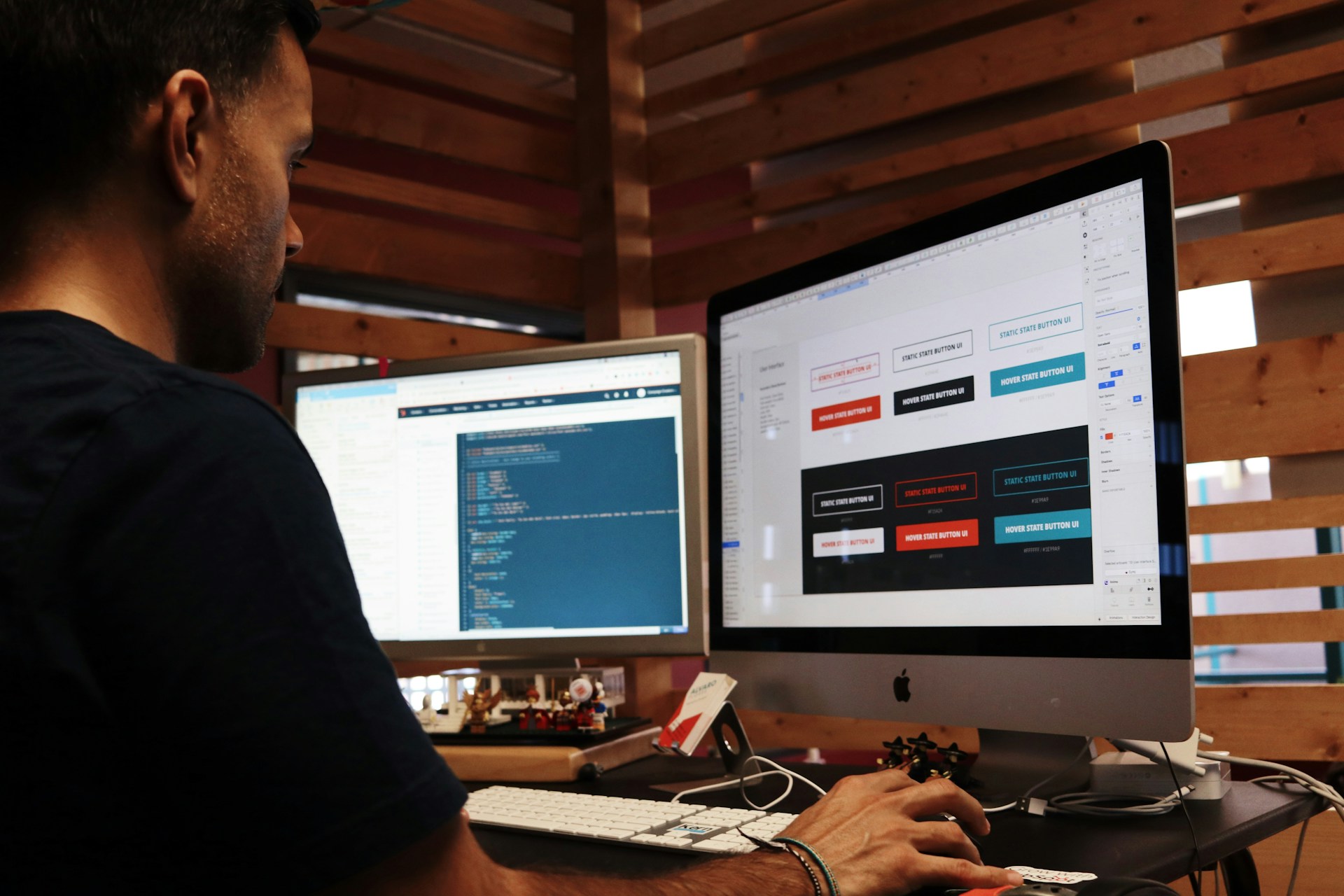 Development becomes more predictable when important design decisions have already been resolved. A polished homepage alone is not enough to define how an entire WordPress website should work.
Information Architecture
Information architecture establishes how services, sectors, resources and other content relate to one another. It affects navigation, internal pathways, URL planning and the ease with which users can understand where they are within the website.
User Journeys and Wireframes
Wireframes can be used to resolve hierarchy and behaviour before detailed visual work begins. The important question is not whether every page receives its own wireframe, but which page types and interactions contain decisions that need to be validated.
Visual Direction
Typography, spacing, imagery, interface hierarchy and recurring visual patterns need to work as one system. A strong visual direction should provide enough consistency for the website to feel coherent without forcing unrelated content into identical layouts.
Reusable Components
Service introductions, calls to action, comparison blocks, forms, supporting content and other recurring elements can be treated as components rather than redesigned every time they appear. Their rules need to be clear enough to support different content without becoming unpredictable.
Responsive States
Important layouts also need decisions beyond their desktop appearance. Navigation, tables, forms, multi-column sections and content-heavy components may require different priorities or behaviour on smaller screens rather than simply being compressed.
Custom Design Should Create a System, Not a Collection of Pages
One of the more expensive mistakes in bespoke website design is treating every page as an independent composition. Twenty individually designed pages can still produce a less flexible website than a smaller set of well-considered templates and reusable components.
A useful design system defines what should remain consistent and where variation is justified. A service page, for example, may need optional sections for processes, comparisons, FAQs, technical details or supporting evidence. Those options can exist within a controlled framework rather than requiring a new layout whenever the content changes.
This becomes particularly important for businesses using their website as an active publishing and marketing platform. New content should extend the system rather than gradually dismantle it.
How Much Flexibility Should Your WordPress CMS Have?
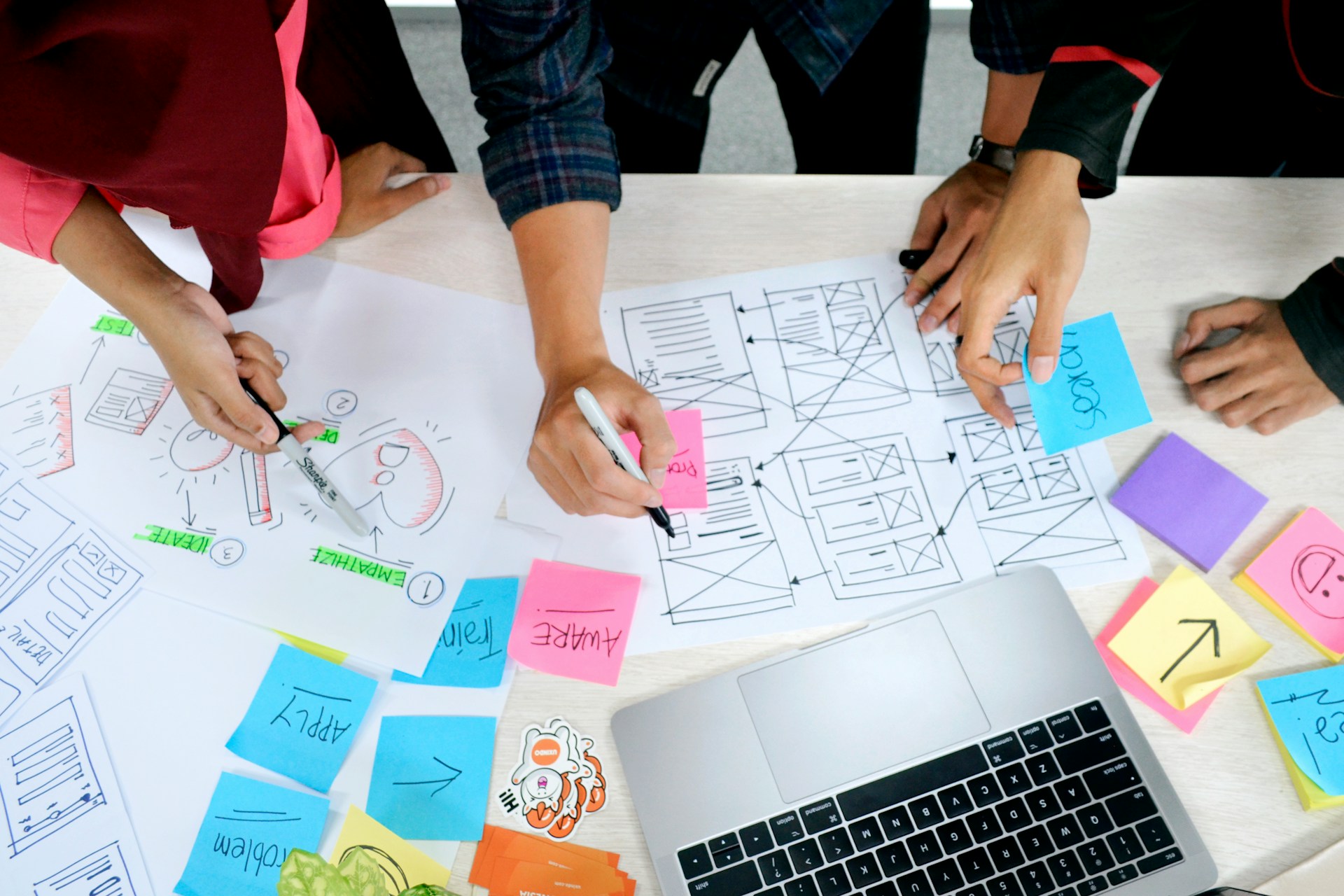 Complete editing freedom can sound attractive during procurement. In practice, unlimited layout control can make publishing slower and introduce inconsistencies between pages.
The opposite extreme creates a different problem: templates can be so rigid that even reasonable content changes require development work.
A useful WordPress editing model sits between those extremes. Recurring content can have structured fields or defined components, while areas that genuinely need variation can remain more flexible. The appropriate balance depends on who publishes the content, how frequently the site changes and how much layout control those users actually need.
This is why CMS usability should be considered during design rather than after the front-end layouts have been approved. The public interface and the internal publishing model are different views of the same content system.
Where Custom Design Ends and WordPress Development Begins
Custom WordPress design and WordPress development overlap, but they are not the same service.
Design establishes what users experience: hierarchy, navigation, page types, components, interactions, visual rules and responsive behaviour. Development determines how those decisions are implemented inside WordPress, including templates, functionality, data structures and technical integrations.
The boundary matters because a visually strong concept may still be a poor website specification if its behaviour, content requirements or editing implications have not been considered. Development constraints can also reveal where a design decision creates unnecessary technical complexity.
How a Custom WordPress Design Project Moves into Development
The exact workflow depends on the project, but the design-to-development transition should resolve the important decisions before implementation rather than leaving developers to infer them from static screens.
Requirements and Content Structure
The starting point is understanding what the website needs to contain and what visitors need to do. Existing websites, content, brand material and project requirements can help identify page types, important journeys and areas where a standard pattern may not be sufficient.
Page Types and UX Decisions
The next decisions concern structure rather than decoration: which layouts need to exist, how users move between them, what information receives priority and which interactions require particular attention. Complex or unusual areas deserve more design work than routine pages that can follow an established system.
Design System and Responsive Behaviour
Once the structural decisions are understood, visual rules and reusable components can be defined together with their important responsive states. The objective is to give implementation enough clarity without specifying unnecessary variations that add complexity but little user value.
Implementation Handoff and Design QA
The approved design needs to communicate more than screenshots. Developers need to understand component behaviour, content variation and responsive expectations. During implementation, the built website can then be checked against those decisions rather than judged only by whether it resembles a desktop mock-up.
Where a project also involves specialist functionality, integrations or broader technical architecture, those requirements should be addressed through the appropriate development work rather than being treated as visual-design details.
Designing for Real Content, Not Perfect Mock-ups
Design files tend to contain convenient examples: balanced headings, complete images and paragraphs that fit neatly into their allocated space. Published websites are less predictable.
A service title may be twice as long as another. A team profile may not have an image. A table may contain more columns than expected. An editor may need a section that was not used on the original example page. These are not unusual exceptions; they are normal conditions for a working content-managed website.
Custom WordPress web design should therefore consider content variation while the system is being designed. Reusable components need sensible boundaries, and page structures should tolerate realistic changes without breaking hierarchy or forcing editors into awkward workarounds.
Responsive Behaviour Within a Custom Design System
Responsive design is not simply a desktop layout displayed at a smaller width. Some interfaces need different priorities on mobile: navigation may change, columns may need a deliberate order, large tables may require another treatment and calls to action may need different placement.
The most important responsive decisions should be part of the design system, while routine behaviour can follow consistent implementation rules. This keeps the project focused on the areas where screen size genuinely changes the user experience.
SEO, Accessibility and Performance at the Design Stage
Some technical outcomes are influenced before development begins. Heading hierarchy, navigation, content order, internal pathways and page architecture can affect how clearly information is understood by users and search engines. Our technical SEO work addresses the broader technical search requirements where specialist input is needed.
Accessibility also has design implications, including contrast, readable typography, interaction states and the clarity of navigation and forms. These considerations are easier to address within the design system than to retrofit inconsistently across finished pages.
Performance is ultimately an implementation concern as well, but design decisions can increase or reduce the technical burden. Heavy media, unnecessarily complex interfaces and excessive visual effects all create consequences for development and page performance. More detailed optimisation belongs within website performance optimisation rather than turning the design stage into a separate performance project.
What Affects the Cost of Custom WordPress Web Design?
There is no single verified project price that can accurately represent every custom WordPress website. Cost depends on the amount of design decision-making required rather than simply the number of URLs in the final sitemap.
- the complexity of the information architecture and navigation;
- the number of genuinely different page types;
- the depth of UX and wireframing required;
- the number and complexity of reusable components;
- responsive and interaction requirements;
- the maturity of existing brand and content material;
- the CMS editing requirements that need to be considered during design;
- and the amount of specialist functionality that needs coordination with development.
A website with many pages may still use a relatively compact design system. A smaller website with unusual journeys, interactions or content relationships can require considerably more design thinking. Scope therefore needs to be understood before a meaningful quotation can be prepared.
What Affects the Project Timeline?
Project duration depends on similar variables. Requirements need to be sufficiently clear, content and brand material may need to be available, and the right stakeholders need to review decisions without repeatedly reopening previously approved areas.
Complex integrations or technical unknowns can also affect the point at which certain design decisions can be finalised. For that reason, Prime Lion Digital does not treat an unverified standard delivery period as applicable to every custom WordPress design project.
Is Custom WordPress Web Design the Right Approach for Your Project?
The strongest reason to choose custom design is not a preference for bespoke work in itself. It is that the website has requirements worth designing around.
| Situation | Likely direction | Why |
|---|---|---|
| Small website with conventional content and limited future change | Standard or lightly customised approach may be sufficient | Additional design complexity may provide little practical value |
| Distinctive brand with specific presentation requirements | Custom design may be appropriate | The interface can be designed around the brand rather than adapted to a theme |
| Several services, audiences or content relationships | Custom architecture and design are worth considering | Structure and navigation become part of the business problem |
| Existing WordPress website has become restrictive | Assess the current system before deciding to rebuild | The constraint may be design, architecture, implementation or a combination |
| Completed Figma designs already exist | Implementation may be the primary requirement | The project may need design validation and WordPress development rather than a new design service |
| Complex functionality is the main requirement | Start with development requirements | Engineering architecture may need to drive the solution before detailed interface work |
If the project does not require a fully custom approach, the broader WordPress web design service provides the appropriate context for other design routes.
Relevant WordPress Design Experience
Prime Lion Digital’s wider website work includes projects such as Audit Consulting Group, Freizeit Camper and Construction & Repair Work. These projects provide relevant experience of planning and delivering business websites with different content, service and commercial requirements.
They should not be treated as evidence that every project used the same custom-design process or technical implementation. The appropriate design approach depends on the requirements of the individual website, and project scope should be established before drawing conclusions about the level of customisation required.
Frequently Asked Questions
What is custom WordPress web design?
Custom WordPress web design means planning the website’s structure, UX, visual system, page types and reusable components around specific project requirements rather than relying primarily on the layouts supplied by an existing theme.
Is a custom WordPress website built from scratch?
Not necessarily. “Custom” describes the degree to which the design and website system are created around the project. The technical implementation may still use established WordPress tools and components where they are appropriate.
Is custom WordPress design better than using a theme?
Not automatically. A good theme-led approach can be more proportionate for a straightforward website. Custom design becomes valuable when existing patterns would restrict the brand, content structure, user journeys or publishing requirements.
Do I need custom WordPress web design?
You are more likely to benefit from it when the website has distinctive design requirements, several content or service types, specific user journeys, recurring publishing needs or limitations that cannot be addressed cleanly with an existing theme. The requirements should be assessed before deciding.
How much does custom WordPress web design cost in the UK?
The cost depends on project scope, design complexity, page types, UX requirements, reusable components, content readiness and the relationship between design and development. A meaningful quotation requires those requirements to be understood first; no generic project price is assumed on this page.
Can I edit a custom WordPress website myself?
A custom website can be designed with internal content management in mind. The appropriate level of editing control depends on what your team needs to change and how much consistency the website needs to preserve.
Can Elementor be used for a custom WordPress design?
Yes, where it is appropriate to the project’s technical and editing requirements. Custom design describes the design approach rather than requiring one specific implementation method. Prime Lion Digital also provides dedicated Elementor development for projects where Elementor is central to the requirement.
Is custom WordPress design different from custom WordPress development?
Yes. Design focuses on structure, UX, visual rules, components and responsive behaviour. Development focuses on implementing those decisions in WordPress and delivering the required functionality, integrations and technical architecture. Some projects require both, but they solve different parts of the problem.
Discuss Your Custom WordPress Website
If you are considering a custom WordPress website, the useful first step is to establish whether custom design is actually justified and which parts of the project need bespoke decisions.
You can share an existing website, project brief, brand material or the requirements you already have. Prime Lion Digital can review the scope and discuss the appropriate relationship between design, WordPress implementation and any wider technical requirements before the project is defined.
Discuss your custom WordPress web design requirements with Prime Lion Digital.