Custom WordPress Theme Development for Bespoke Websites
Prime Lion Digital develops custom WordPress themes for businesses that need a bespoke frontend rather than adapting their website to the limitations of a pre-built theme. We turn approved designs, content structures and presentation requirements into reusable WordPress templates and responsive frontend components that work with the way your website needs to be managed.
Custom WordPress theme development starts from £900.
Discuss Your Custom WordPress Theme
Tell us a little about what you’re looking for, and our team will be in touch to discuss how we can help.
A Custom WordPress Theme Is More Than Colours and Styling
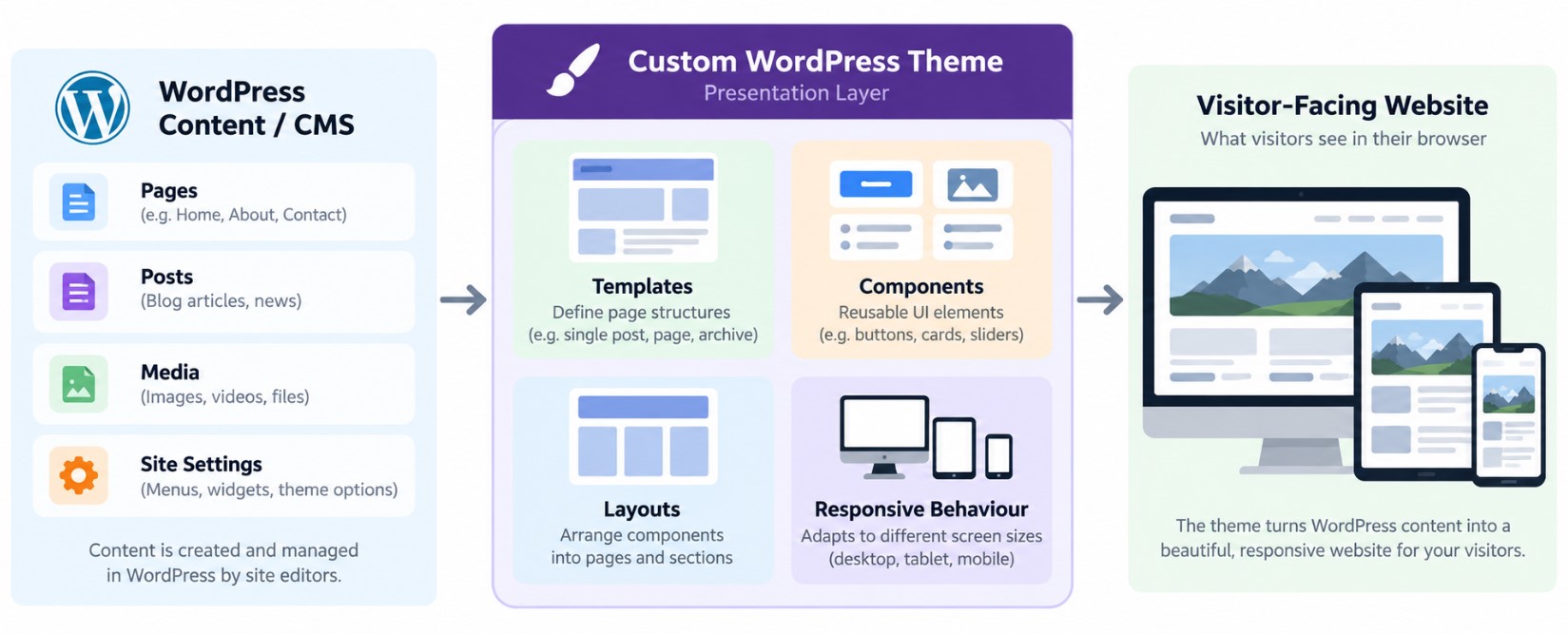
Instead of repeatedly adapting an existing theme around requirements it was not designed for, the presentation layer can be planned around the website itself. That may include bespoke templates, reusable frontend components, responsive behaviour and the relationship between content stored in WordPress and the layouts displayed on the website.
What Can a Custom WordPress Theme Enable?
- Closer implementation of a bespoke design: templates and frontend components can be developed around the approved interface rather than the constraints of a generic theme.
- Consistent presentation: recurring content can use defined templates and components instead of being assembled differently from page to page.
- Controlled publishing: editors can manage content in WordPress while the theme controls how that content is presented.
- Less irrelevant theme functionality: the frontend does not need to depend on every option or layout bundled into a general-purpose theme.
- A clearer foundation for additional templates: compatible new content can reuse established presentation patterns, while genuinely different content requirements can be handled with additional templates where needed.
These are potential benefits of the architecture rather than guaranteed performance, SEO or conversion outcomes.
When Does Custom WordPress Theme Development Make Sense?
You Already Have a Bespoke Website Design
A business, designer or agency may already have an approved interface that needs to be implemented in WordPress. The theme becomes the technical presentation layer that translates those designs into reusable templates and responsive frontend behaviour while keeping content manageable through WordPress.
Your Current Theme Is Restricting the Website
An existing website may have reached the point where important layouts require workarounds because the active theme was designed around different requirements. A custom theme can be considered when repeatedly modifying the existing structure is becoming less practical than creating a presentation layer around the website’s actual needs.
Your Website Needs Consistent Specialised Templates
Businesses with several recurring content types may need more than a collection of generic page layouts. A custom theme can define how those content types are presented so editors can manage the information while the frontend maintains an agreed structure.
Your Team Needs Flexibility Without Rebuilding Every Layout
Marketing and content teams may need to update content regularly without making presentation decisions from scratch each time. Reusable templates and components can provide editing flexibility while maintaining appropriate visual and structural guardrails.
You Need WordPress Implementation for a Client or Design Project
Agencies and design teams can also use custom theme development as the implementation stage between an approved design and a working WordPress frontend, with the required templates, responsive states and content relationships defined as part of the development scope.
What Can Be Included in a Custom WordPress Theme?
Theme Architecture and Templates
The theme can include templates for the content types and page structures agreed for the project. The objective is to create a coherent template system rather than a collection of unrelated layouts.
Reusable Frontend Components
Repeated interface patterns can be implemented as reusable presentation components so common elements behave consistently across relevant parts of the website.
Responsive Behaviour
The theme can define how layouts, navigation, content hierarchy and interactive elements adapt across appropriate screen sizes instead of treating mobile presentation as an afterthought.
Content-to-Frontend Mapping
Content stored in WordPress can be mapped to the appropriate templates and presentation components. This helps separate the information editors manage from the way that information is displayed to visitors.
Editor Compatibility
The theme can be developed around the editing approach agreed for the website. Where the project requires custom Gutenberg functionality, dedicated blocks may form part of a separate or scope-dependent development requirement rather than being treated as synonymous with the theme itself.
WooCommerce presentation and other specialist template requirements can also be considered where they form part of the approved project scope.
What Should Be Built in the Theme — and What Belongs Somewhere Else?
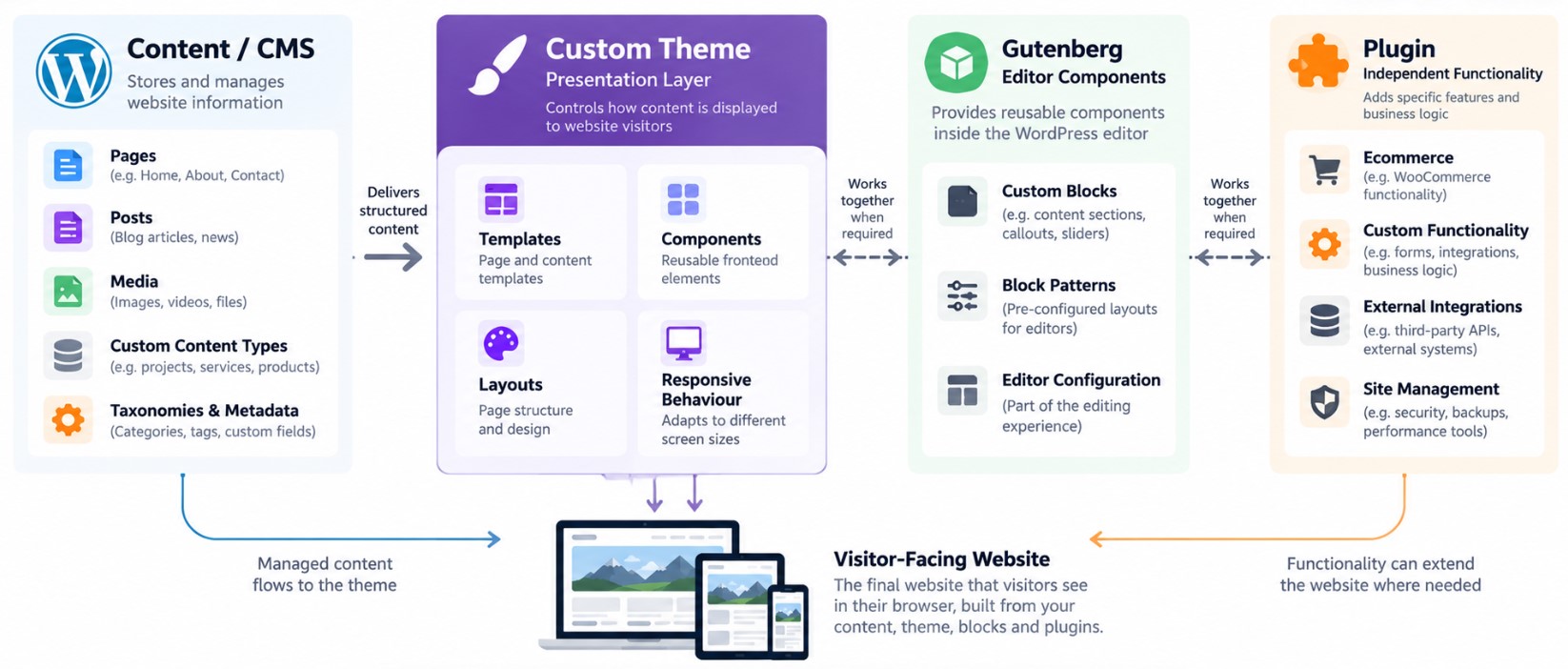
| Requirement | Typical WordPress Layer | Primary Role |
|---|---|---|
| Structured content | WordPress CMS / content model | Stores and manages the information used by the website. |
| Templates, layouts and frontend presentation | Custom WordPress theme | Controls how managed content is presented to visitors. |
| Custom editing components | Gutenberg blocks | Provides reusable components inside the WordPress editing experience. |
| Independent functionality or business logic | Plugin or other appropriate functionality layer | Keeps functionality separate from the active presentation theme where appropriate. |
This distinction helps prevent a theme from becoming responsible for requirements that would be better maintained independently.
How Does a Custom WordPress Theme Work?
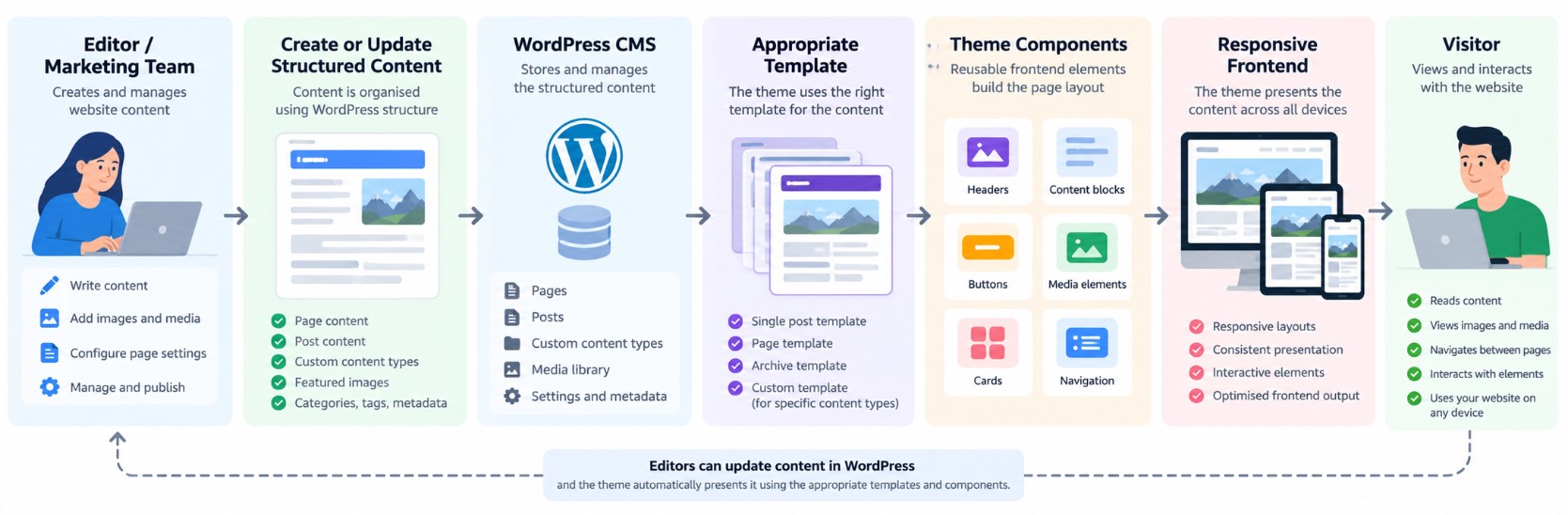
Editor / Marketing Team → Structured WordPress Content → Template Selection → Theme Components → Responsive Frontend → Visitor
An editor updates the relevant content in WordPress. The website uses the appropriate template and presentation components to render that information on the frontend. Visitors then interact with the resulting page rather than with the underlying content-management structure.
This operating workflow is different from the project delivery process used to design and develop the theme.
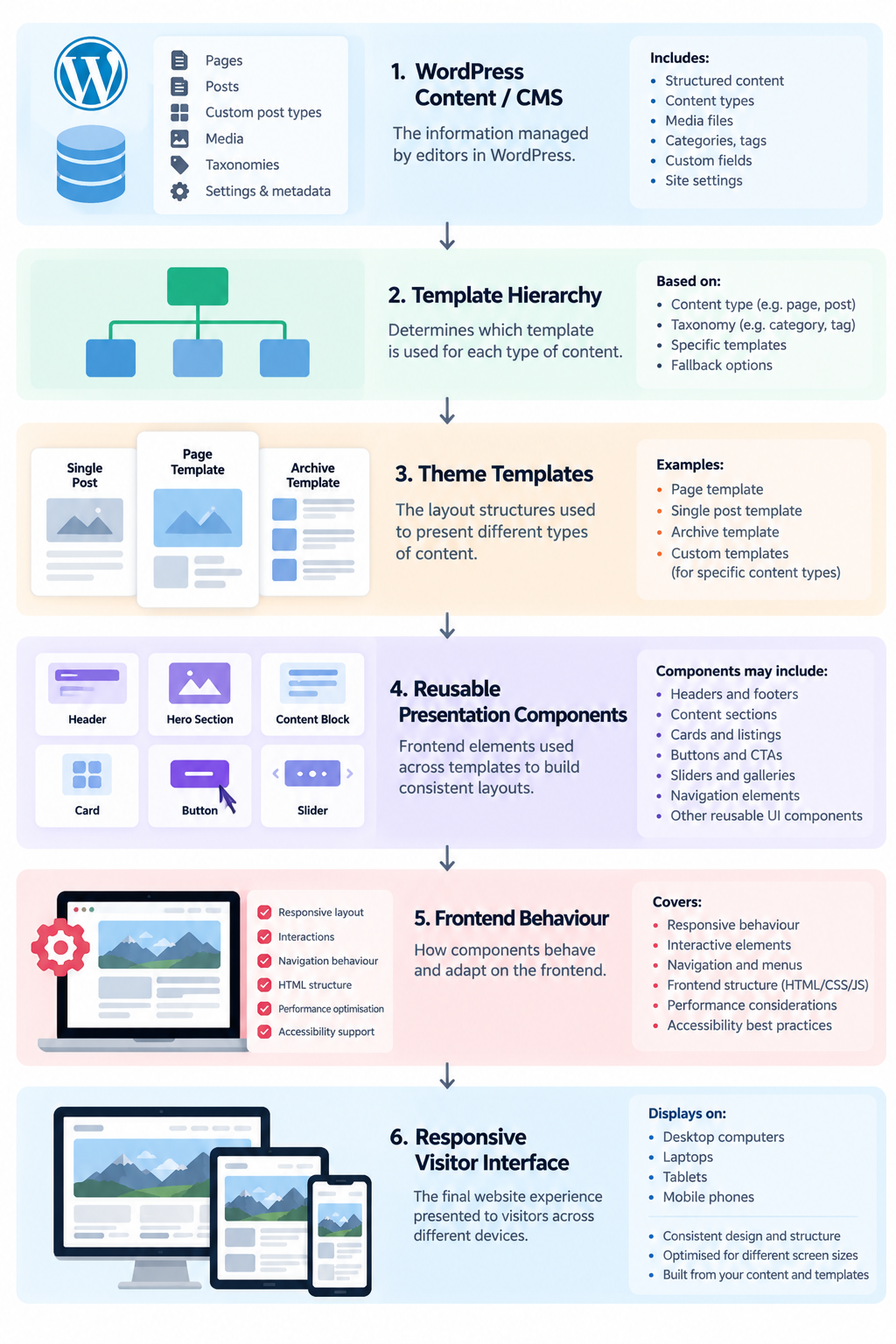
How Is a Custom WordPress Theme Structured?
- WordPress Content / CMS — the information managed by editors.
- Template Hierarchy — the logic determining which presentation structure applies to a particular type of content.
- Theme Templates — the layouts used to present agreed page and content types.
- Reusable Presentation Components — recurring interface elements shared across appropriate templates.
- Frontend Behaviour — the presentation and interaction rules applied to those components.
- Responsive Visitor Interface — the final website experience presented across relevant devices.
This structure also affects how the theme can evolve. Compatible new content may be able to use existing templates and components, while a genuinely different content requirement may justify an additional template without recreating the entire frontend system.
 Custom WordPress Theme vs Pre-Built Theme
| Consideration | Custom WordPress Theme | Pre-Built Theme |
|---|---|---|
| Design | Developed around the approved interface requirements. | Design normally adapts to an existing theme framework. |
| Templates | Can be planned around the website’s required content and page types. | Primarily uses the layouts and options supplied by the theme. |
| Editing | Can be aligned with the agreed content and presentation model. | Depends on the editing model provided by the selected theme. |
| Bundled functionality | Can avoid relying on presentation options that are irrelevant to the project. | May include a broad range of features intended for many types of websites. |
| Development requirement | Requires bespoke implementation and testing. | Can reduce development requirements when the theme already fits the project. |
| Initial investment | Typically requires more project-specific development. | Can be more economical for straightforward requirements. |
| Future changes | Can extend established templates and components where the architecture supports the requirement. | Future changes remain influenced by the structure and capabilities of the selected theme. |
| Best fit | Projects with specific design, template or presentation requirements. | Projects whose requirements already fit an appropriate existing theme. |
Responsive and Technical Considerations
A custom theme should account for more than desktop appearance. The implementation may need to address navigation behaviour, content hierarchy, responsive layouts, interactive states, semantic frontend structure, accessibility considerations and performance-conscious asset delivery where relevant to the approved scope.
These implementation considerations support the quality of the frontend, but they should not be treated as guarantees of specific accessibility scores, search rankings, Core Web Vitals results or conversion improvements.
Relevant WordPress Website Work
Freizeit Camper
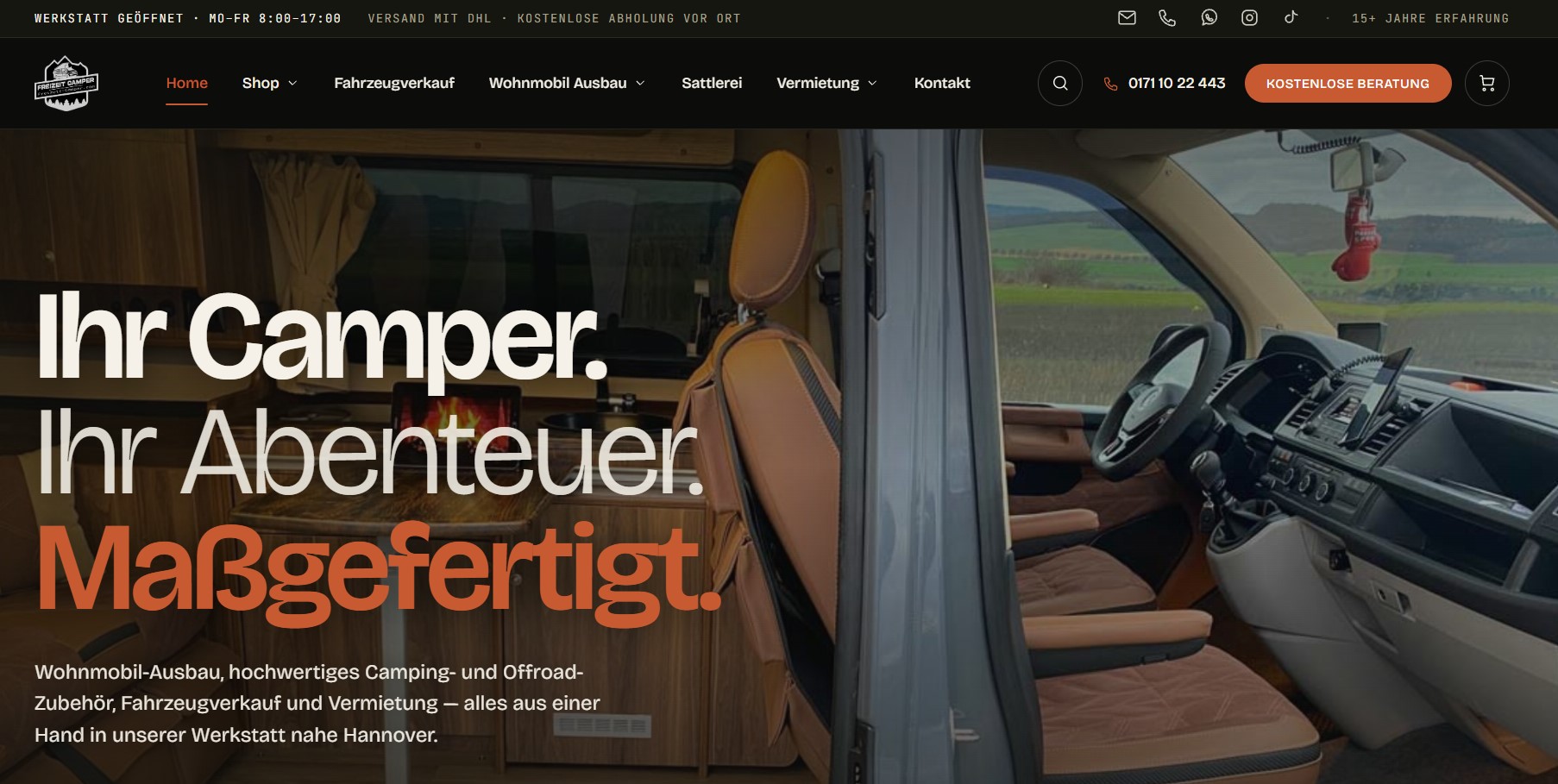
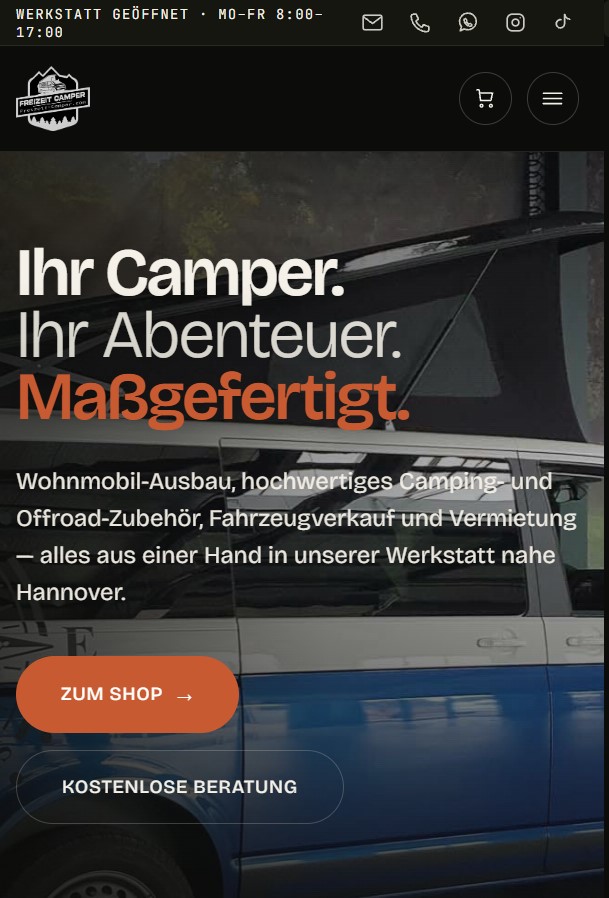
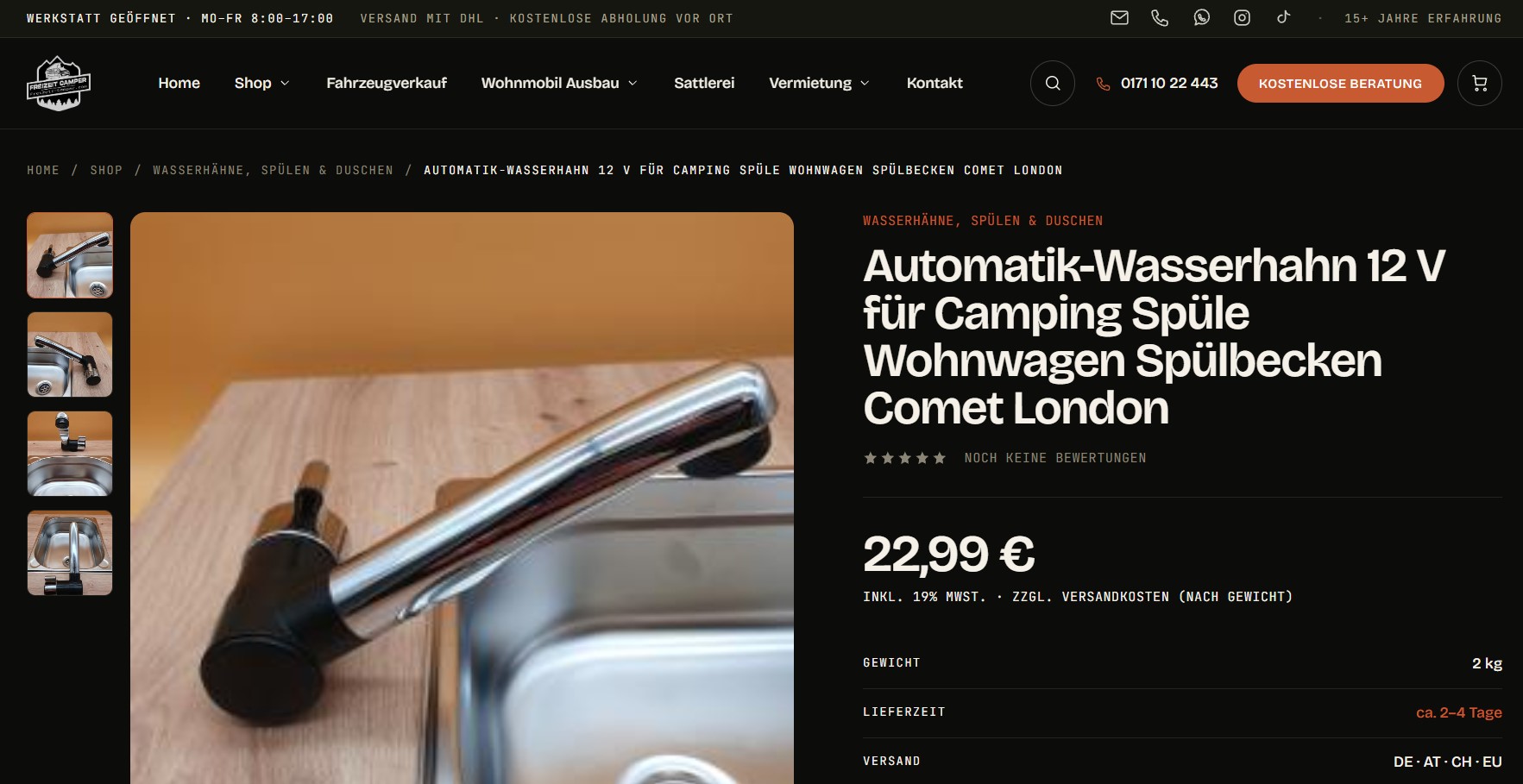
Prime Lion Digital’s work on Freizeit Camper provides relevant evidence of real WordPress website implementation involving website architecture, UX/UI and WooCommerce development. It demonstrates the practical relationship between content, different website areas and visitor-facing presentation.
It should not be interpreted as proof that the project used a bespoke theme developed from scratch unless that specific project detail is separately verified.
View the Freizeit Camper project
Do You Need a Custom Theme or a Wider WordPress Build?
If the requirement is independent functionality rather than presentation, it may belong in a plugin. If it concerns reusable editing components, Gutenberg development may be the more appropriate service.
Discuss Whether You Need a Custom Theme
How We Deliver a Custom WordPress Theme
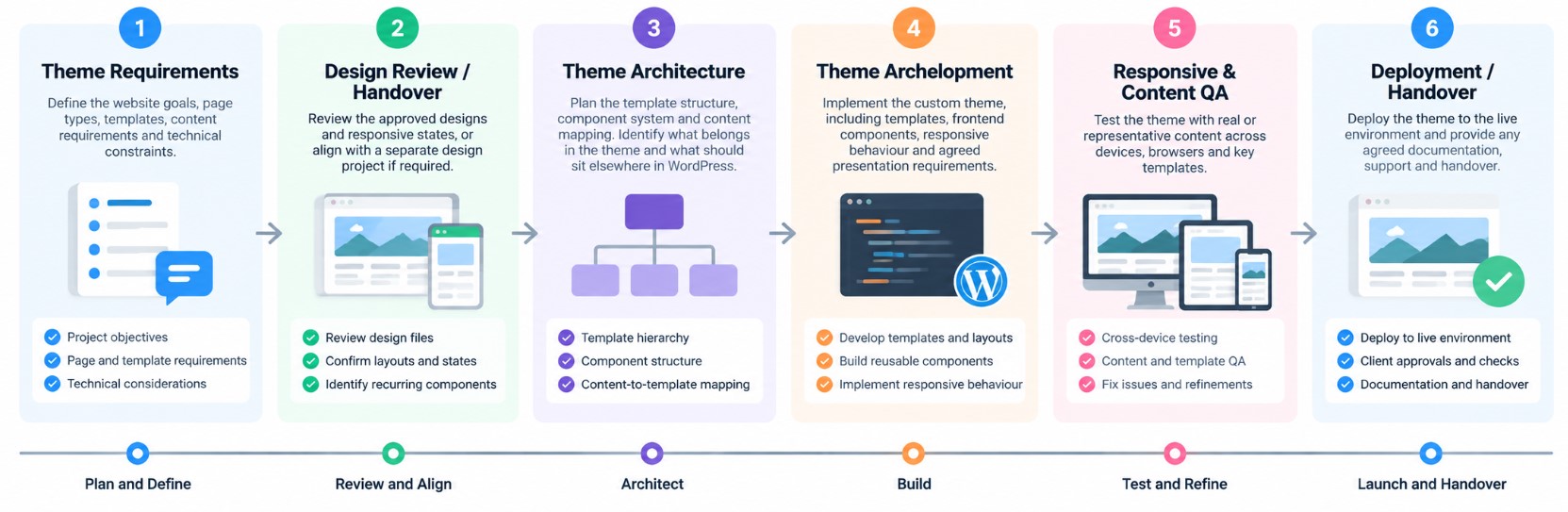
1. Theme Requirements
We define the page types, content requirements, presentation rules, editing requirements and relevant technical constraints. The client provides the available website requirements, existing environment information and project context.
2. Design Review or Handover
Where an approved design already exists, we review the required layouts, responsive states and recurring interface patterns before implementation. Where design work is required separately, the appropriate design scope should be agreed before theme development is treated as ready for production.
3. Theme Architecture
We determine how the required content types, templates and reusable presentation components should relate to one another and identify requirements that may belong outside the theme.
4. Theme Development
The agreed presentation architecture is implemented in WordPress, including the required templates, frontend components and responsive behaviour within the approved project scope.
5. Responsive and Content QA
The implementation is reviewed with representative content and relevant device behaviour so template, content and presentation issues can be identified before deployment.
6. Deployment and Handover
The final deployment approach depends on the existing WordPress environment and agreed project scope. Any required client approvals, content preparation or handover requirements are confirmed as part of the project.
What Do You Receive?
| Deliverable | What It Contains | Why It Matters |
|---|---|---|
| Custom theme implementation | The agreed WordPress presentation layer developed around the approved project requirements. | Provides the technical foundation for the bespoke frontend. |
| Template system | The page and content templates included in the approved scope. | Keeps recurring content types visually and structurally consistent. |
| Reusable presentation components | Frontend elements intended for use across relevant templates. | Reduces unnecessary duplication and supports consistent presentation. |
| Responsive frontend implementation | Agreed layouts and behaviours adapted for relevant screen sizes. | Ensures the theme is not implemented solely around a desktop layout. |
| CMS-to-theme implementation | The relationship between managed WordPress content and its frontend presentation. | Allows editors to manage content without treating every page as an independent frontend build. |
| Scope-dependent components | May include custom Gutenberg blocks, WooCommerce template work, documentation or deployment requirements where agreed. | Keeps additional requirements explicit rather than implying they are automatically included in every theme project. |
Custom WordPress Theme Development from £900
Custom WordPress theme development starts from £900. The final cost depends on the presentation and technical requirements of the project rather than simply the number of pages on the website.
| Cost Factor | Why It Affects Scope |
|---|---|
| Number of templates | Different content and page types may require separate presentation structures. |
| Design complexity | More specialised layouts and interactions can require additional frontend implementation. |
| Responsive behaviour | Layouts may require specific behaviour across different screen sizes and interface states. |
| Content structure | The way content is stored and related can affect how templates need to retrieve and present it. |
| Existing WordPress environment | An existing theme, plugins, content model and other dependencies may affect implementation or migration requirements. |
| Gutenberg requirements | Custom editing components can add a separate development requirement where they are needed. |
| WooCommerce presentation | Custom ecommerce templates or presentation requirements can increase the scope. |
| Migration and QA | Existing content, template changes and testing requirements may add implementation work. |
How Long Does Custom Theme Development Take?
The delivery timeline depends on the number and complexity of templates, design readiness, content structure, responsive requirements, existing WordPress dependencies, review cycles and testing scope. A realistic project timeline is confirmed once those requirements have been reviewed rather than assigning the same delivery period to every custom theme.
Expert Insight: What Should Live in a WordPress Theme — and What Should Not?
Before development, we recommend classifying each important requirement as content, presentation, editor component or independent functionality. That makes it easier to decide whether it belongs in WordPress content structures, the theme, Gutenberg or a plugin.
A particularly useful test is to consider a future theme change. If important functionality should continue working after the presentation theme is replaced, that is a reason to question whether the functionality should be tied directly to the theme in the first place.
Related WordPress Services
Custom WordPress Development
Use the broader Custom WordPress Development service when you first need to determine which part of WordPress requires custom development rather than beginning with a theme-specific requirement.
Custom WordPress Website Development
If the requirement extends beyond frontend presentation into the complete website architecture, content structure, functionality and other WordPress layers, may be the more appropriate route.
Custom Gutenberg Block Development
If the main requirement is reusable editing components inside the WordPress block editor rather than the overall presentation layer, should own the deeper treatment.
Custom WordPress Plugin Development
If you need independent functionality or business logic that should not depend on the active theme, may be more appropriate.
WordPress Web Design
If the main requirement is the visual and UX design itself rather than implementing an approved design as a WordPress theme, WordPress Web Design covers that design-led requirement.
Custom WordPress Theme Development FAQs
What is custom WordPress theme development?
Custom WordPress theme development is the creation of a project-specific presentation layer for WordPress. It can include bespoke templates, reusable frontend components, responsive behaviour and the logic that determines how managed WordPress content is presented to website visitors.
What is the difference between a custom and pre-built WordPress theme?
A pre-built theme provides an existing collection of layouts, options and behaviours that the website adapts to. A custom theme is developed around the approved presentation requirements of a specific project. A pre-built theme can still be the more efficient choice where its structure already fits the website.
Do I need a custom theme or a complete custom WordPress website?
If the main requirement concerns templates and frontend presentation, custom theme development may be sufficient. A complete custom website project becomes more relevant when website architecture, content modelling, functionality, integrations and several WordPress layers need to be planned together.
Can you develop a WordPress theme from an existing design?
Yes. An approved website design can form the basis of the theme-development scope. The layouts, recurring interface patterns, responsive states and content requirements should be reviewed before implementation so the design can be translated into an appropriate WordPress presentation system.
Can a custom WordPress theme work with Gutenberg?
Yes. A custom theme can work with WordPress’s block editor. Where the project also requires bespoke editing components, custom Gutenberg block development may be included as a separate or scope-dependent requirement rather than treating the blocks and theme as the same layer.
Should custom functionality be built into the theme?
Not automatically. Presentation-specific behaviour may belong in the theme, but independent functionality or business logic may be better separated from it. If functionality needs to remain active when the theme changes, that is a strong reason to evaluate whether a plugin or another implementation layer is more appropriate.
Can an existing WordPress website move to a custom theme?
Potentially. The approach depends on the existing theme, plugins, content structures, templates and other dependencies. The migration should be scoped around what can be retained safely and what needs to change for the new presentation architecture.
How much does custom WordPress theme development cost?
Custom WordPress theme development starts from £900. The final cost depends on template requirements, design complexity, responsive behaviour, content structure, existing WordPress dependencies, Gutenberg or WooCommerce requirements, migration and testing scope.
Scope Your Custom WordPress Theme Project
If your website needs a bespoke frontend rather than another round of compromises around an unsuitable theme, we can review the design, templates, content structure and editing requirements and determine what should be handled by the theme — and what should remain elsewhere in WordPress.