UX Design: What Is It? Complete Guide to UX Design, Process, Costs and Business Benefits
UX design, or user experience design, is the process of improving how people interact with a website, app or digital product. It focuses on making the user journey clear, simple, accessible and efficient, so visitors can complete important actions without confusion or friction.
For a business, UX design is not just about making a website look better. It is about helping users find information faster, trust the brand more quickly and take action with greater confidence. A strong UX strategy can improve conversion rates, reduce bounce rate, increase engagement and support long-term digital growth.
UX Design What Is – Definition and Meaning
UX design means designing the full experience a user has when interacting with a digital product. This includes the structure of the website, the navigation, the content flow, the checkout process, the contact forms, the mobile experience and the ease of completing tasks.
UX design usually includes:
- User research
- Customer journey mapping
- Information architecture
- Wireframing
- Prototyping
- Usability testing
- Interaction design
- Accessibility review
- Conversion rate optimisation
- Continuous UX optimisation
Unlike UI design, which focuses mainly on the visual interface, UX design focuses on how the whole experience works for the user.
UX Design What Is It in Simple Words?
If you are asking “UX design what is it?”, the simplest answer is this: UX design makes websites and apps easier to use.
For example, if users cannot find the checkout button, the contact form is too long, the menu is confusing or the mobile version is difficult to use, that is a UX problem. Good UX removes those barriers and helps users complete the action they came for.
- Poor UX: users struggle to find the right service page.
- Good UX: services are clearly grouped and easy to navigate.
- Poor UX: checkout has too many unnecessary steps.
- Good UX: checkout is simple, fast and transparent.
- Poor UX: users abandon the contact form.
- Good UX: the form is short, clear and easy to complete.
This is why UX design directly affects enquiries, sales and customer satisfaction.
Why UX Design Matters for Businesses
UX design matters because users make quick decisions online. If a website is slow, confusing or difficult to use, visitors often leave before they contact the business or complete a purchase.
For businesses, strong UX can help:
- Increase conversion rates
- Reduce bounce rate
- Improve mobile performance
- Increase form submissions
- Improve customer trust
- Reduce support questions
- Improve SEO performance through better engagement
- Increase revenue from existing traffic
UX Performance Indicators
| UX Area | Business Impact |
|---|---|
| Clear navigation | Users find information faster |
| Shorter forms | More enquiries and submissions |
| Faster page speed | Lower abandonment rate |
| Mobile-first layout | Better mobile engagement |
| Improved checkout flow | Higher ecommerce conversions |
| Better content hierarchy | Users understand the offer faster |
UX Design vs UI Design
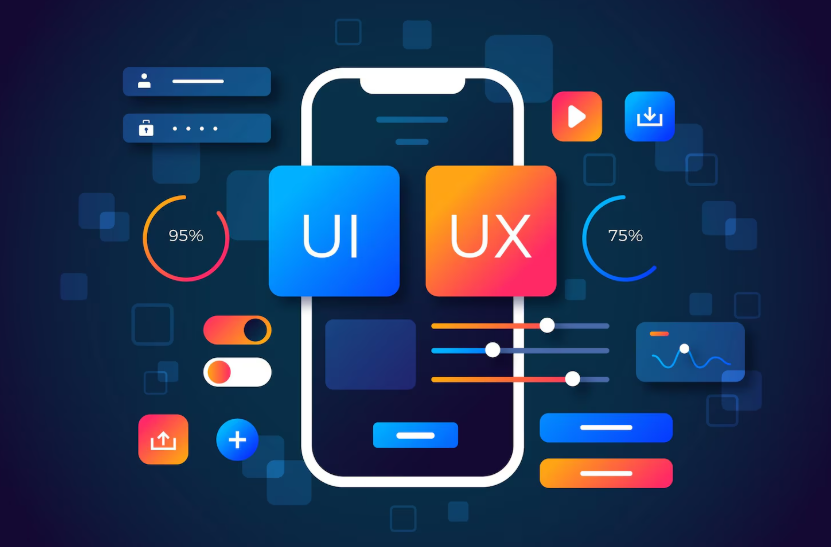
UX and UI are closely connected, but they are not the same. UX design focuses on the experience, structure and usability. UI design focuses on the visual interface, including colours, typography, buttons and layout styling.
| UX Design | UI Design |
|---|---|
| User journey and flow | Visual interface and styling |
| Research and user behaviour | Colours, icons and typography |
| Wireframes and structure | Final screen design |
| Usability testing | Visual consistency |
| Task completion and conversion | Brand appearance |
A successful digital product needs both. UX ensures the experience works; UI ensures it looks professional and on-brand.
UX Design Process Explained
A professional UX design process should be structured, research-led and focused on measurable outcomes. The exact process depends on the project, but most UX projects follow a similar journey.
UX Design Workflow
| Stage | Purpose |
|---|---|
| Research | Understand users, goals and business problems |
| Analysis | Identify friction points and opportunities |
| Information architecture | Organise pages, content and navigation |
| Wireframing | Create the page structure before visual design |
| Prototyping | Build an interactive model of the experience |
| Usability testing | Check whether users can complete tasks easily |
| Implementation | Turn the UX structure into a working product |
| Optimisation | Improve performance after launch using data |
UX Design What Is for Websites?
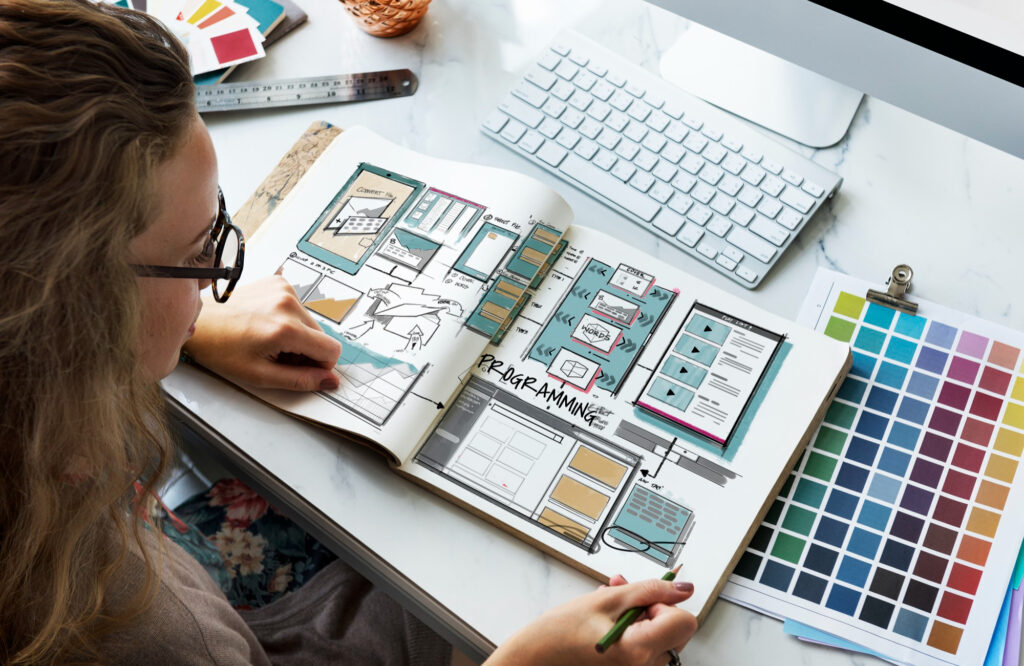 For websites, UX design focuses on how easily visitors can move from landing on a page to taking action. This could mean submitting a contact form, booking a consultation, buying a product, reading an article or downloading a resource.
Website UX design commonly improves:
- Navigation structure
- Homepage layout
- Service page flow
- Landing page clarity
- Call-to-action placement
- Contact form usability
- Mobile layout
- Accessibility
- Page speed
- Content readability
Good website UX helps users understand what the business offers, why it matters and what to do next.
UX Design What Is for Mobile Apps?
Mobile app UX design focuses on making app interactions simple, fast and intuitive on smaller screens. Mobile users expect quick access, clear buttons and minimal friction.
Mobile UX design usually includes:
- Touch-friendly navigation
- Simple screen flows
- Clear onboarding
- Fast loading screens
- Accessible button sizes
- Minimal form fields
- Clear calls to action
- Reduced user effort
Strong mobile UX can improve retention, reduce uninstall rates and increase repeat usage.
UX Design and Conversion Rate Impact
 UX design is one of the most important parts of conversion rate optimisation. If users cannot easily understand the offer or complete an action, traffic alone will not create strong results.
| UX Improvement | How It Supports Conversions |
|---|---|
| Simplified navigation | Users find the right page faster |
| Shorter forms | More users complete enquiries |
| Better CTA placement | Users know what action to take next |
| Improved checkout flow | Fewer abandoned baskets |
| Mobile UX optimisation | More users convert on mobile devices |
| Clear content hierarchy | Users understand the offer faster |
UX optimisation focuses on removing friction between the user and the desired action.
UX Design Benefits for Businesses
Professional UX design can create value across the full customer journey. It helps users trust the business, understand the offer and complete important actions with less effort.
- Higher conversion rates
- Better customer satisfaction
- Improved engagement time
- Lower bounce rate
- Reduced customer support issues
- Better mobile performance
- Improved brand perception
- Greater return from existing traffic
For many businesses, improving UX is more cost-effective than simply buying more traffic.
When Businesses Need UX Design
A business should consider UX design when a website, app or digital product is not performing as expected. UX problems are often visible in analytics, user feedback and conversion data.
Signs You Need UX Improvements
- High bounce rate
- Low conversion rate
- Users abandoning checkout
- Poor mobile usability
- Confusing navigation
- Low engagement metrics
- Slow page load speed
- Negative user feedback
- Too many support questions
- Forms being started but not completed
If several of these issues apply, a UX audit can help identify what needs to change.
UX Design Cost – Average UK Market Pricing
UX design cost depends on project size, research depth, number of pages, complexity and whether the work includes testing, prototyping and conversion optimisation.
Average UX Design Prices
| Service | Average Cost |
|---|---|
| UX audit | £500 – £3,000 |
| UX research | £1,000 – £8,000 |
| Wireframing | £800 – £5,000 |
| Prototyping | £1,500 – £7,000 |
| Usability testing | £1,000 – £6,000 |
| Full UX project | £5,000 – £50,000+ |
For small and medium-sized business websites, UX projects often range from £3,000 to £15,000, depending on scope.
UX Design Pricing by Project Type
| Project Type | Typical UX Cost |
|---|---|
| Small business website | £2,000 – £6,000 |
| Business website redesign | £4,000 – £12,000 |
| eCommerce UX | £6,000 – £20,000 |
| SaaS platform UX | £10,000 – £40,000 |
| Mobile app UX | £8,000 – £35,000 |
UX Designer Hourly Rates
UX designer hourly rates vary depending on experience, location and whether the work is carried out by a freelancer, consultant or agency.
| Experience Level | Typical Hourly Rate |
|---|---|
| Junior UX Designer | £25 – £45 |
| Mid-Level UX Designer | £45 – £75 |
| Senior UX Designer | £75 – £120 |
| UX Consultant | £100 – £180 |
Most UK UX agencies charge higher rates than individual freelancers because agency work often includes strategy, project management, design systems, testing and development collaboration.
UX Design ROI for Businesses
UX design can deliver strong return on investment because it improves the performance of users already visiting the website or app. Instead of relying only on more traffic, UX helps convert existing traffic more effectively.
| UX Investment | Potential Return |
|---|---|
| UX research | Fewer wrong design decisions |
| Usability testing | Reduced redesign costs later |
| UX optimisation | Higher conversion rates |
| Mobile UX improvements | Better mobile engagement |
| UX strategy | Long-term digital growth |
UX ROI Example
A business website receives 10,000 visitors per month. Before UX improvements, the conversion rate is 1.5%. After improving navigation, forms, content hierarchy and CTA placement, the conversion rate increases to 3%.
- Before UX: 150 conversions per month
- After UX: 300 conversions per month
- Revenue per conversion: £100
- Before UX revenue: £15,000 per month
- After UX revenue: £30,000 per month
- Monthly increase: £15,000
This shows how UX design can quickly pay for itself when implemented strategically.
UX Design vs No UX – Business Impact
| Metric | Without UX Focus | With UX Strategy |
|---|---|---|
| Conversion rate | Often lower | More likely to improve |
| Bounce rate | Often higher | Can be reduced |
| User satisfaction | Inconsistent | Stronger and more measurable |
| Customer retention | Harder to maintain | Improved through better experience |
| Revenue growth | Limited by friction | Supported by clearer user journeys |
UX Design Tools Used by Professionals
UX designers use specialist tools to research, map, prototype, test and optimise digital experiences.
| Tool | Purpose |
|---|---|
| Figma | Wireframing, prototyping and collaborative design |
| Adobe XD | UX and interface design |
| Sketch | Interface design and design systems |
| Hotjar | Heatmaps and user behaviour tracking |
| Google Analytics | Performance and behaviour analysis |
| Maze | Usability testing and user feedback |
UX Metrics to Track
To understand whether UX design is working, businesses should track both user behaviour and commercial performance.
- Conversion rate
- Bounce rate
- Time on page
- Scroll depth
- Task completion rate
- Form completion rate
- Checkout abandonment rate
- User satisfaction score
- Retention rate
- Click-through rate
Tracking these metrics helps businesses make evidence-based decisions rather than relying only on opinion.
UX Design Process Timeline
The timeline for UX design depends on complexity. A small website UX audit may take a few days, while a full SaaS platform or mobile app UX project may take several months.
| Phase | Typical Timeline |
|---|---|
| Research | 1–2 weeks |
| Analysis | 1 week |
| Wireframes | 1–2 weeks |
| Prototype | 1–3 weeks |
| Testing | 1–2 weeks |
| Implementation support | 2–4 weeks |
A typical UX project timeline is around 4–10 weeks, depending on scope.
UX Design for Different Industries
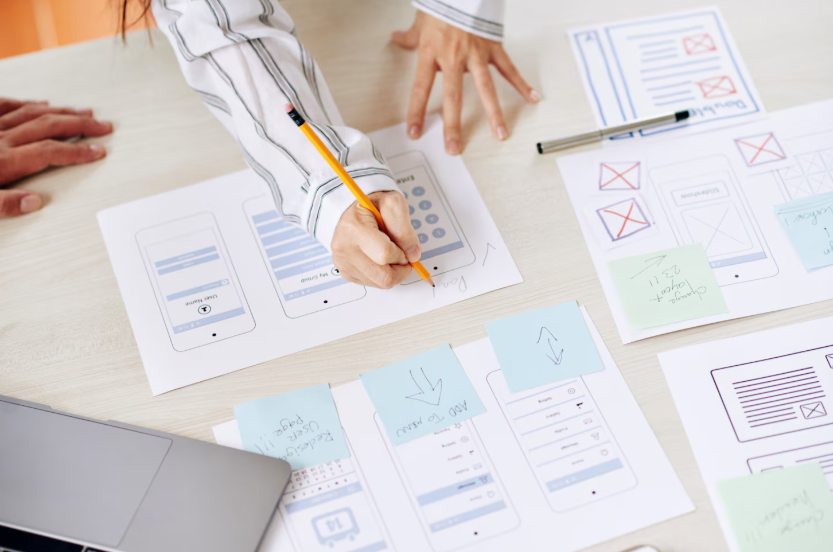 UX design benefits many sectors, but the focus changes depending on the type of business and user journey.
| Industry | UX Benefit |
|---|---|
| eCommerce | Higher conversions and fewer abandoned baskets |
| SaaS | Better onboarding and user retention |
| Finance | Improved trust and clearer decision journeys |
| Healthcare | Better accessibility and appointment journeys |
| Education | Higher engagement and easier content access |
| Professional services | More enquiries and stronger credibility |
UX Design Impact on the Customer Journey
UX design improves every stage of the customer journey, from the first visit to long-term retention.
| Journey Stage | UX Improvement |
|---|---|
| Awareness | Clear messaging and strong first impression |
| Consideration | Easy navigation and helpful content structure |
| Conversion | Simplified forms, checkout or booking process |
| Retention | Better usability and consistent experience |
| Loyalty | Positive interaction and stronger brand trust |
Common Misconceptions About UX Design
Misconception 1: UX is only visual design
UX is not just how something looks. It includes research, structure, testing, behaviour analysis and optimisation.
Misconception 2: UX is only for large companies
Small businesses also benefit from UX because better usability can increase enquiries and reduce wasted traffic.
Misconception 3: UX is too expensive
UX can save money by reducing redesign costs, improving conversions and helping businesses avoid poor design decisions.
Misconception 4: UX and UI are the same
UX focuses on the experience. UI focuses on the visual interface. Both are important, but they solve different problems.
Benefits of Professional UX Design Services
Working with UX professionals gives businesses a more structured and data-driven approach to digital improvement.
- Data-driven decisions
- Clearer user journeys
- Better conversion opportunities
- Improved accessibility
- Reduced development waste
- Better mobile usability
- Stronger customer satisfaction
- More scalable digital products
Professional UX design is especially valuable when a business depends on its website or app for leads, sales or customer engagement.
Why Choose Professional UX Design – Prime Lion Digital
Prime Lion Digital creates UX strategies designed to improve both user experience and business performance. Our approach combines research, usability analysis, conversion thinking and practical implementation planning.
We help businesses with:
- UX audits
- User journey optimisation
- Website UX design
- Mobile UX design
- Conversion rate optimisation
- Wireframing and structure planning
- UX strategy development
- Performance-focused redesign planning
Our UX solutions are built to improve clarity, engagement and measurable return from digital traffic.
Final Conclusion
Understanding UX design is essential for any business that wants a better-performing website, app or digital platform. UX design focuses on user behaviour, usability, accessibility and optimisation. It helps remove friction, improve customer journeys and guide users towards important actions.
Whether you are researching ux design what is or ux design what is it, the key point is simple: UX design is not only about design. It is about making digital experiences easier, clearer and more effective for users and businesses.
Investing in UX design can improve conversions, reduce bounce rate, increase engagement and support long-term digital growth.
About the Author
Serhii Kryvoviaz
 Serhii Kryvoviaz is an IT entrepreneur, digital growth strategist, and the founder of Prime Lion Digital, with over 14 years of experience delivering high-impact digital solutions. He has led and executed more than 2,000 projects for businesses across the UK, Europe, and the United States, helping brands scale through advanced SEO, performance-driven websites, and strategic digital marketing. Serhii specialises in building robust digital ecosystems — combining technology, data, and content to generate sustainable growth, increased visibility, and measurable commercial results for clients in competitive markets.