

Ecommerce Website Inspiration for High-Converting Online Stores
Ecommerce website inspiration helps businesses understand how successful online stores are structured, designed, and optimised to generate sales. A strong ecommerce website is not only visually attractive. It must guide users from product discovery to checkout with clarity, speed, trust, and minimal friction.
For UK ecommerce brands, competition is increasingly intense. Customers compare prices, delivery options, reviews, product quality, and website experience within seconds. If an online store feels slow, confusing, or unreliable, users often leave and buy elsewhere.
Effective ecommerce website design inspiration helps businesses improve:
- product presentation;
- category structure;
- mobile usability;
- checkout experience;
- trust signals;
- page speed;
- conversion rates;
- average order value;
- customer retention.
The best ecommerce websites combine UX design, technical performance, SEO, branding, and conversion optimisation into one seamless shopping experience.
Why Ecommerce Website Design Inspiration Matters
Good ecommerce design directly affects revenue. Online shoppers make decisions quickly, especially on mobile devices. A strong layout helps users find products faster, understand value clearly, and complete purchases with confidence.
Poor ecommerce design usually creates friction through:
- confusing navigation;
- slow product pages;
- weak product images;
- unclear delivery information;
- hidden costs;
- poor mobile layouts;
- complicated checkout journeys;
- lack of reviews or trust signals.
Many ecommerce brands focus heavily on traffic generation through SEO, Google Ads, Meta campaigns, influencer marketing, and email. However, if the website experience is weak, that traffic does not convert efficiently.
What High-Converting Ecommerce Websites Have in Common
Successful ecommerce websites are built around user behaviour. They reduce uncertainty, make product comparison easier, and remove unnecessary steps before purchase.
| Ecommerce Element | Why It Matters |
|---|---|
| Clear navigation | Helps users find products quickly |
| Strong product visuals | Improves confidence and product understanding |
| Simple category structure | Makes browsing easier |
| Fast loading speed | Reduces abandonment |
| Mobile optimisation | Supports modern shopping behaviour |
| Trust signals | Builds confidence before purchase |
| Easy checkout | Reduces cart abandonment |
| Clear CTA buttons | Guides users towards action |
Ecommerce Website Layout Structure
A strong ecommerce website layout should support product discovery, trust, and conversion. Every section should have a clear purpose.
| Section | Purpose |
|---|---|
| Header | Navigation, search, account, and basket access |
| Hero section | Promotions, featured collections, or key product messages |
| Category blocks | Help users browse product groups quickly |
| Product grid | Display products clearly with key information |
| Trust section | Reviews, delivery promises, guarantees, and secure payments |
| Content section | SEO content, buying guidance, or brand storytelling |
| CTA section | Encourage product browsing, purchase, or email signup |
| Footer | Support links, returns, delivery, contact, and policies |
Ecommerce Website Inspiration Types
 Minimal Ecommerce Design
Minimal ecommerce design focuses on clean layouts, strong product imagery, simple typography, and limited distractions. This approach works particularly well when product visuals and brand perception are central to the buying decision.
Minimal ecommerce design is often effective for:
- fashion stores;
- luxury products;
- beauty brands;
- interior and furniture retailers;
- premium direct-to-consumer brands;
- branding-focused ecommerce businesses.
The main advantage is clarity. Users can focus on the product without unnecessary visual noise.
Grid-Based Ecommerce Design
Grid-based ecommerce design is ideal for stores with multiple products, collections, or categories. It helps users compare products quickly and browse larger catalogues more comfortably.
Strong grid layouts usually include:
- consistent product image sizes;
- clear product names;
- visible prices;
- review ratings where relevant;
- quick view or add-to-basket options;
- filter and sorting tools;
- mobile-friendly product cards.
Storytelling Ecommerce Design
Storytelling ecommerce design uses brand narrative, lifestyle imagery, product benefits, and emotional positioning to build a stronger connection with customers.
This works well for:
- lifestyle brands;
- sustainable products;
- premium products;
- independent ecommerce brands;
- direct-to-consumer brands;
- artisan or handmade products.
Storytelling should support the purchase decision, not distract from it. The best ecommerce websites balance emotion with usability.
Marketplace-Style Ecommerce Design
Marketplace-style ecommerce layouts are useful for larger stores with many categories, filters, and product variations. These websites prioritise search, sorting, comparison, and product discovery.
Key features usually include:
- advanced search;
- mega menus;
- category filters;
- product comparison tools;
- customer reviews;
- clear stock information;
- fast category pages;
- structured product data.
Ecommerce Website Design Inspiration by Industry
Different ecommerce industries require different design priorities. A fashion store, electronics retailer, and furniture brand should not follow the same UX structure.
| Industry | Design Focus |
|---|---|
| Fashion | Strong visuals, filters, size guidance, lifestyle imagery |
| Electronics | Product specifications, comparisons, reviews, warranty details |
| Beauty | Lifestyle visuals, benefits, ingredients, reviews, bundles |
| Furniture | Large product photos, dimensions, delivery information, room context |
| Food and drink | Clear categories, subscriptions, delivery clarity, product freshness |
| Digital products | Conversion-focused layout, pricing, benefits, instant access |
| Luxury ecommerce | Premium visual identity, storytelling, trust, refined UX |
| B2B ecommerce | Bulk ordering, account pricing, technical details, repeat purchasing |
Ecommerce Homepage Inspiration
The ecommerce homepage should help users understand what the store sells, why they should trust the brand, and where to go next.
A high-performing ecommerce homepage usually includes:
- clear brand positioning;
- featured product categories;
- seasonal or promotional banners;
- best-selling products;
- customer reviews;
- delivery and returns information;
- trust badges;
- newsletter signup;
- internal links to key categories.
The homepage should not try to show everything. Its role is to direct users quickly towards the most relevant shopping path.
Ecommerce Product Page Inspiration
Product pages are where most purchase decisions happen. A weak product page can lose sales even if the homepage and category pages are strong.
| Product Page Element | Purpose |
|---|---|
| High-quality images | Help users understand the product visually |
| Product title | Confirms what the user is viewing |
| Price visibility | Supports quick decision-making |
| Product description | Explains features, benefits, and suitability |
| Reviews | Build social proof |
| Delivery information | Reduces uncertainty before purchase |
| Returns information | Improves confidence |
| Add-to-cart button | Drives conversion |
Strong product pages answer customer questions before they become objections.
Ecommerce Category Page Inspiration
Category pages are especially important for SEO and product discovery. They help users browse relevant products while helping search engines understand the store structure.
Effective category pages usually include:
- clear category titles;
- short SEO-friendly introductory text;
- filter options;
- sorting controls;
- consistent product cards;
- internal links to subcategories;
- helpful buying guidance;
- fast loading product grids;
- mobile-friendly layout.
For ecommerce SEO, category pages often have stronger ranking potential than individual product pages, especially for commercial keywords.
Ecommerce Website Navigation Best Practices
Clear navigation improves both usability and sales. Users should never feel lost or unsure where to click next.
Best practices include:
- simple top-level categories;
- visible search bar;
- mega menu for larger catalogues;
- breadcrumb navigation;
- clear product filters;
- sticky basket access;
- logical category hierarchy;
- easy access to delivery and returns information.
Navigation should be designed around customer behaviour, not only internal product organisation.
Ecommerce Website Inspiration for Mobile Design
Mobile ecommerce performance is critical. Many users browse and buy from smartphones while commuting, watching television, comparing products in-store, or responding to ads.
Strong mobile ecommerce design should include:
- fast loading pages;
- large tappable buttons;
- simple mobile navigation;
- clear product images;
- sticky add-to-cart buttons;
- short forms;
- Apple Pay, Google Pay, or fast payment options;
- easy basket editing;
- clear checkout progress.
Mobile users are less patient with friction. Even small usability issues can reduce conversion rates.
Ecommerce Checkout Design Inspiration
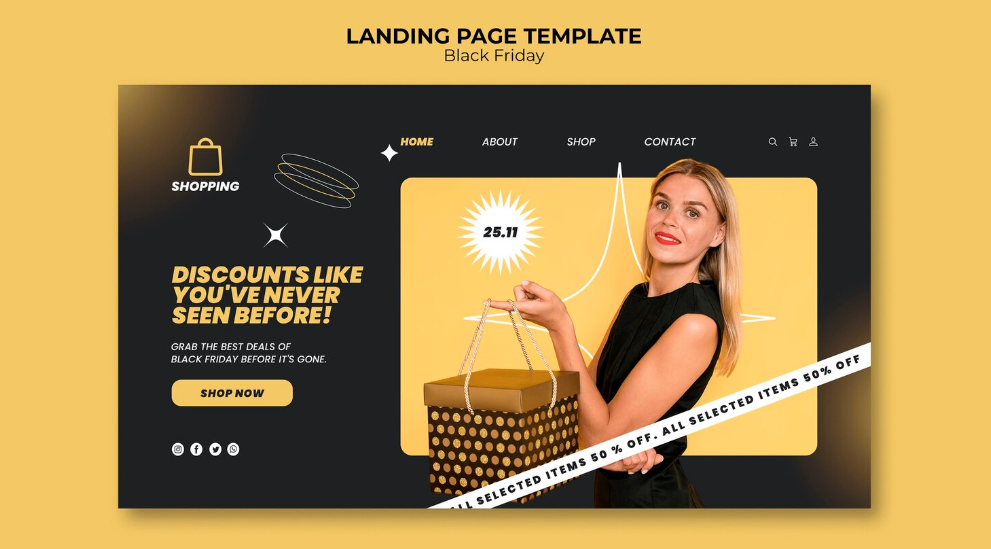 Checkout design has a direct impact on revenue. Many customers abandon baskets because the checkout process feels too long, confusing, or risky.
Strong checkout design should include:
- guest checkout option;
- minimal form fields;
- clear delivery costs;
- multiple payment options;
- secure payment indicators;
- progress indicator;
- easy basket review;
- clear return policy;
- no unexpected costs at the final step.
The checkout should feel fast, secure, and predictable.
Trust Signals for Ecommerce Websites
Trust is one of the most important parts of ecommerce design. Customers often hesitate before buying from a brand they do not know.
Useful trust signals include:
- customer reviews;
- star ratings;
- secure payment badges;
- clear returns policy;
- delivery information;
- contact details;
- real product photography;
- social proof;
- press mentions;
- guarantees where appropriate.
Trust signals should appear close to decision points, especially near add-to-cart buttons and checkout steps.
Ecommerce SEO and Website Structure
Ecommerce website inspiration should also consider SEO. A visually strong store may still struggle if search engines cannot understand its structure.
Important ecommerce SEO elements include:
- clean category URLs;
- optimised product titles;
- unique product descriptions;
- structured category content;
- internal links between categories and products;
- image ALT text;
- schema markup;
- fast page speed;
- mobile usability;
- indexable category pages.
SEO and UX should work together. Category pages should be helpful for users and clear for Google.
Ecommerce Design Trends
Modern ecommerce website design inspiration often includes trends that improve engagement and browsing experience.
- large product imagery;
- minimal navigation;
- sticky add-to-cart buttons;
- personalised recommendations;
- AI-powered product suggestions;
- micro animations;
- quick view options;
- subscription purchase flows;
- social proof sections;
- mobile-first checkout.
Trends should be used carefully. A trend is only useful if it improves clarity, trust, or conversion performance.
Ecommerce Website Performance Metrics
Design decisions should be measured through real performance data.
| Metric | Why It Matters |
|---|---|
| Conversion rate | Shows how effectively visitors become customers |
| Average order value | Measures how much customers spend per transaction |
| Cart abandonment rate | Shows checkout friction |
| Product page engagement | Shows whether users interact with product content |
| Mobile conversion rate | Measures mobile shopping performance |
| Page speed | Affects UX, SEO, and conversions |
| Repeat purchase rate | Measures customer retention |
Tracking these metrics helps ecommerce brands understand whether design improvements are actually increasing revenue.
Ecommerce Website Inspiration vs Custom Design
Inspiration is useful, but every ecommerce brand needs a design that fits its own products, audience, and commercial goals.
| Inspiration-Based Design | Custom Ecommerce Design |
|---|---|
| Faster concept development | Designed around brand and audience |
| Useful for visual direction | Better UX flexibility |
| May follow existing trends | More original and scalable |
| Can reduce planning time | Supports specific conversion goals |
The best approach is to use inspiration strategically, then build a custom ecommerce experience around real customer behaviour.
How Ecommerce Website Inspiration Improves Conversions
 Analysing successful ecommerce websites helps identify patterns that reduce friction and increase buyer confidence.
It can help improve:
- product layout;
- category navigation;
- mobile usability;
- checkout flow;
- trust placement;
- visual hierarchy;
- product filtering;
- cross-sell and upsell sections;
- customer review presentation.
Better design helps customers make decisions faster and with more confidence.
Ecommerce Website Inspiration Checklist
Use this checklist when reviewing ecommerce website design inspiration:
- Is the product hierarchy clear?
- Are CTA buttons visible and consistent?
- Is the website mobile-friendly?
- Does the store load quickly?
- Are product images strong enough?
- Are trust signals visible?
- Is navigation simple?
- Are filters useful?
- Is checkout short and clear?
- Are delivery and returns easy to find?
- Is the category structure SEO-friendly?
- Does the design reflect the brand?
Case Study Example: Ecommerce UX Improvement
A UK ecommerce retailer had strong website traffic but weak mobile conversions. Customers were reaching product pages but leaving before checkout.
The main issues included:
- slow mobile product pages;
- unclear product filters;
- weak delivery information;
- poor CTA visibility;
- too many checkout steps;
- limited trust signals near purchase points.
After restructuring the product pages, improving mobile layouts, simplifying checkout, and adding trust signals near CTAs, the store created a smoother buying journey and improved conversion performance.
Why Professional Ecommerce Design Matters
Professional ecommerce design helps online stores move beyond attractive visuals and create a commercially effective shopping experience.
It supports:
- higher conversion rates;
- better mobile performance;
- lower bounce rates;
- improved SEO structure;
- stronger brand trust;
- better customer retention;
- increased revenue potential.
For competitive ecommerce brands, design is part of the sales process.
How Prime Lion Digital Helps Ecommerce Brands
At Prime Lion Digital, we help ecommerce businesses create faster, clearer, and more conversion-focused online stores.
Our ecommerce work commonly includes:
- Shopify optimisation;
- WooCommerce optimisation;
- ecommerce UX design;
- product page optimisation;
- checkout improvement;
- technical SEO;
- Core Web Vitals improvements;
- mobile usability improvements;
- conversion rate optimisation;
- ecommerce website development.
The goal is to create ecommerce websites that look professional, perform quickly, rank better, and convert visitors into customers.
Final Thoughts
Ecommerce website inspiration is valuable when used strategically. The strongest online stores are not built by copying competitors, but by understanding what successful ecommerce websites do well and adapting those ideas to the brand, audience, and product range.
A high-performing ecommerce website combines clear navigation, strong product presentation, fast performance, mobile-first UX, trust signals, and a smooth checkout experience.
For ecommerce businesses competing in the UK market, design is not just a visual decision. It directly affects sales, SEO, advertising efficiency, and long-term growth.
Frequently Asked Questions
What is ecommerce website inspiration?
Ecommerce website inspiration means analysing successful online stores to understand design patterns, UX structures, product layouts, and checkout flows that improve sales and usability.
What makes a good ecommerce website design?
A good ecommerce website is fast, mobile-friendly, easy to navigate, visually clear, trustworthy, and simple to purchase from.
Why is mobile ecommerce design important?
Many ecommerce users browse and buy from mobile devices. Poor mobile UX can reduce conversions and increase cart abandonment.
What should an ecommerce product page include?
A strong product page should include clear images, product details, price, reviews, delivery information, returns policy, and a visible add-to-cart button.
How can ecommerce website design improve conversions?
Better design reduces friction, improves trust, makes products easier to compare, simplifies checkout, and helps users make buying decisions faster.
Should ecommerce websites use custom design?
Custom design is usually better for brands that need stronger UX, unique positioning, scalable features, and conversion-focused layouts.
About the Author
Serhii Kryvoviaz

Serhii Kryvoviaz is an IT entrepreneur, digital growth strategist, and the founder of Prime Lion Digital, with over 14 years of experience delivering high-impact digital solutions. He has led and executed more than 2,000 projects for businesses across the UK, Europe, and the United States, helping brands scale through advanced SEO, performance-driven websites, and strategic digital marketing. Serhii specialises in building robust digital ecosystems — combining technology, data, and content to generate sustainable growth, increased visibility, and measurable commercial results for clients in competitive markets.